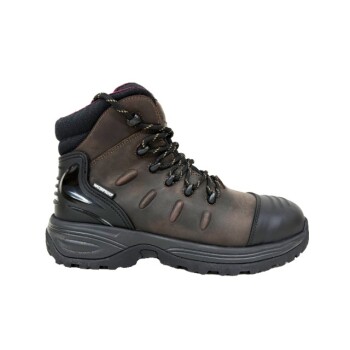
Professional-grade industrial safety shoes function as a vital containment line against asbestos exposure in high-risk sectors like mining and shipbuilding. Their primary role is to serve as a dense physical barrier that prevents toxic dust from contacting the skin and helps stop the migration of hazardous fibers into non-work zones.
The most critical function of safety footwear in asbestos environments is preventing secondary exposure. By utilizing dense, impermeable materials, these shoes stop fibers from embedding in the sole and traveling home with the worker, effectively mitigating the risk of chronic health issues for both the wearer and others.
The Mechanics of Asbestos Protection
Creating an Impermeable Barrier
In environments laden with asbestos, standard footwear often allows microscopic fibers to penetrate through fabric or seams.
Professional-grade shoes utilize dense structural designs that effectively block asbestos dust. This prevents the fibers from coming into direct contact with the skin of the feet, which is essential for reducing the overall body burden of exposure.
Preventing Cross-Contamination
One of the most insidious risks of asbestos is its tendency to cling to clothing and gear, allowing workers to unknowingly carry it into break rooms or their homes.
High-quality safety shoes are designed to prevent workers from carrying hazardous fibers to non-work areas. By resisting fiber embedding, they significantly reduce the risk of chronic occupational exposure caused by tracking contaminants out of the hazard zone.
Material Composition and Durability
Specialized Chemical Resistance
While the primary focus regarding asbestos is particulate matter, industrial environments often present mixed hazards.
Safety shoes frequently employ specialized materials like rubber, neoprene, or treated leather. These materials provide an extra protective layer that resists not only dust but also harmful chemicals and corrosive substances often found alongside asbestos in shipyards.
Structural Integrity in Harsh Conditions
Mines and shipyards are rigorous environments that degrade standard equipment quickly.
The waterproof and chemical-resistant nature of professional-grade footwear ensures durability when exposed to harsh substances. This maintains the integrity of the protective barrier over time, ensuring that the shoe does not develop cracks or gaps where asbestos fibers could enter.
Common Pitfalls to Avoid
The "invincibility" Misconception
It is a critical error to assume that wearing safety shoes eliminates the need for strict decontamination protocols.
While these shoes block skin contact, they can still accumulate surface dust. Without proper cleaning or boot-wash station usage before leaving a zone, the shoes themselves become a vehicle for contamination, negating their protective role against tracking fibers.
Ignoring Physical Hazards
Focusing solely on particulate protection can lead to overlooking physical trauma risks.
In high-rise construction or mining, sharp debris and falling objects are constant threats. Users must ensure their footwear offers reinforced toe caps and puncture-resistant midsoles alongside dust protection to prevent crushing injuries or punctures from sharp objects like rebar.
Making the Right Choice for Your Goal
Select your footwear based on the specific hierarchy of hazards in your workspace:
- If your primary focus is Asbestos Containment: Prioritize shoes made of smooth, dense synthetic materials or treated leather that can be easily washed down to prevent fiber migration.
- If your primary focus is Mixed-Hazard Environments: Look for footwear that combines chemical resistance (neoprene/rubber) with puncture-resistant midsoles to handle both corrosive liquids and sharp debris.
- If your primary focus is Physical Stability: Ensure the footwear features high-traction, slip-resistant outsoles to prevent falls on wet or uneven surfaces common in shipyards.
True safety relies on treating your footwear as a component of a broader, disciplined decontamination strategy.
Summary Table:
| Protective Feature | Primary Role | Benefit in Asbestos Zones |
|---|---|---|
| Impermeable Material | Dense barrier | Blocks microscopic fiber penetration to skin |
| Smooth Outer Finish | Anti-embedding | Enables easy decontamination and washing |
| Chemical Resistance | Durability | Prevents degradation in harsh shipyard conditions |
| Structural Integrity | Hazard containment | Reduces the risk of tracking dust to non-work zones |
| Reinforced Midsole | Physical safety | Protects against sharp debris in mines and construction |
Secure Your Workforce with Premium Protective Footwear
Protecting your team against invisible hazards like asbestos requires high-performance gear that meets rigorous industrial standards. As a large-scale manufacturer serving distributors and brand owners, 3515 offers comprehensive production capabilities for all footwear types, anchored by our flagship Safety Shoes series.
Whether you need specialized boots for mining, shipyards, or construction, our extensive portfolio covers work and tactical boots, outdoor shoes, training shoes, and sneakers, as well as Dress & Formal shoes to meet diverse bulk requirements. Our expertise ensures your orders benefit from superior materials and unmatched durability.
Ready to elevate your inventory with industry-leading safety solutions?
Contact 3515 Today to Discuss Your Bulk Requirements
References
- Suresh R. Naik, Amisha Mahesh Bhopatrao. Chemical health hazards and toxicity of environmental pollutants on humans, animals and others: An overview. DOI: 10.59400/jts.v2i1.1135
This article is also based on technical information from 3515 Knowledge Base .
Related Products
- Premium Waterproof High-Cut Industrial Safety Boots for Wholesale and Bulk Orders
- Premium Wheat Nubuck Safety Shoes for Bulk Distribution
- Wholesale Mesh Steel Toe Safety Shoes with Dial Closure Factory Production
- Wholesale Anti-Smash & Puncture-Proof Safety Shoes Custom Manufacturing for Brands
- Premium KPU Athletic Safety Shoes for Wholesale
People Also Ask
- Why are oil-resistant and anti-slip properties critical for industrial safety boots? Expert Outsole Engineering Guide
- What are the primary protective functions of industrial safety boots in oil palm plantations? Master Rough Terrain Safety
- Why is professional industrial-grade safety footwear a suitable carrier for diabetic rehabilitation insoles?
- How do industrial safety boots assist maintenance personnel working on high-level palm oil factory structures?
- What dual characteristics do industrial safety boots exhibit? Balance Worker Protection with Health Recovery Efficiency