
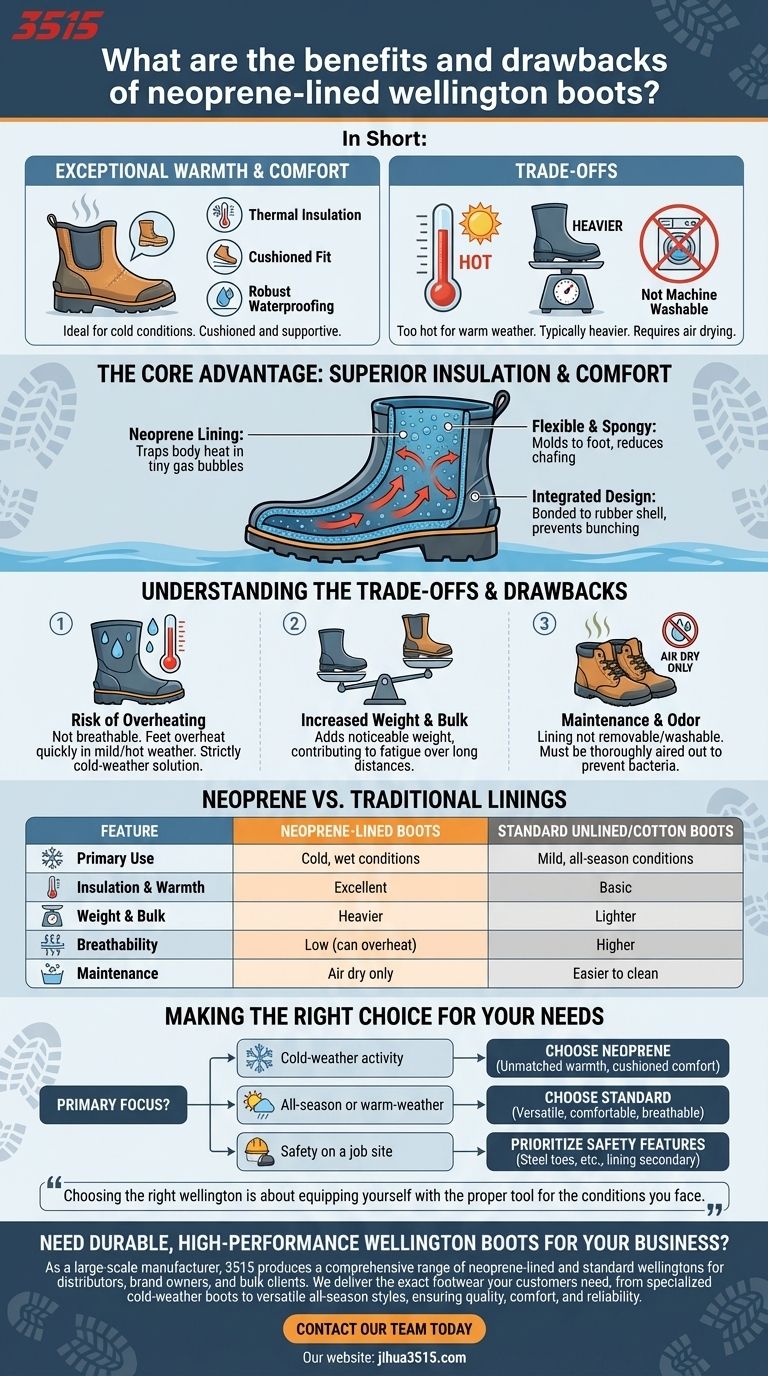
In short, neoprene-lined wellington boots offer exceptional warmth, a cushioned and supportive fit, and robust waterproofing ideal for cold conditions. However, their excellent insulation makes them too hot for warm weather, they are typically heavier than standard boots, and the lining is not machine washable.
The decision to choose a neoprene-lined wellington is not about finding a universally "better" boot, but about selecting a specialized tool. It excels in cold, wet environments at the cost of all-season versatility.
The Core Advantage: Superior Insulation and Comfort
The primary reason to choose a neoprene lining is for its performance in cold and demanding conditions. This material, a type of synthetic rubber, fundamentally changes how the boot feels and functions.
How Neoprene Provides Warmth
Neoprene is an excellent thermal insulator. Its structure is filled with tiny gas bubbles that trap body heat, preventing it from escaping. This process keeps your feet significantly warmer than a standard cotton or unlined rubber boot would in cold mud, snow, or water.
A Cushioned, Snug Fit
The material is naturally flexible and spongy. This allows the boot lining to mold around the contours of your foot, providing a secure, snug fit that reduces internal movement and potential chafing. This cushioning also adds significant comfort for long periods of walking.
Integrated and Durable Design
In most quality wellingtons, the neoprene liner is bonded directly to the waterproof rubber outer shell. This integrated design prevents the lining from bunching up or separating over time, a common issue with looser linings.
Understanding the Trade-offs and Drawbacks
While neoprene offers clear benefits, it comes with specific limitations that make it unsuitable for certain users and environments.
The Risk of Overheating
The same insulation that keeps you warm in winter becomes a liability in mild or hot weather. Neoprene is not breathable, meaning your feet will sweat and overheat quickly, leading to discomfort. It is strictly a cold-weather solution.
Increased Weight and Bulk
The additional layer of neoprene adds noticeable weight and bulk compared to a traditional wellington. While often manageable, this extra weight can contribute to fatigue over very long distances.
Maintenance and Odor
Neoprene linings cannot be removed or machine washed. If the boots become damp inside from sweat, they must be aired out thoroughly to prevent odor-causing bacteria from building up.
Neoprene vs. Traditional Linings
Understanding the alternative helps clarify when neoprene is the right choice.
Standard Rubber or Cotton Linings
Traditional wellingtons often have a thin cotton lining or are simply unlined rubber. These boots are much lighter and more suitable for general-purpose use in mild conditions. They offer basic waterproof protection without the intense insulation of neoprene.
Heavy-Duty and Safety Features
It's important not to confuse insulation with protection. While some neoprene boots are heavy-duty, other specialized work boots prioritize features like steel toe caps, puncture-resistant soles, and chemical resistance over thermal comfort. Your primary task—warmth or safety—should guide your choice.
Making the Right Choice for Your Needs
Selecting the correct lining comes down to matching the boot's features to your specific activities and environment.
- If your primary focus is cold-weather activity: Neoprene is the definitive choice for its unmatched warmth and cushioned comfort during winter months.
- If your primary focus is all-season or warm-weather use: A standard wellington with a cotton or unlined interior will be far more versatile and comfortable.
- If your primary focus is safety on a job site: Prioritize boots with certified safety features like steel toes, which may or may not include a neoprene lining.
Ultimately, choosing the right wellington is about equipping yourself with the proper tool for the conditions you face.
Summary Table:
| Feature | Neoprene-Lined Boots | Standard Unlined/Cotton Boots |
|---|---|---|
| Primary Use | Cold, wet conditions | Mild, all-season conditions |
| Insulation & Warmth | Excellent | Basic |
| Weight & Bulk | Heavier | Lighter |
| Breathability | Low (can overheat) | Higher |
| Maintenance | Air dry only (not machine washable) | Easier to clean |
Need durable, high-performance wellington boots for your business?
As a large-scale manufacturer, 3515 produces a comprehensive range of neoprene-lined and standard wellingtons for distributors, brand owners, and bulk clients. We can deliver the exact footwear your customers need, from specialized cold-weather boots to versatile all-season styles, ensuring quality, comfort, and reliability.
Contact our team today to discuss your specific requirements and get a competitive quote.
Visual Guide
Related Products
- Durable Waterproof Rain Boots | Custom Manufacturer for Wholesale & Brands
- Wholesale Durable & Breathable Training Shoes for Custom Brands
- Durable Goodyear Welt Leather Work Boots for Wholesale & Private Label
- Premium Wholesale Tactical Style Safety Shoes Boots with Quick Lacing
- High-Traction Suede Tactical Boots Wholesale & Custom Manufacturing
People Also Ask
- What are the main materials for waterproof rain boots? Choose the Right Material for Durability & Comfort
- What is the overall recommendation for choosing rain boot materials? A Guide to Rubber vs. PVC
- How does boot height affect waterproofing? Choose the Right Height for Ultimate Protection
- Why are rain boots more flexible and comfortable than snow boots? The Key Differences Explained
- What are the best types of shoes for different gardening conditions? Find Your Perfect Match.
















