The lightweight nature of PVC boots directly translates to reduced worker fatigue and a lower risk of long-term injury. By minimizing the physical load with every step, these boots significantly decrease the strain on a worker's feet, legs, and back over a full shift. This reduction in daily physical stress is a crucial factor in enhancing comfort and preventing chronic musculoskeletal disorders (MSDs).
Choosing a lightweight boot is an investment in long-term worker health. The cumulative effect of lifting less weight thousands of times per day reduces fatigue and mitigates the risk of debilitating musculoskeletal injuries over a career.
The Ergonomic Impact of Footwear Weight
Understanding why a few ounces matter requires looking at the cumulative effect over an entire workday. The benefit isn't just about initial comfort; it's about sustained performance and health.
Reducing Cumulative Load
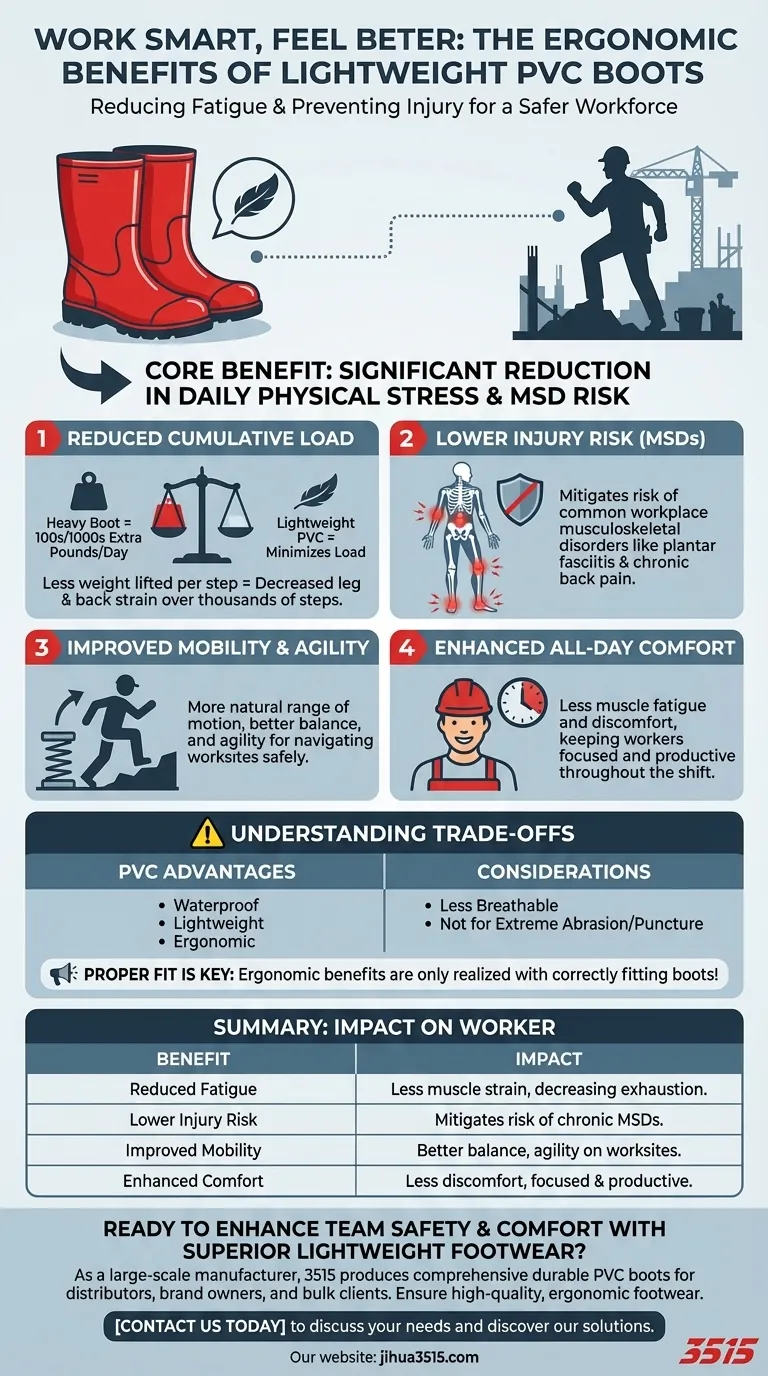
A slightly heavier boot may not feel significant at first, but the extra weight adds up. Over thousands of steps, this forces a worker to lift hundreds, or even thousands, of extra pounds per day, leading directly to physical exhaustion and strain.
Enhancing All-Day Comfort
Less weight means less work for the muscles in the legs and lower back. This directly reduces discomfort and the feeling of "heavy legs" that often occurs toward the end of a long period of wear, keeping workers more focused and comfortable.
Improving Mobility and Agility
Lighter footwear allows for a more natural and less restrictive range of motion. This can improve a worker's balance and agility, which is a safety benefit in itself when navigating uneven surfaces or cluttered worksites.
The Link Between Lightweight Boots and Injury Prevention
The most critical benefit of lightweight footwear is its role in proactive injury prevention. Heavy boots are a known contributing factor to a specific class of common workplace injuries.
Understanding Musculoskeletal Disorders (MSDs)
MSDs are injuries and disorders that affect the body's movement system, including muscles, tendons, ligaments, and nerves. Common examples related to footwear include plantar fasciitis, tendonitis, and chronic lower back pain.
How Heavy Footwear Contributes to MSDs
Heavy boots force the body to alter its natural gait and overwork key muscle groups to compensate. This unnatural strain, repeated day after day, can lead to inflammation, tissue damage, and chronic pain, significantly impacting a worker's quality of life and ability to perform their job.
PVC as a Proactive Solution
By choosing lightweight PVC boots, which are often significantly lighter than traditional leather or rubber alternatives, employers can actively reduce a key risk factor for MSDs. It's a simple ergonomic intervention with a powerful long-term impact on workforce health.
Understanding the Trade-offs
While the lightweight nature of PVC is a major advantage, it's essential to consider the full picture to make an informed decision for a specific job task.
Durability and Application
In environments with extreme abrasion or high puncture risks, a heavier, specially reinforced boot might be necessary. PVC provides excellent waterproof protection but may not offer the same level of rugged durability as premium leather or specialized rubber compounds in every scenario.
Breathability
PVC is a non-porous material, which makes it 100% waterproof. The trade-off is a lack of breathability compared to materials like leather or canvas. In hot, dry climates, this can lead to discomfort from trapped sweat and heat.
The Importance of Proper Fit
The ergonomic benefits of a lightweight boot are only realized if the boot fits correctly. A poorly fitting boot, regardless of its weight, can create pressure points, blisters, and its own set of musculoskeletal problems.
Making the Right Choice for Your Goal
Selecting the right boot requires matching its characteristics to the primary demands of the job.
- If your primary focus is reducing worker fatigue and MSD risk in wet environments: Lightweight PVC boots are an exceptional choice due to their combination of impermeability and minimal strain.
- If your primary focus is maximum durability in abrasive, high-puncture-risk environments: You may need to evaluate heavier, reinforced boots and weigh the trade-off between protection and long-term ergonomic health.
- If your primary focus is all-day comfort for workers on their feet for extended shifts: The significant reduction in cumulative weight lifted makes lightweight PVC a leading contender.
Ultimately, selecting footwear based on its ergonomic impact is a critical step toward a safer and more productive workforce.
Summary Table:
| Benefit | Impact on Worker |
|---|---|
| Reduced Fatigue | Less muscle strain over a full shift, decreasing exhaustion. |
| Lower Injury Risk | Mitigates risk of chronic musculoskeletal disorders (MSDs). |
| Improved Mobility | Better balance and agility for navigating worksites safely. |
| Enhanced Comfort | Less discomfort, keeping workers focused and productive. |
Ready to enhance your team's safety and comfort with superior lightweight footwear?
As a large-scale manufacturer, 3515 produces a comprehensive range of durable PVC boots for distributors, brand owners, and bulk clients. Our production capabilities ensure you receive high-quality, ergonomic footwear designed to reduce worker fatigue and prevent injury.
Contact us today to discuss your specific needs and discover how our footwear solutions can benefit your workforce.
Visual Guide
Related Products
- Premium Wholesale Waterproof Safety Boots High Performance Protection for Industrial Markets
- High-Traction Suede Tactical Boots Wholesale & Custom Manufacturing
- High Performance Fire-Retardant Waterproof Safety Boots
- Premium Waterproof High-Cut Industrial Safety Boots for Wholesale and Bulk Orders
- Wholesale Waterproof Tactical Boots Custom Suede & High-Traction Soles
People Also Ask
- What weather and chemical protections do premium boots offer? Your Complete Guide to Safety & Performance
- Why are waterproof safety boots recommended for certain work environments? Essential Protection for Wet & Hazardous Jobs
- What are the primary protective functions of industrial safety boots in oil palm plantations? Master Rough Terrain Safety
- Why are oil-resistant and anti-slip properties critical for industrial safety boots? Expert Outsole Engineering Guide
- What are the best types of shoes for different gardening conditions? Find Your Perfect Match.