Yes, absolutely. The lining of a Wellington boot has a direct and significant impact on its fit. While the outer boot may be the same size, a thicker insulating lining, such as neoprene or fleece, reduces the internal volume, making the boot feel tighter and often requiring you to adjust the size you choose.
The key is to understand that you aren't just fitting your foot to the boot; you are fitting it into the remaining space left by the lining. A thicker lining means less space, which directly translates to a snugger, and potentially smaller, fit.
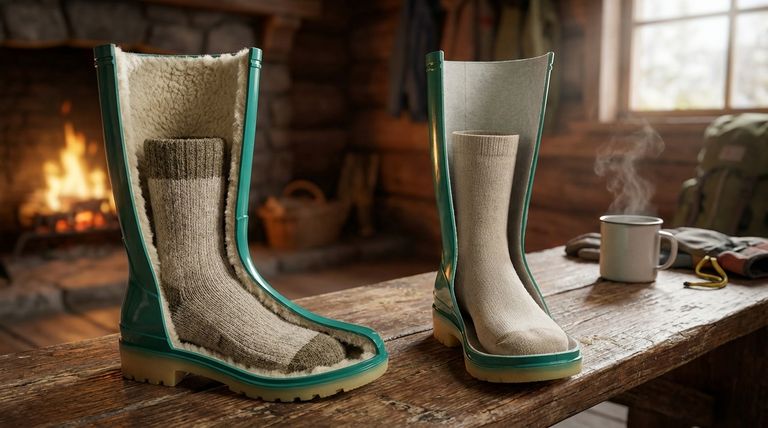
How Linings Alter the Internal Fit
The term "true-to-size" for Wellington boots is best understood as a baseline. The type of lining material is the most common variable that will require you to deviate from that baseline.
The Standard, Unlined Fit
Most basic Wellington boots have a very thin cotton or nylon lining. This material adds negligible thickness, providing a fit that is generally considered true to your standard shoe size. This is the reference point for all other comparisons.
Insulated Linings: Neoprene and Fleece
Boots designed for colder weather often use neoprene (the same material used in wetsuits) or fleece. These linings are significantly thicker to provide insulation.
This added thickness directly subtracts from the internal space available for your foot. A boot with a 3mm or 5mm neoprene lining will feel much snugger than its unlined counterpart, often making it feel half a size to a full size smaller.
The Crucial Role of Socks
The socks you plan to wear are just as important as the boot's lining. Wearing thick, woolen winter socks has the same effect as adding another lining—it further reduces the available internal space.
Combining a thick insulated lining with a thick sock almost always necessitates sizing up to avoid a constrictive and uncomfortable fit.
Understanding the Sizing Trade-offs
Choosing the right size isn't just about getting your foot in; it's about finding a functional balance between being too loose and too tight.
The Danger of a Fit That's Too Snug
A boot that is too tight can cause more problems than just discomfort. It can restrict circulation to your feet, which ironically can make them feel colder, defeating the purpose of an insulated boot. It also increases the likelihood of chafing and blisters.
The Problem with a Fit That's Too Loose
Conversely, sizing up excessively can be just as problematic. A boot that is too large will allow your heel to lift and slip with every step. This friction is a primary cause of painful blisters and can lead to a feeling of instability on uneven ground.
How to Choose the Correct Size
Use your standard shoe size as a starting point and adjust based on lining and intended use.
- If your primary focus is general use with standard socks: Select a boot with a minimal lining and stick to your true shoe size.
- If your primary focus is warmth in cold weather: Choose an insulated boot and go up one full size to accommodate both the thick lining and your winter socks.
- If you are between standard shoe sizes: It is almost always better to size up. You can easily perfect a slightly loose fit with a thicker sock or an added insole, but you cannot fix a boot that is too small.
Ultimately, the goal is a secure fit that locks your heel in place while leaving enough room to wiggle your toes freely.
Summary Table:
| Lining Type | Effect on Fit | Recommended Sizing |
|---|---|---|
| Unlined (Cotton/Nylon) | True to your standard shoe size. | Stick to your regular size. |
| Insulated (Neoprene/Fleece) | Feels 1/2 to 1 full size smaller. | Size up to accommodate lining and winter socks. |
Struggling to find the right fit for your bulk order of Wellington boots?
As a large-scale manufacturer, 3515 produces a comprehensive range of footwear for distributors, brand owners, and bulk clients. Our production capabilities encompass all types of insulated and unlined Wellington boots, ensuring a perfect fit for every customer's needs. Let our experts help you navigate sizing complexities for your next large order.
Contact our team today to discuss your specific requirements and get a customized solution.
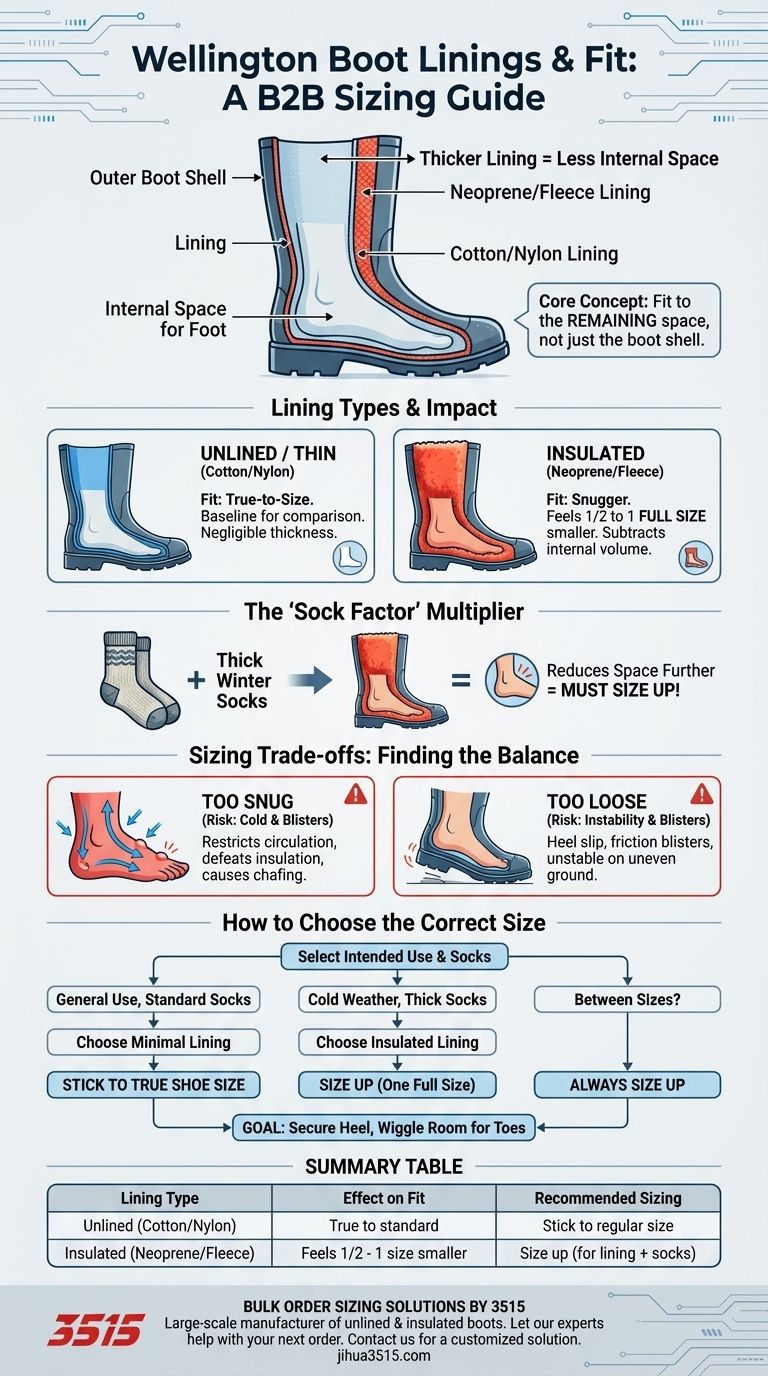
Visual Guide
Related Products
- Durable Waterproof Rain Boots | Custom Manufacturer for Wholesale & Brands
- Durable Goodyear Welt Leather Work Boots for Wholesale & Private Label
- Wholesale Durable Leather Work Boots | 8-Inch Goodyear Welt Manufacturer
- High-Traction Suede Tactical Boots Wholesale & Custom Manufacturing
- Premium Wholesale Tactical Style Safety Shoes Boots with Quick Lacing
People Also Ask
- What are the main materials for waterproof rain boots? Choose the Right Material for Durability & Comfort
- What is the overall recommendation for choosing rain boot materials? A Guide to Rubber vs. PVC
- How does boot height affect waterproofing? Choose the Right Height for Ultimate Protection
- Why are rain boots more flexible and comfortable than snow boots? The Key Differences Explained
- What are the best types of shoes for different gardening conditions? Find Your Perfect Match.