
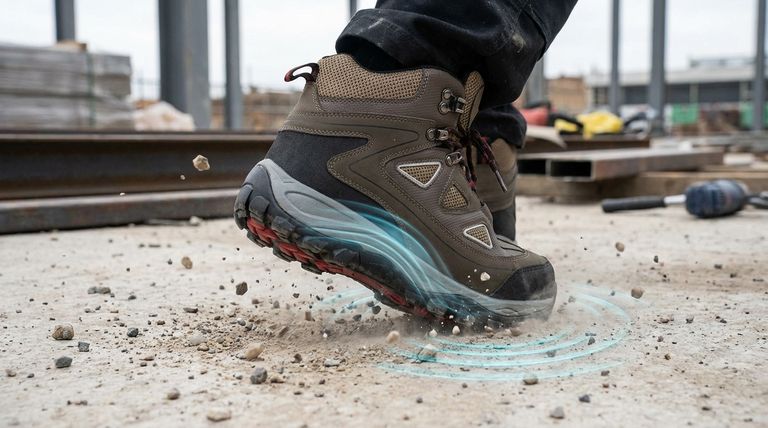
In safety footwear, the primary role of shock absorption is to protect your body from the cumulative damage of repetitive impact. It acts as a critical suspension system, cushioning every step on hard, unforgiving surfaces like concrete. This significantly reduces daily fatigue and, more importantly, helps prevent chronic, long-term injuries to your feet, joints, and back.
The core function of shock absorption extends beyond immediate comfort. It is a preventative health feature that dissipates the energy from each footfall, mitigating the micro-traumas that lead to musculoskeletal disorders over a career.
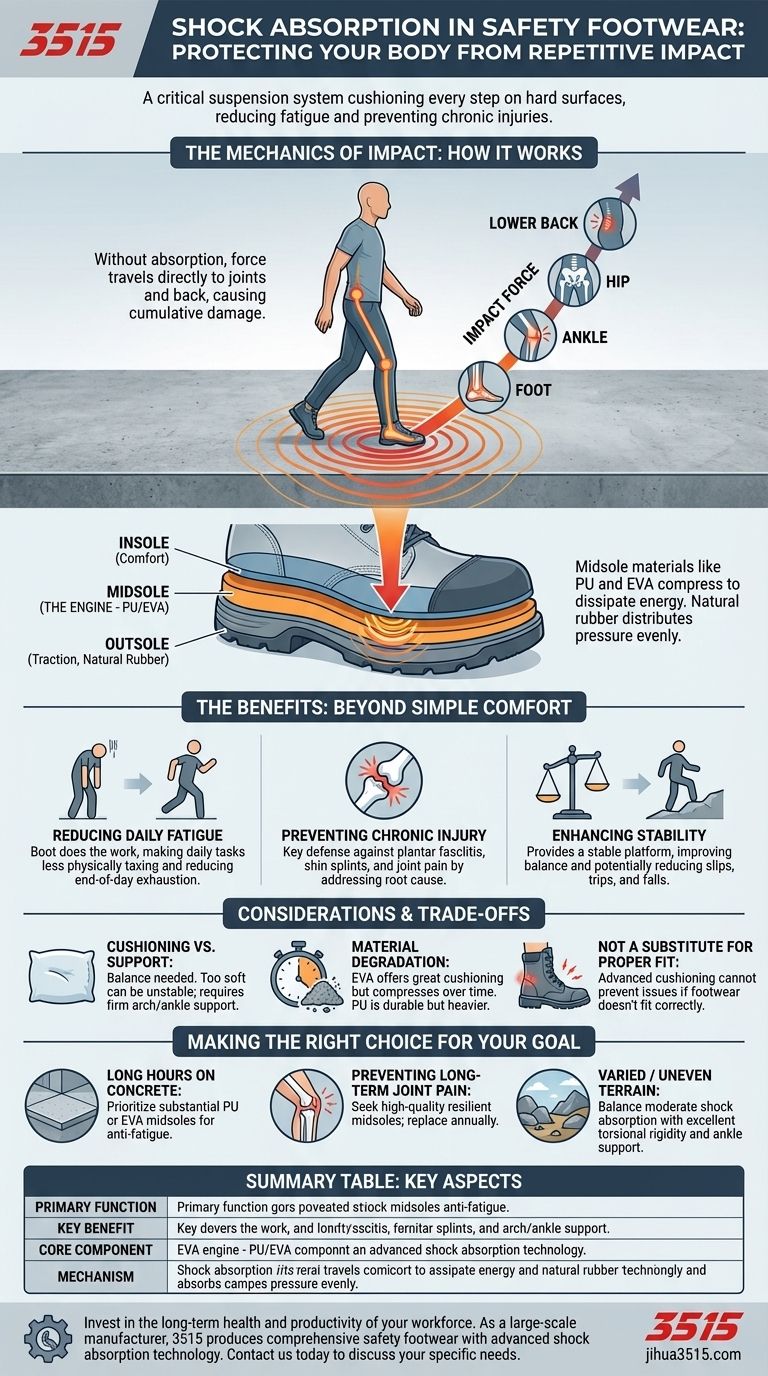
The Mechanics of Impact: How Shock Absorption Works
To understand its importance, you must first understand the forces at play. Every step you take sends a shockwave from the ground up through your body's kinetic chain.
The Journey of an Impact Force
Without adequate absorption, the force of a step travels from your foot directly into your ankles, shins, knees, hips, and lower back. Over thousands of steps a day, this repeated jarring takes a significant toll.
The Midsole as the Engine
The midsole is the heart of a boot's shock absorption system. It's a layer of material sandwiched between the insole and the outsole.
Materials like PU (polyurethane) and EVA (ethylene vinyl acetate) are engineered to compress upon impact. This compression absorbs and dissipates the shockwave's energy before it can travel further up your body.
Pressure Distribution
Effective shock absorption also involves distributing pressure evenly across the entire sole of your foot. Materials like natural rubber are highly elastic, which helps spread the force of impact rather than allowing it to concentrate on the heel or ball of the foot.
The Benefits: Beyond Simple Comfort
While a cushioned step certainly feels more comfortable, the true benefits of shock absorption are rooted in occupational health and safety.
Reducing Daily Fatigue
By absorbing the impact of each step, the boot does work that your muscles and joints would otherwise have to do. This makes daily tasks less physically taxing and is a primary factor in reducing end-of-day exhaustion.
Preventing Chronic Injury
This is the most critical benefit. Proper shock absorption is a key defense against common workplace ailments like plantar fasciitis, shin splints, and persistent joint pain in the knees and hips. It addresses the root cause of these repetitive stress injuries.
Enhancing Stability
A well-designed midsole provides a stable and predictable platform. This can improve your balance, especially as fatigue sets in, potentially reducing the risk of slips, trips, and falls.
Understanding the Trade-offs
No single feature works in isolation. Achieving effective shock absorption requires a balanced design, and there are important considerations to keep in mind.
Cushioning vs. Support
Excessively soft cushioning can sometimes feel unstable, particularly on uneven or shifting surfaces. The best safety footwear balances shock-absorbing cushion with the structural integrity needed for firm arch and ankle support.
Material Degradation
The materials that provide shock absorption do not last forever. Lighter materials like EVA offer excellent cushioning but can become permanently compressed over time, losing their effectiveness. Heavier materials like PU are often more durable but can add to the boot's overall weight.
Not a Substitute for Proper Fit
Shock absorption is only one component of a safe and comfortable boot. If the footwear does not fit correctly—providing a snug heel lock while allowing room for your toes—even the most advanced cushioning system cannot prevent blisters, chafing, or improper support.
Making the Right Choice for Your Goal
Your specific work environment and physical needs should dictate your footwear selection.
- If your primary focus is working long hours on concrete: Prioritize footwear with substantial PU or EVA midsoles specifically marketed for anti-fatigue properties.
- If your primary focus is preventing long-term joint pain: Seek boots with high-quality, resilient midsoles and consider replacing them annually as the cushioning materials degrade with use.
- If your primary focus is navigating varied or uneven terrain: Look for a boot that offers a balance of moderate shock absorption with excellent torsional rigidity and ankle support for stability.
Choosing footwear with appropriate shock absorption is a direct investment in your daily performance and long-term health.
Summary Table:
| Key Aspect | Role in Safety Footwear |
|---|---|
| Primary Function | Protects the body from cumulative damage caused by repetitive impact on hard surfaces. |
| Key Benefit | Reduces daily fatigue and helps prevent long-term injuries to feet, joints, and back. |
| Core Component | The midsole, made from materials like PU or EVA, acts as the main shock-absorbing engine. |
| Mechanism | Compresses upon impact to dissipate energy and distribute pressure evenly across the foot. |
Invest in the long-term health and productivity of your workforce. As a large-scale manufacturer, 3515 produces a comprehensive range of safety footwear with advanced shock absorption technology for distributors, brand owners, and bulk clients. Our production capabilities encompass all types of safety shoes and boots engineered to reduce fatigue and prevent injury. Contact us today to discuss your specific needs and discover how our footwear can protect your team.
Visual Guide
Related Products
- Safety Footwear Wholesale Manufacturer for Custom OEM/ODM Production
- Premium Suede Sport Safety Shoes for Wholesale & Bulk Orders
- Premium Safety Shoes with Rotating Buckle Safety Sneakers
- Premium Lightweight Safety Shoes for Wholesale & Bulk Orders
- Puncture-Resistant Velcro Safety Boots for Wholesale & Custom Manufacturing
People Also Ask
- What are the key OSHA regulations for safety footwear? Ensure Compliance & Protect Your Workforce
- Why is high-load mechanical testing equipment necessary for safety footwear? Ensure Life-Saving Compression Resistance
- What does a red rectangle with a white C letter on safety footwear mean? Essential Guide to Conductive Footwear
- What is the difference between oil resistance and slip resistance in footwear? Protect Your Boots and Your Safety
- What are the basic requirements of the ASTM F2413-05 standard? Mandatory Impact & Compression Protection


















