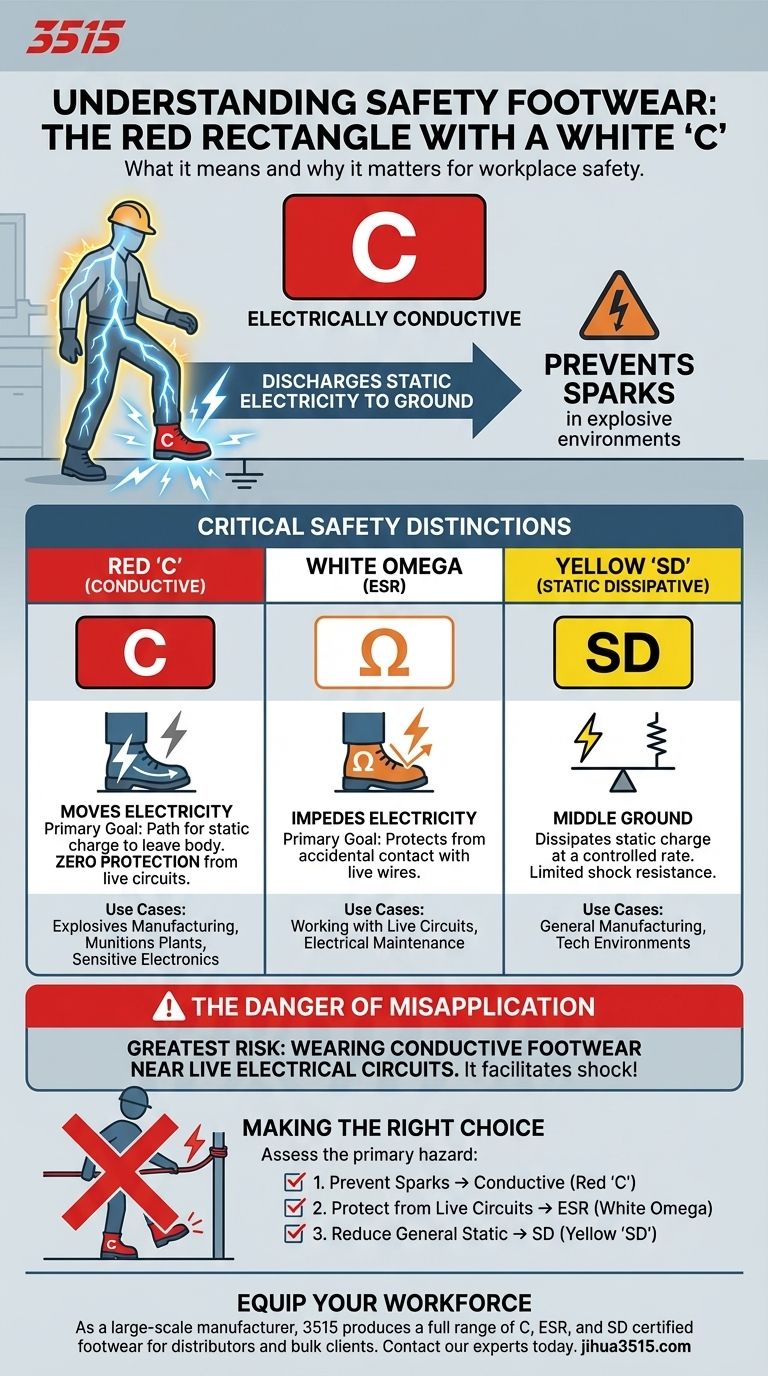
A red rectangle with a white C on your safety footwear indicates that it is electrically conductive. This type of footwear is specifically designed to discharge static electricity from your body to the ground, preventing sparks that could ignite flammable materials or damage sensitive electronics.
The symbols on safety footwear represent highly specific protections for different hazards. The red 'C' for conductive footwear is functionally the opposite of the white 'Omega' for electric shock resistance—confusing the two can have dangerous consequences.

The Purpose of Electrically Conductive (C) Footwear
Safety footwear with the red 'C' symbol serves a single, critical purpose: to mitigate the risk of static electricity.
Preventing Static Discharge
As you work and move, your body naturally builds up a static charge. In most situations, this is harmless. However, in environments with explosive vapors, flammable liquids, or sensitive electronic components, a sudden static discharge (a spark) can be catastrophic.
How It Works
Conductive footwear has a very low electrical resistance. This design creates an effective path for static electricity to flow from your body, through your boots, and safely into the ground, assuming the flooring is also properly grounded.
Common Use Cases
This type of footwear is essential in specialized fields. You will find it in high-risk areas such as explosives manufacturing, munitions plants, or rooms with highly sensitive computer equipment where a static spark could lead to disaster.
Critical Safety Distinctions
Understanding the difference between the electrical ratings on footwear is not just about compliance; it's about personal safety. Conductive footwear is part of a spectrum of protection.
The Red 'C' (Conductive)
This symbol means the boot is designed to move electricity. Its primary goal is to provide a path for static charge to leave your body. It offers zero protection from contact with live electrical circuits.
The White Omega (Electric Shock Resistant - ESR)
Conversely, a white rectangle with an orange Omega symbol (Ω) signifies Electric Shock Resistant (ESR) footwear. These boots are designed to impede the flow of electricity. Their soles are made from non-conductive materials to protect you from accidental contact with live wires.
The Yellow 'SD' (Static Dissipative)
A yellow rectangle with "SD" marks Static Dissipative footwear. This type is a middle ground between Conductive and ESR. It dissipates static charge from the body to the ground at a controlled rate but still offers a degree of resistance to electric shock, though less than ESR-rated boots.
The Danger of Misapplication
Choosing the wrong footwear for your environment can create a hazard instead of preventing one.
The Primary Risk
The greatest danger is wearing conductive (Red 'C') footwear in an environment where you might accidentally contact a live electrical source.
Because these boots are designed to conduct electricity, they will actively facilitate the flow of current through your body in the event of an electric shock.
When Not to Wear Conductive Boots
Never wear footwear marked with the red 'C' symbol when working near live or open electrical circuits. This type of boot is exclusively for controlling static electricity in hazardous locations and provides no protection against shock.
Making the Right Choice for Your Goal
Always assess the primary electrical hazard in your workplace to select the appropriate footwear.
- If your primary focus is preventing sparks in an explosive or sensitive environment: Electrically conductive (Red 'C') footwear is the correct choice to dissipate static charge.
- If your primary focus is protecting yourself from live electrical circuits: Electric shock resistant (White Omega) footwear is essential to insulate you from the ground.
- If your primary focus is reducing static in a general manufacturing or tech environment: Static dissipative (Yellow 'SD') footwear provides a balanced solution for most situations.
Always match the symbol on your footwear to the specific hazards of your environment to ensure your safety.
Summary Table:
| Footwear Symbol | Color | Meaning | Primary Use Case |
|---|---|---|---|
| Red 'C' | Red Rectangle, White 'C' | Electrically Conductive | Prevents static sparks in explosive/sensitive environments |
| White Omega (Ω) | White Rectangle, Orange Ω | Electric Shock Resistant | Protects from contact with live electrical circuits |
| Yellow 'SD' | Yellow Rectangle, Black 'SD' | Static Dissipative | Reduces static charge at a controlled rate |
Ensure your workforce is equipped with the correct safety footwear for their specific hazards. As a large-scale manufacturer, 3515 produces a comprehensive range of certified safety boots and shoes for distributors, brand owners, and bulk clients. Our production capabilities encompass all types of conductive (C), electric shock resistant (ESR), and static dissipative (SD) footwear to meet your exact safety standards.
Contact our experts today for a consultation on the right protective footwear for your application.
Visual Guide
Related Products
- Safety Footwear Wholesale Manufacturer for Custom OEM/ODM Production
- Premium Suede Sport Safety Shoes for Wholesale & Bulk Orders
- Wholesale Safety Footwear Manufacturer for Bulk & Custom OEM Orders
- Premium Safety Shoes with Rotating Buckle Safety Sneakers
- Wholesale Anti-Smash & Puncture-Proof Safety Shoes Custom Manufacturing for Brands
People Also Ask
- What are the key OSHA regulations for safety footwear? Ensure Compliance & Protect Your Workforce
- Why is high-load mechanical testing equipment necessary for safety footwear? Ensure Life-Saving Compression Resistance
- What is the difference between oil resistance and slip resistance in footwear? Protect Your Boots and Your Safety
- What are the basic requirements of the ASTM F2413-05 standard? Mandatory Impact & Compression Protection
- What are the CSA Group standards for safety footwear in Canada? A Guide to Compliance and Protection