
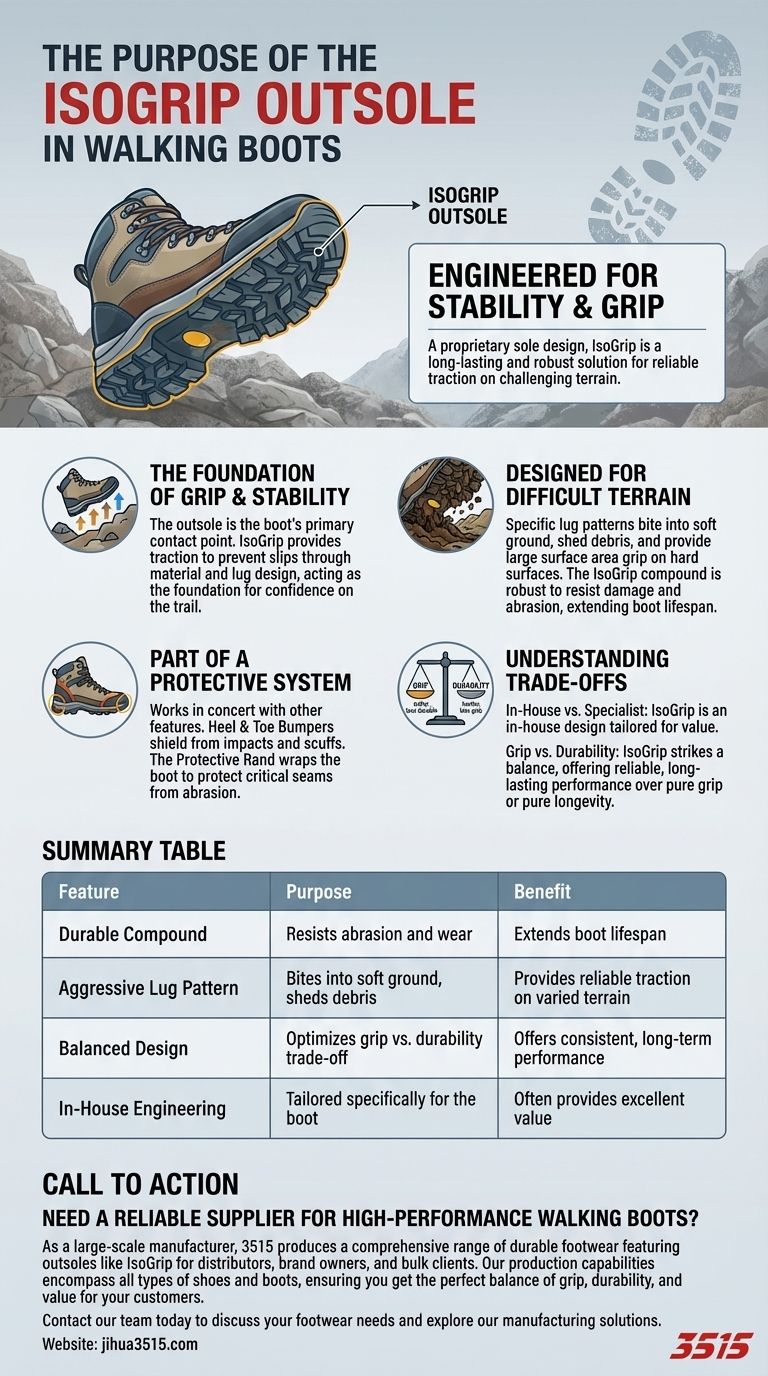
At its core, the IsoGrip outsole is a proprietary sole design engineered to be long-lasting and robust. Its specific purpose is to provide reliable stability and grip, particularly on difficult or challenging terrain where traction is critical for performance and safety.
A boot's outsole is its single most important point of contact with the ground. IsoGrip represents one manufacturer's specific in-house solution to the fundamental engineering challenge of balancing aggressive grip with long-term durability.
Deconstructing the Outsole's Role
To understand the purpose of IsoGrip, it's essential to first understand the function of any high-performance outsole on a walking boot. The outsole is the foundation for your stability and confidence on the trail.
The Foundation of Grip and Stability
The outsole is the layer of the boot that makes direct contact with the ground. Its primary job is to provide traction, preventing slips and falls.
This is achieved through a combination of the material used and the physical design of its tread, known as lugs.
Engineered for Durability
Walking on uneven, abrasive terrain subjects a boot to immense wear. The IsoGrip compound is specifically formulated to be robust, resisting damage and abrasion to extend the lifespan of the boot.
Designed for Difficult Terrain
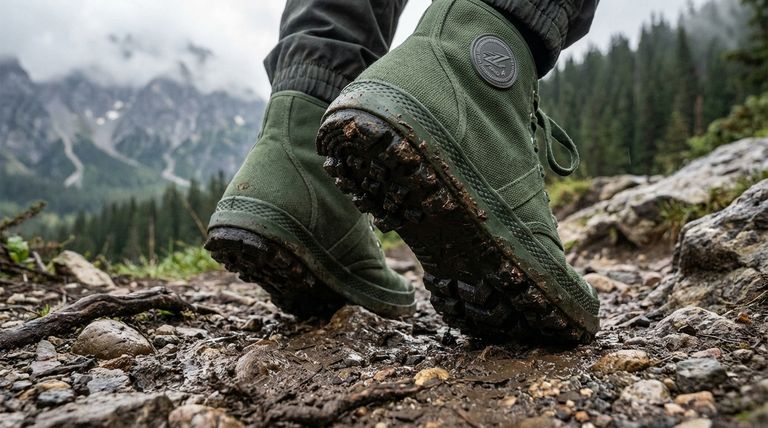
The lug pattern on an IsoGrip outsole is designed to bite into soft ground like mud and shed debris, while also providing a large enough surface area to grip effectively on hard surfaces like rock.
The Outsole as Part of a System
A high-quality walking boot is more than just its sole. The outsole works in concert with other protective features to create a durable and secure piece of footwear.
Heel and Toe Protection
Most boots designed for rough terrain include heel and toe bumpers. These are reinforced caps, often made of textured rubber, that shield your feet from impacts against rocks and roots.
They also protect the boot itself from scuffs and damage, complementing the durable nature of the outsole.
The Protective Rand
On more technical and stiffer boots, you may find a rand. This is a strip of rubber that wraps around the perimeter of the boot where the upper material meets the sole.
Its purpose is to protect this critical stitched seam from abrasion, adding another layer of resilience for use in the most challenging conditions.
Understanding the Trade-offs
While IsoGrip is designed as a high-performance solution, it's important to understand the inherent compromises in any outsole design.
In-House vs. Specialist Designs
IsoGrip is an in-house design, meaning it was developed by the boot manufacturer. This allows them to tailor the sole's characteristics specifically for their footwear, often providing excellent value.
The alternative is a boot that uses a sole from a specialist third-party company. These brands build their reputation solely on outsole performance, but this can sometimes add to the final cost of the boot.
The Grip vs. Durability Balance
The core trade-off in any outsole material is grip versus durability. A softer rubber compound provides exceptional grip, especially on wet rock, but it will wear down much faster.
A harder rubber compound offers superior longevity and can withstand years of use, but it may provide less traction. IsoGrip is engineered to strike a specific balance between these two attributes to offer reliable, long-lasting performance.
Making the Right Choice for Your Goal
When evaluating a boot with an IsoGrip outsole, consider how its features align with your intended use.
- If your primary focus is general trail walking: A boot featuring an IsoGrip sole combined with protective bumpers offers an excellent balance of grip, durability, and all-around performance.
- If your primary focus is challenging, rocky terrain: Ensure the IsoGrip sole is on a stiffer boot that also includes a protective rand to get the maximum stability and durability required.
- If your primary focus is maximum value: An in-house outsole like IsoGrip provides a purpose-built, durable solution that is often more cost-effective than third-party branded alternatives.
Ultimately, understanding how the outsole functions as part of a complete protective system empowers you to select footwear that truly matches your specific needs.
Summary Table:
| Feature | Purpose | Benefit |
|---|---|---|
| Durable Compound | Resists abrasion and wear | Extends boot lifespan |
| Aggressive Lug Pattern | Bites into soft ground, sheds debris | Provides reliable traction on varied terrain |
| Balanced Design | Optimizes grip vs. durability trade-off | Offers consistent, long-term performance |
| In-House Engineering | Tailored specifically for the boot | Often provides excellent value |
Need a reliable supplier for high-performance walking boots?
As a large-scale manufacturer, 3515 produces a comprehensive range of durable footwear featuring outsoles like IsoGrip for distributors, brand owners, and bulk clients. Our production capabilities encompass all types of shoes and boots, ensuring you get the perfect balance of grip, durability, and value for your customers.
Contact our team today to discuss your footwear needs and explore our manufacturing solutions.
Visual Guide
Related Products
- Durable Rubber Sole Outdoor Shoes Wholesale & Custom Manufacturing
- Lightweight Breathable Training Shoes for Wholesale & Custom OEM Manufacturing
- Wholesale Durable & Breathable Training Shoes for Custom Brands
- Wholesale Breathable Training Shoes Custom Athletic Footwear Manufacturer
People Also Ask
- What is the function of the sole in outdoor shoes? Find the Perfect Grip and Support
- What role do outdoor shoes and sneakers play in navigating external terrains? Engineered Stability for Every Surface
- How is AI utilized in the design of outdoor and safety footwear? Harnessing Big Data for Market-Driven Shoe Innovation
- Why is durability important when selecting outdoor shoes? A Guide to Safety & Long-Term Value
- What are the key components of outdoor shoes that affect comfort and sturdiness? A Guide to Durable, High-Performance Footwear



