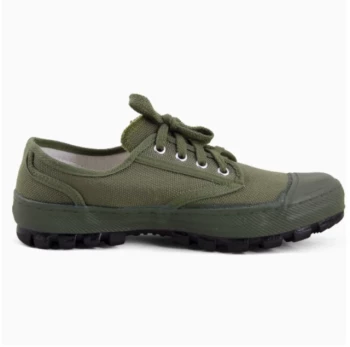
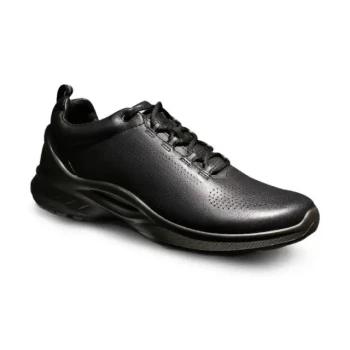
For the best combination of selection and expert guidance, the ideal place to buy walking shoes is a specialty running or walking shoe store. Unlike large chain retailers, these stores employ staff trained in gait analysis who can properly measure your feet and recommend a shoe based on your specific mechanics, ensuring a better fit and reducing the risk of discomfort or injury.
The most important factor isn't where you buy your shoes, but how you buy them. A specialty store is simply the best environment to facilitate the correct fitting process, which is the true key to finding a comfortable and supportive walking shoe.

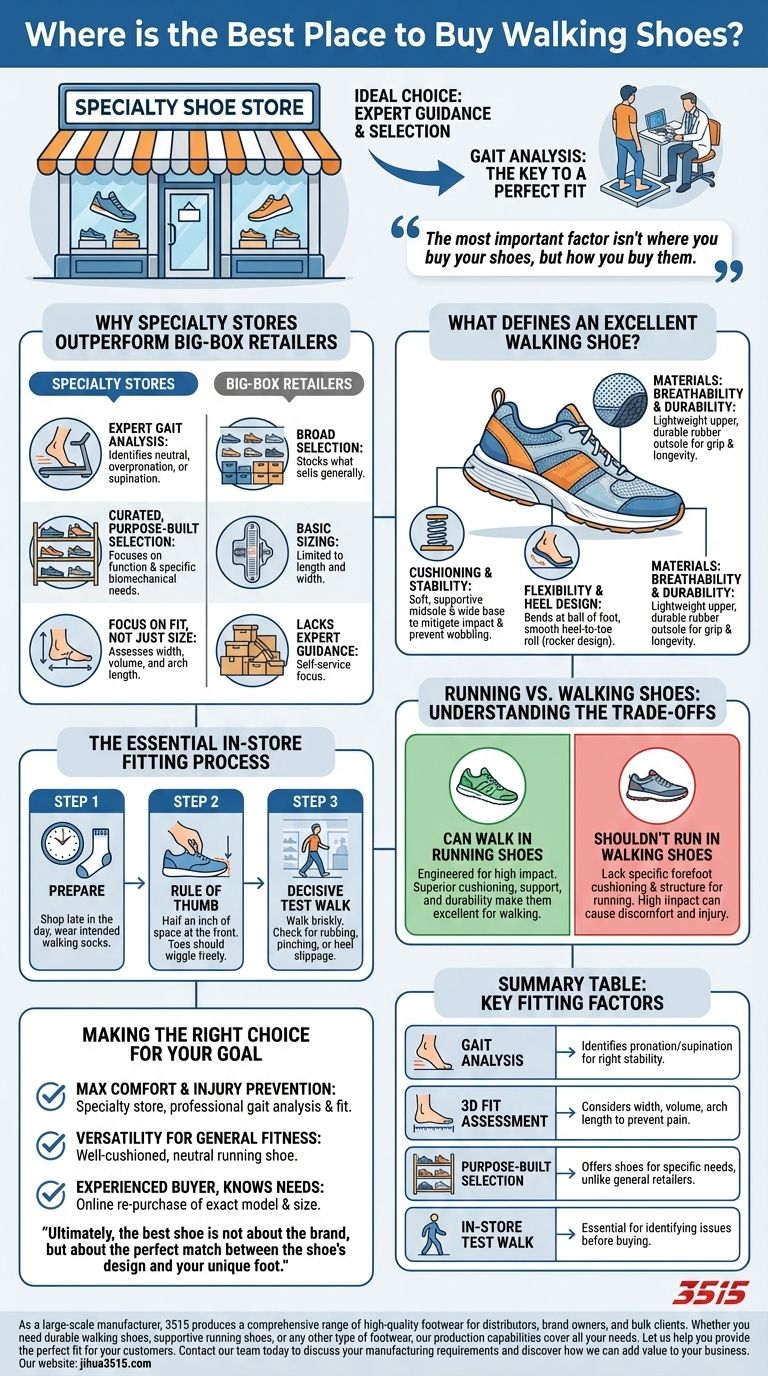
Why a Specialty Store Outperforms a Big-Box Retailer
The advantage of a specialty store comes down to one thing: a focus on function over general appeal. They are equipped to solve the specific biomechanical problem of finding the right shoe for your foot.
The Value of Expert Gait Analysis
Specialty stores often have treadmills or pressure plates to observe your gait—how your foot rolls when you walk. They can identify if you have a neutral arch, overpronation (foot rolls inward), or supination (foot rolls outward).
This analysis is critical for matching you with a shoe that provides the right kind of stability.
A Curated, Purpose-Built Selection
Big-box stores stock what sells broadly. A specialty store stocks shoes designed to address specific needs, from extra cushioning for joint protection to stability features for pronation control. Their inventory is a curated toolkit, not just a wall of popular brands.
Focus on Fit, Not Just Size
An expert fitter understands that shoe size is just a starting point. They will assess your foot's width, volume, and arch length to find a shoe that fits you three-dimensionally, preventing common issues like blisters, bruised toenails, and arch pain.
What Defines an Excellent Walking Shoe?
While the fit is personal, the best walking shoes share several key technical characteristics. Many of the best "walking" shoes are technically running shoes prized for their superior cushioning and support.
The Foundation: Cushioning and Stability
A great walking shoe has a soft yet supportive midsole to mitigate the impact of each step. It should also have a wide, stable base to prevent your foot from wobbling and to provide confidence on uneven surfaces.
The Mechanics: Flexibility and Heel Design
The shoe must bend easily at the ball of your foot, not in the middle of the arch. This allows for a natural, smooth walking motion. Look for a low heel profile or a "rocker" design, where the sole is curved to help your foot roll effortlessly from heel to toe.
The Materials: Breathability and Durability
The upper part of the shoe should be made of lightweight, breathable materials to keep your feet cool and dry. A durable rubber outsole is also crucial for providing reliable grip and ensuring the shoe lasts for hundreds of miles.
The Essential In-Store Fitting Process
To ensure you leave with the right pair, follow a simple but effective process inside the store. This checklist is your best tool for making a successful purchase.
Prepare for Your Visit
Shop for shoes late in the day, as your feet naturally swell and will be at their largest. Crucially, wear the same type of socks you plan to walk in, as sock thickness can significantly alter a shoe's fit. Avoid 100% cotton socks, which retain moisture.
The "Rule of Thumb" Test
Once a shoe is on, you should have at least a finger's width (or about half an inch) of space between your longest toe and the front of the shoe. Your toes should have enough room to wiggle freely without being constricted.
The Decisive Test Walk
The only way to truly know is to walk. Take a brisk walk around the store for a few minutes. Pay close attention to any rubbing, pinching, or heel slippage. The shoe should feel comfortable and secure right out of the box.
Understanding the Trade-offs: Running Shoes vs. Walking Shoes
It's a common point of confusion, but the distinction is important for both performance and injury prevention.
Why You Can Walk in Running Shoes
Running shoes are engineered to handle the high-impact forces of running. This means their cushioning, support, and durability are more than sufficient for the lower impact of walking, making them an excellent and often superior choice.
Why You Shouldn't Run in Walking Shoes
Shoes designed exclusively for walking typically lack the specific forefoot cushioning and overall structural integrity needed for running. Using them for running can lead to discomfort and increase your risk of injury, as they are not built to absorb those higher impact forces.
Making the Right Choice for Your Goal
Your final decision should be guided by your specific needs and priorities.
- If your primary focus is maximum comfort and injury prevention: Prioritize a visit to a specialty shoe store for a professional gait analysis and an expert-guided fitting.
- If your primary focus is versatility for general fitness: A well-cushioned, neutral running shoe is an outstanding choice that will serve you perfectly for walking and other activities.
- If you are an experienced buyer and know your exact needs: Buying online can be a good option for price, but only if you are re-purchasing the exact same model and size that you know works for you.
Ultimately, the best shoe is not about the brand, but about the perfect match between the shoe's design and your unique foot.
Summary Table:
| Fitting Factor | Why It Matters |
|---|---|
| Gait Analysis | Identifies pronation/supination to match you with the right stability features. |
| 3D Fit Assessment | Considers width, volume, and arch length, not just shoe size, to prevent blisters and pain. |
| Purpose-Built Selection | Offers shoes designed for specific needs, unlike general retailers' broad inventory. |
| In-Store Test Walk | Essential for identifying rubbing, pinching, or heel slippage before you buy. |
As a large-scale manufacturer, 3515 produces a comprehensive range of high-quality footwear for distributors, brand owners, and bulk clients. Whether you need durable walking shoes, supportive running shoes, or any other type of footwear, our production capabilities cover all your needs. Let us help you provide the perfect fit for your customers. Contact our team today to discuss your manufacturing requirements and discover how we can add value to your business.
Visual Guide
Related Products
- Durable Rubber Sole Outdoor Shoes Wholesale & Custom Manufacturing
- Wholesale Durable Camouflage Canvas Shoes with High-Traction Cleated Rubber Sole
- Premium Suede Sport Safety Shoes for Wholesale & Bulk Orders
- Wholesale Comfortable Business Casual Shoes Custom Manufacturing
- Premium Lightweight Safety Shoes for Wholesale & Bulk Orders
People Also Ask
- What is the function of the sole in outdoor shoes? Find the Perfect Grip and Support
- What role do outdoor shoes and sneakers play in navigating external terrains? Engineered Stability for Every Surface
- How is AI utilized in the design of outdoor and safety footwear? Harnessing Big Data for Market-Driven Shoe Innovation
- Why is durability important when selecting outdoor shoes? A Guide to Safety & Long-Term Value
- What are the key components of outdoor shoes that affect comfort and sturdiness? A Guide to Durable, High-Performance Footwear