
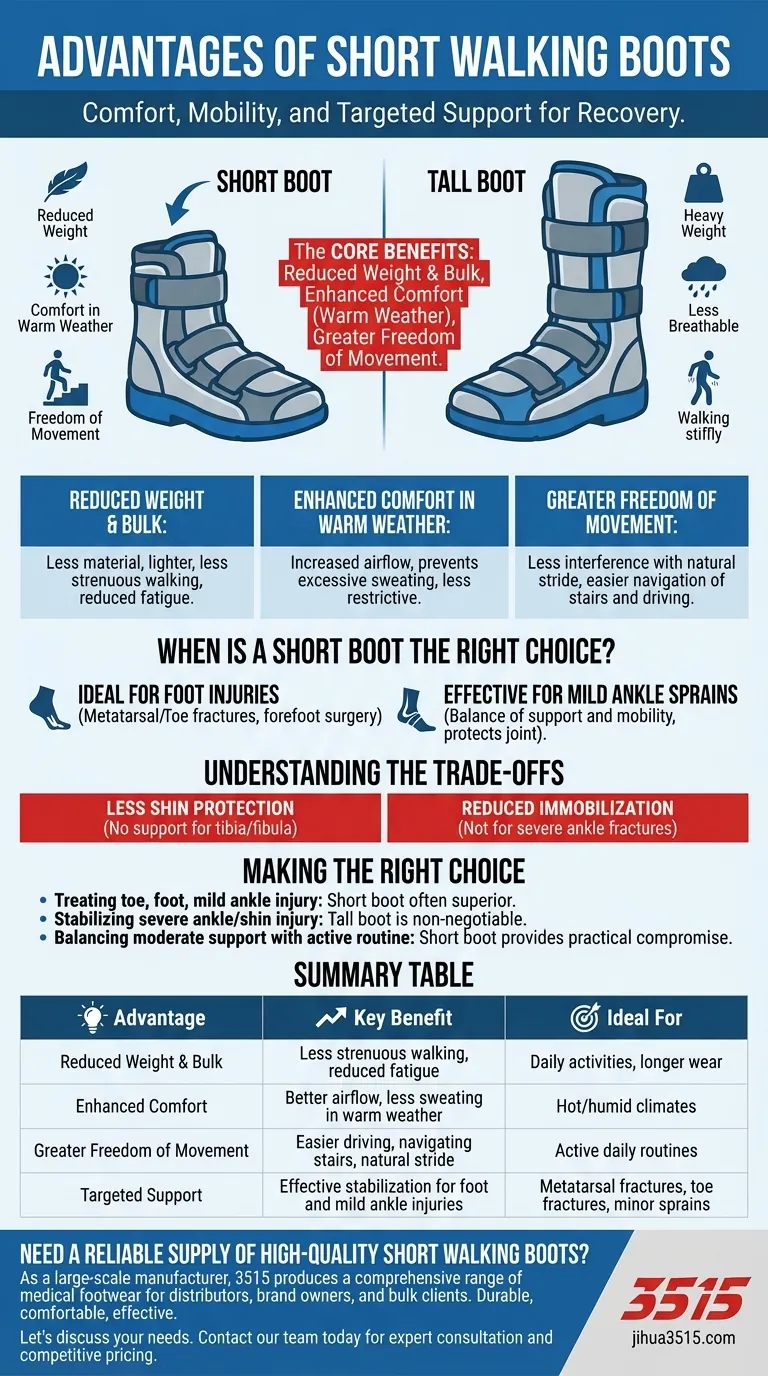
In short, the primary advantages of short walking boots are their reduced weight, lower bulk, and increased comfort, especially in warmer weather. This design makes them significantly easier to manage for daily activities like walking and driving, providing necessary support for foot injuries and mild ankle sprains without the cumbersome nature of a taller boot.
A short walking boot is fundamentally a compromise. It trades the maximum immobilization of a tall boot for superior comfort and mobility, making it the ideal choice for less severe injuries located at or below the ankle.
The Core Benefits of a Shorter Design
A short medical walking boot, sometimes called a fracture boot, is engineered to provide support while minimizing its impact on your daily life. The benefits stem directly from its lower-profile construction.
Reduced Weight and Bulk
A shorter boot uses less material, making it significantly lighter and less bulky than its taller counterpart. This reduction in weight makes walking less strenuous and reduces fatigue over the course of a day.
Enhanced Comfort in Warm Weather
With less of the leg covered, a short boot is far more comfortable in hot or humid conditions. The increased airflow helps prevent the excessive sweating and discomfort often associated with taller, more restrictive boots.
Greater Freedom of Movement
The most practical advantage is the increased ease of movement. Short boots interfere less with your natural stride and make navigating stairs, getting into a car, and even driving (with the uninjured foot) much simpler.
When Is a Short Boot the Right Choice?
While any walking boot aims to protect an injury, the short boot is specifically suited for certain conditions where maximum immobilization of the entire lower leg is unnecessary.
Ideal for Foot Injuries
Short boots are highly effective for injuries to the foot itself. This includes conditions like metatarsal fractures, toe fractures, or recovery from forefoot surgery. They provide the necessary stability to the foot while leaving the shin and calf free.
Effective for Mild Ankle Sprains
For minor to moderate ankle sprains, a short boot offers a good balance of support and mobility. It protects the joint from external impact and reduces painful movements, facilitating a more comfortable healing process.
Understanding the Trade-offs
Choosing a short boot means accepting certain limitations. Its advantages in comfort and mobility come at the cost of protection for the upper ankle and lower leg.
Less Protection for the Shin
The most obvious trade-off is the lack of protection for the tibia and fibula. A short boot offers no support for shin injuries and is inappropriate for severe ankle fractures that require stabilization of the entire lower leg.
Reduced Immobilization
While a benefit for minor injuries, the reduced immobilization is a significant drawback for more severe issues. Injuries that require the ankle and lower leg to be held completely rigid to heal properly demand the support of a tall boot.
Making the Right Choice for Your Recovery
Ultimately, the decision between a short and tall walking boot should always be guided by a medical professional. However, understanding their intended purposes can help you have a more informed discussion.
- If your primary focus is treating a toe, foot, or mild ankle injury: A short boot is often the superior choice for its comfort and ease of use in daily life.
- If your primary focus is stabilizing a severe ankle fracture or a shin injury: A tall boot is non-negotiable, as it provides the necessary immobilization for proper healing.
- If your primary focus is balancing moderate support with an active daily routine: A short boot provides a practical compromise for less severe sprains and strains.
Choosing the correct medical device is a critical step in ensuring a safe and efficient recovery.
Summary Table:
| Advantage | Key Benefit | Ideal For |
|---|---|---|
| Reduced Weight & Bulk | Less strenuous walking, reduced fatigue | Daily activities, longer wear |
| Enhanced Comfort | Better airflow, less sweating in warm weather | Hot/humid climates |
| Greater Freedom of Movement | Easier driving, navigating stairs, natural stride | Active daily routines |
| Targeted Support | Effective stabilization for foot and mild ankle injuries | Metatarsal fractures, toe fractures, minor sprains |
Need a reliable supply of high-quality short walking boots?
As a large-scale manufacturer, 3515 produces a comprehensive range of medical footwear for distributors, brand owners, and bulk clients. Our production capabilities ensure durable, comfortable, and effective short walking boots that support patient recovery.
Let's discuss your specific needs and how we can support your business. Contact our team today for expert consultation and competitive pricing.
Visual Guide
Related Products
- Wholesale Lightweight Tactical Boots with Dial Closure OEM & Bulk Orders
- Wholesale Lightweight Tactical Boots Custom Manufacturer for Desert & Combat Use
- Premium Wholesale Tactical Style Safety Shoes Boots with Quick Lacing
- Lightweight Breathable Training Shoes for Wholesale & Custom OEM Manufacturing
- Wholesale Safety Boots Manufacturer for Custom & Private Label Orders
People Also Ask
- What are the important features of tactical boots for military operators? A Guide to Mission-Critical Footwear
- What are some key features of top-tier tactical boots for 2023? Find the Perfect Boot for Your Mission
- Who commonly uses tactical boots? From Military to Outdoor Enthusiasts
- How do sturdy uppers enhance tactical boots? Boosting Ankle Stability and Protection
- What are the weight and breathability characteristics of the boots? Find the Perfect Fit for Your Mission

















