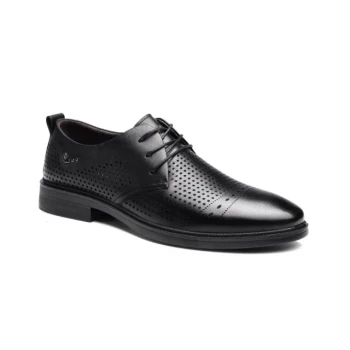
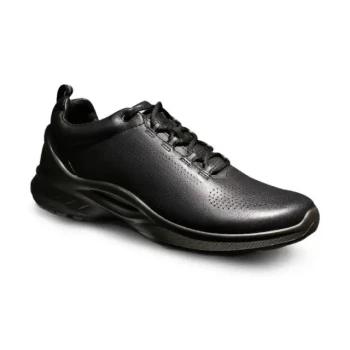
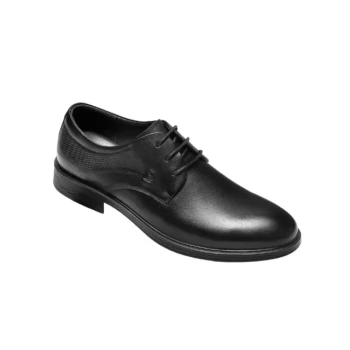
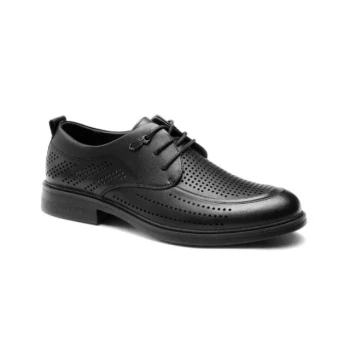
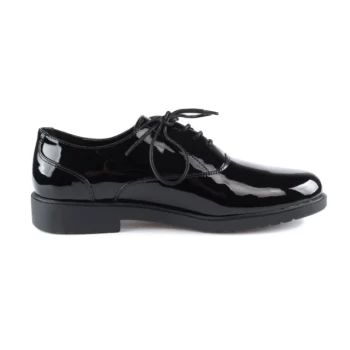
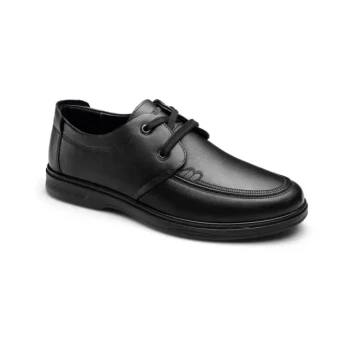
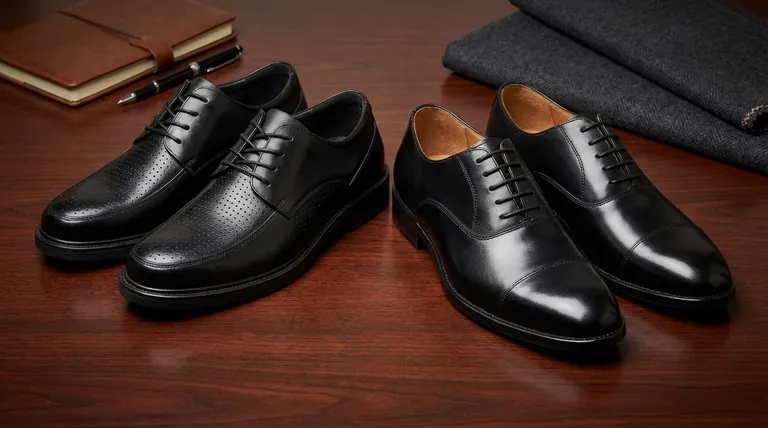
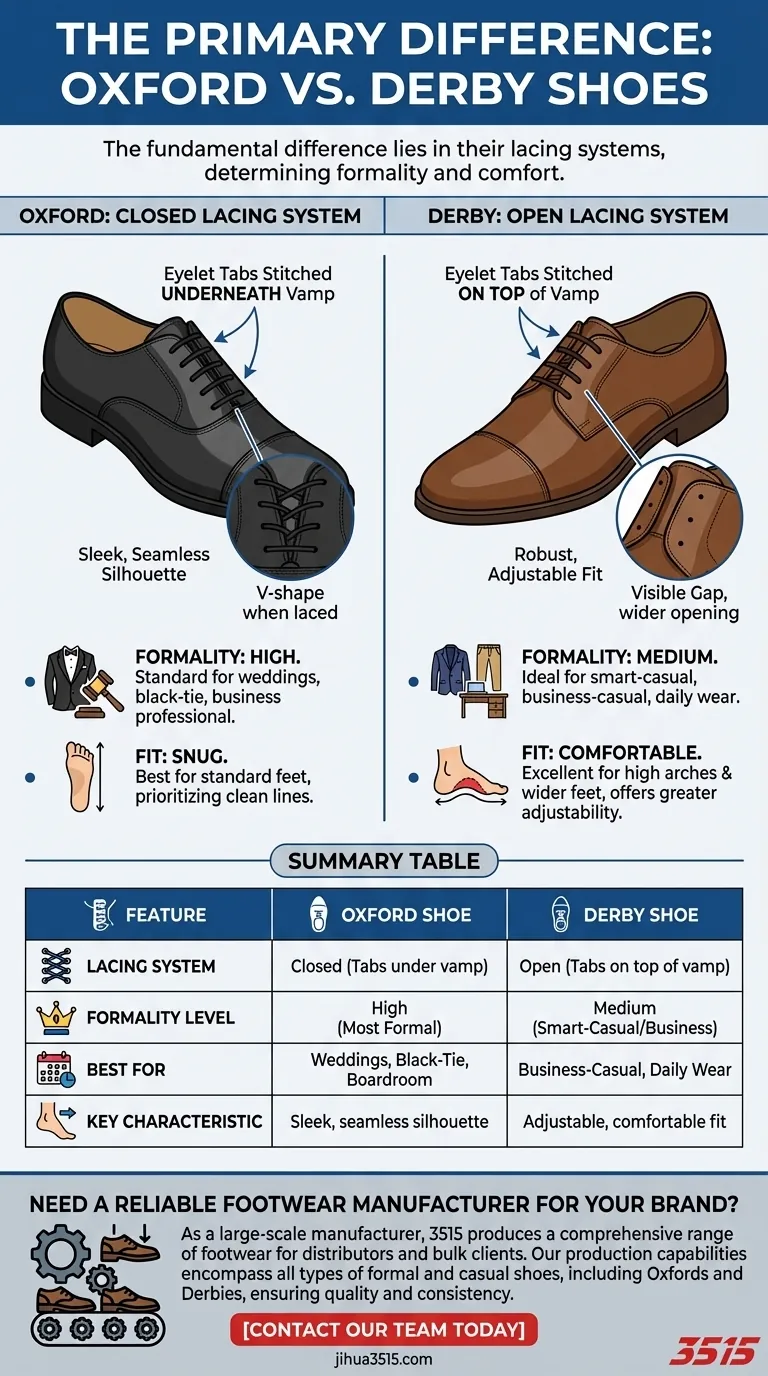
The fundamental difference between an Oxford and a Derby shoe is its lacing system. Oxfords feature a "closed" lacing system where the eyelet tabs are stitched underneath the shoe's upper, creating a sleek, seamless look. Derbies use an "open" system, with the eyelet tabs stitched on top, making them appear more robust and offering greater adjustability.
The closed lacing of an Oxford makes it the standard for formal wear due to its clean silhouette. In contrast, the Derby's open lacing provides superior comfort and versatility, positioning it as the ideal choice for smart-casual and business settings.
Deconstructing the Lacing System
The distinction between these two iconic shoe styles seems minor, but it fundamentally alters their appearance, fit, and appropriate use. It all comes down to how the quarters—the pieces of leather containing the eyelet tabs—are attached to the vamp, which is the front section of the shoe.
The Oxford's Closed Lacing
In an Oxford, the eyelet tabs are sewn underneath the vamp.
This construction creates a "V" shape where the laces meet and pulls the shoe's quarters snugly together, leaving no gap. The result is a clean, uninterrupted line across the top of the shoe.
Think of it as an integrated, built-in system that prioritizes a sleek and elegant silhouette above all else.
The Derby's Open Lacing
In a Derby, the eyelet tabs are sewn on top of the vamp.
This design creates two distinct flaps of leather that sit over the shoe's tongue. When laced, these flaps do not fully close, leaving a visible gap.
This construction is less streamlined but allows the quarters to open much wider, like a pair of doors.
The Practical Implications: Formality vs. Comfort
This single structural difference has significant consequences for when and how you should wear each shoe. The choice is a direct trade-off between ultimate formality and practical comfort.
Formality: The Sleekness of the Oxford
The Oxford's closed lacing system creates a slim, formal profile. This makes it the undisputed champion for the most formal occasions.
It is the go-to shoe for business professional attire, black-tie events, weddings, and any situation demanding the highest level of dress.
Comfort & Fit: The Versatility of the Derby
The Derby's open lacing allows for significantly more give and adjustability across the instep.
This makes it a far more comfortable option for individuals with high arches or wider feet, as it alleviates pressure on the top of the foot. Its robust nature and comfortable fit position it as a workhorse for business-casual and smart-casual environments.
Common Pitfalls to Avoid
Choosing the wrong shoe for the context can undermine your entire look. Understanding these common misconceptions is key to making the right decision.
Mistake: Viewing Derbies as "Just Casual"
While less formal than an Oxford, a Derby is not a strictly casual shoe. It expertly occupies the vast and important space between casual sneakers and formal Oxfords.
A well-made leather Derby is perfectly appropriate for most business settings, dinners, and events that call for smart-casual attire.
Mistake: Assuming Oxfords Are "Always Better"
"Better" is entirely dependent on context and fit. An Oxford is only the better choice if the occasion demands peak formality.
Wearing an ill-fitting Oxford because you believe it's superior is a mistake. Comfort and proper fit are paramount, and a Derby is often the more practical and comfortable choice for all-day wear.
Making the Right Choice for Your Needs
Base your decision on the demands of the occasion and the requirements of your foot.
- If your primary focus is formal events (weddings, boardrooms, black-tie): The clean, uninterrupted lines of the Oxford are the unambiguous choice.
- If your primary focus is business-casual or daily office wear: The Derby offers a perfect balance of professionalism and all-day comfort.
- If you have a high instep or wider feet: The Derby's adjustable open-lacing system will almost certainly provide a more comfortable fit.
Understanding this single design difference empowers you to choose the right shoe for both the occasion and your personal comfort.
Summary Table:
| Feature | Oxford Shoe | Derby Shoe |
|---|---|---|
| Lacing System | Closed (eyelet tabs under vamp) | Open (eyelet tabs on top of vamp) |
| Formality Level | High (Most Formal) | Medium (Smart-Casual/Business) |
| Best For | Weddings, Black-Tie, Business Professional | Business-Casual, Daily Wear, Wider Feet |
| Key Characteristic | Sleek, seamless silhouette | Adjustable, comfortable fit |
Need a reliable footwear manufacturer for your brand?
As a large-scale manufacturer, 3515 produces a comprehensive range of footwear for distributors, brand owners, and bulk clients. Our production capabilities encompass all types of formal and casual shoes, including Oxfords and Derbies, ensuring quality, consistency, and style for your customers.
Contact our team today to discuss your manufacturing needs and get a quote.
Visual Guide
Related Products
- Wholesale Leather Derby Shoes Manufacturer | Customizable Business & Dress Footwear
- Classic Leather Derby Dress Shoes Wholesale & Custom Manufacturing
- Wholesale Women's Leather Derby Shoes Custom Factory Production
- Wholesale Breathable Perforated Leather Derby Dress Shoes for Custom Brands
- Wholesale Perforated Comfort Dress Shoes | Custom Derby Shoe Manufacturer
People Also Ask
- What is the main difference between Derby Shoes and Oxford Shoes? It's All in the Lacing.
- What are the features and appropriate occasions for wearing derby shoes? A Guide to Versatile Style
- How do Derby shoes fit into business casual attire? Master the Perfect Balance of Professional Style
- What historical figure is associated with the Derby shoe? The Earl of Derby's Comfort Revolution
- How do Derby shoes differ from Oxfords? A Guide to Choosing the Right Shoe for Any Occasion