The recommended method for cleaning leather shoes is a systematic process that begins with removing loose dirt using a dry brush, followed by a gentle cleaning with a dedicated leather cleaner or mild saddle soap. After application, all soap residue must be wiped away, and the shoes should be allowed to air dry naturally. This foundational cleaning prepares the leather for conditioning, which is essential for maintaining its health and flexibility.
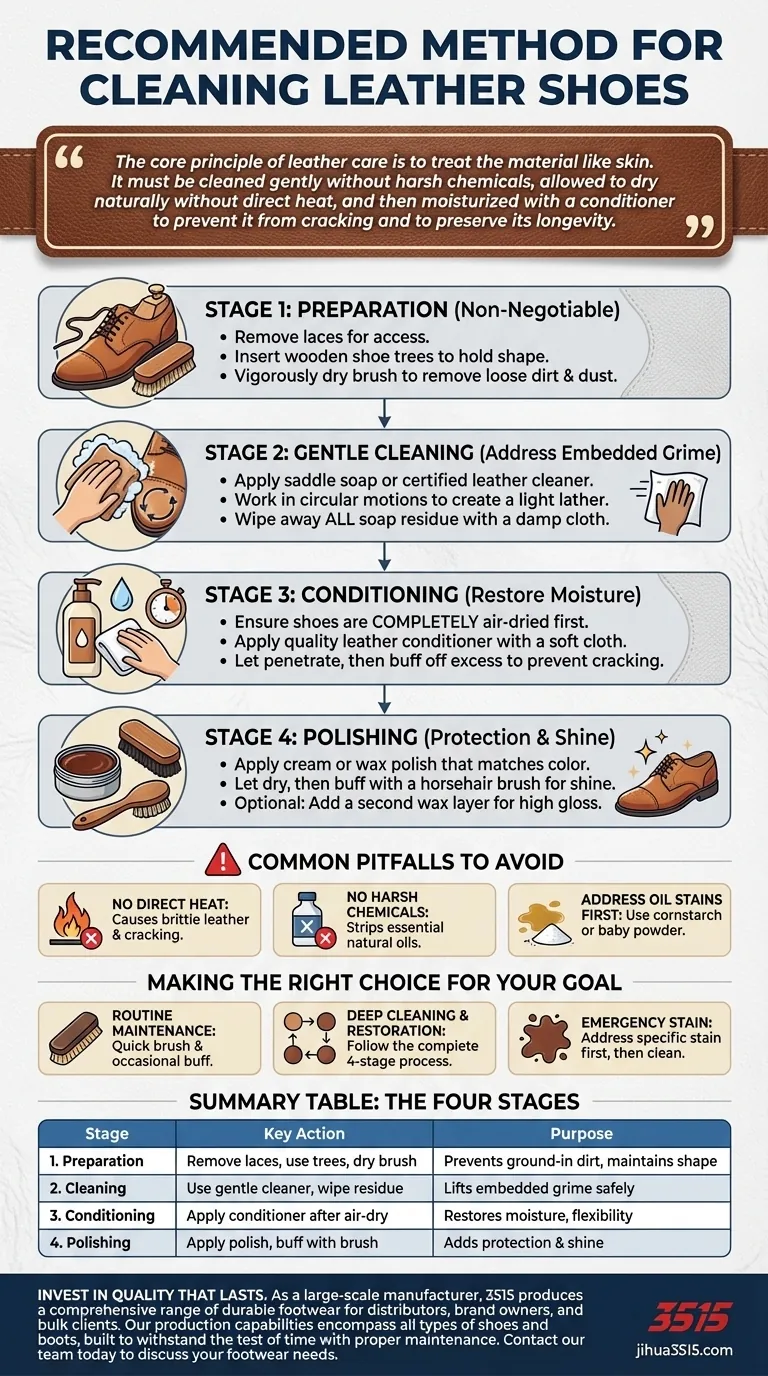
The core principle of leather care is to treat the material like skin. It must be cleaned gently without harsh chemicals, allowed to dry naturally without direct heat, and then moisturized with a conditioner to prevent it from cracking and to preserve its longevity.
The Four Stages of Proper Leather Care
Properly cleaning leather is not a single action but a sequence of steps. Each stage serves a distinct purpose, from initial preparation to final protection, ensuring your shoes not only look good but also last for years.
Stage 1: Preparation is Non-Negotiable
Before applying any cleaner, you must prepare the shoe's surface. This prevents grinding existing dirt deeper into the leather.
First, remove the laces to ensure you can clean the tongue and eyelet areas thoroughly. Insert wooden shoe trees to help the shoe hold its natural shape during the cleaning process.
Next, use a horsehair brush to vigorously brush the entire shoe. The goal is to dislodge and remove all loose surface dirt, dust, and grime. Pay special attention to the welt and seams where dirt often collects.
Stage 2: The Gentle Cleaning Process
With the surface dirt gone, you can now address embedded grime and scuffs. The key is to use a cleaner that is strong enough to work but gentle enough not to strip the leather's natural oils.
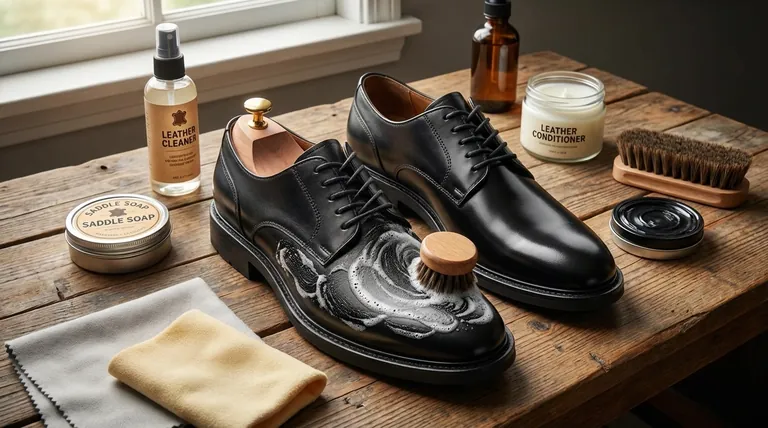
Apply a small amount of saddle soap or a certified leather cleaner to a soft-bristled brush or a clean cloth.
Work the cleaner into the leather one small section at a time using gentle, circular motions. This creates a light lather that lifts the dirt out of the pores.
Once a section is clean, use a separate damp, clean microfiber cloth to wipe away all soap residue. Leaving residue behind can dry out the leather over time.
Stage 3: Conditioning to Restore Moisture
Cleaning, while necessary, can remove some of the leather's essential moisture. Conditioning is the critical step that replenishes these oils, keeping the leather soft, flexible, and resistant to cracking.
After the shoes have completely air-dried, apply a quality leather conditioner with a soft cloth. Use circular motions to cover every part of the shoe, including the tongue and sole edges.
Let the conditioner penetrate the leather for several minutes (or as directed by the product), then buff off any excess with a clean, dry cloth. This step should be performed every few months, regardless of deep cleaning.
Stage 4: Polishing for Protection and Shine
Polishing is the final stage that adds a layer of protection against minor scuffs and water while also providing the desired level of shine.
Apply a cream or wax polish that matches your shoe color using a soft cloth or applicator brush. Use small, circular motions to work the polish into the leather.
Let the polish dry for a few minutes, then use a clean horsehair brush to buff the entire shoe. The friction and heat from brushing bring out the shine. For a high-gloss, "mirror" shine, you can add another layer of wax polish, sprinkle a few drops of water, and buff again with a clean chamois.
Common Pitfalls to Avoid
Following the right steps is just as important as avoiding the wrong ones. Certain common mistakes can cause irreversible damage to leather.
The Danger of Direct Heat
Never use a direct heat source like a blow-dryer, radiator, or direct sunlight to speed up the drying process.
Intense heat cooks the leather's natural oils and proteins, causing it to become brittle and crack. Always let your shoes air dry naturally in a well-ventilated area at room temperature.
The Problem with Harsh Chemicals
Leather is a porous, natural material. Using household cleaners, vinegar, or other harsh chemicals can strip its essential oils and damage the finish.
Always stick to products specifically formulated for leather, such as saddle soap and designated leather cleaners and conditioners.
Handling Specific Stains First
For targeted issues like oil or grease, address them before you begin the general cleaning process.
Cover a fresh grease stain with cornstarch or baby powder and let it sit for a few hours. The powder will absorb the oil, after which you can brush it off and proceed with the standard cleaning routine.
Making the Right Choice for Your Goal
Your cleaning regimen should match the condition of your shoes and your goal.
- If your primary focus is routine maintenance: A quick brushing to remove daily dirt and an occasional buffing is sufficient, with a full conditioning every few months.
- If your primary focus is deep cleaning and restoration: Follow the complete four-stage process to remove deep-seated grime, restore moisture, and rebuild the protective finish.
- If your primary focus is an emergency stain: Address the specific stain (like oil) first using the appropriate technique before proceeding with a general clean.
Properly caring for your leather shoes is a simple routine that transforms them from a disposable item into a lasting investment.
Summary Table:
| Stage | Key Action | Purpose |
|---|---|---|
| 1. Preparation | Remove laces, use shoe trees, brush off dirt | Prevents dirt from being ground in; maintains shape |
| 2. Cleaning | Use saddle soap/leather cleaner with a soft cloth | Gently lifts embedded grime without damaging leather |
| 3. Conditioning | Apply leather conditioner after shoes air dry | Restores moisture to prevent cracking and maintain flexibility |
| 4. Polishing | Apply cream/wax polish and buff with a brush | Adds a protective layer and brings out the shine |
Invest in Quality That Lasts
Proper care is essential for longevity, but it starts with quality craftsmanship. As a large-scale manufacturer, 3515 produces a comprehensive range of durable footwear for distributors, brand owners, and bulk clients. Our production capabilities encompass all types of shoes and boots, built to withstand the test of time with proper maintenance.
Contact our team today to discuss your footwear needs and discover how our manufacturing expertise can provide reliable, long-lasting products for your customers.
Visual Guide
Related Products
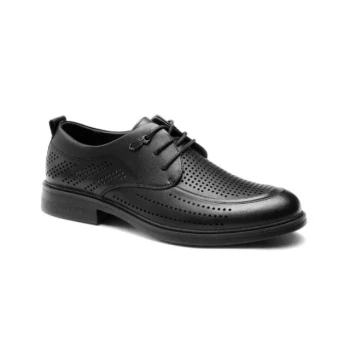
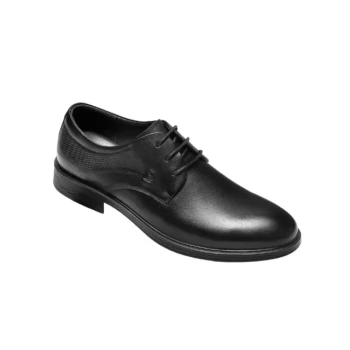
- Classic Leather Derby Dress Shoes Wholesale & Custom Manufacturing
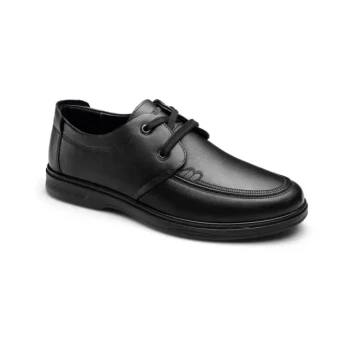
- Factory Direct Wholesale Leather Comfort Shoes with Dial Closure
- Wholesale Comfort Leather Business Shoes with Dial Lacing System
- Custom Manufactured Air Cushion Leather Business Shoes for Wholesale
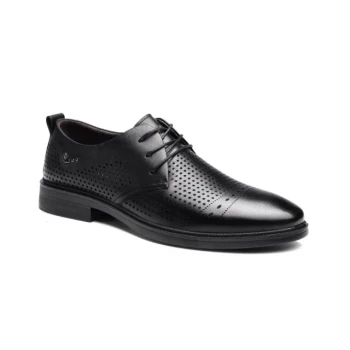
- Wholesale Breathable Perforated Leather Derby Shoes with Modern Comfort Sole
People Also Ask
- How often should leather dress shoes be cleaned and polished? A 3-Tier Care Guide for Longevity
- How can you remove salt stains from leather dress shoes? Save Your Shoes with a Simple Vinegar Solution
- What are the basic steps to clean leather dress shoes? A Guide to Preserving Your Investment
- How should you dry wet leather dress shoes? A Step-by-Step Guide to Save Your Investment
- What historical figure is associated with the Derby shoe? The Earl of Derby's Comfort Revolution