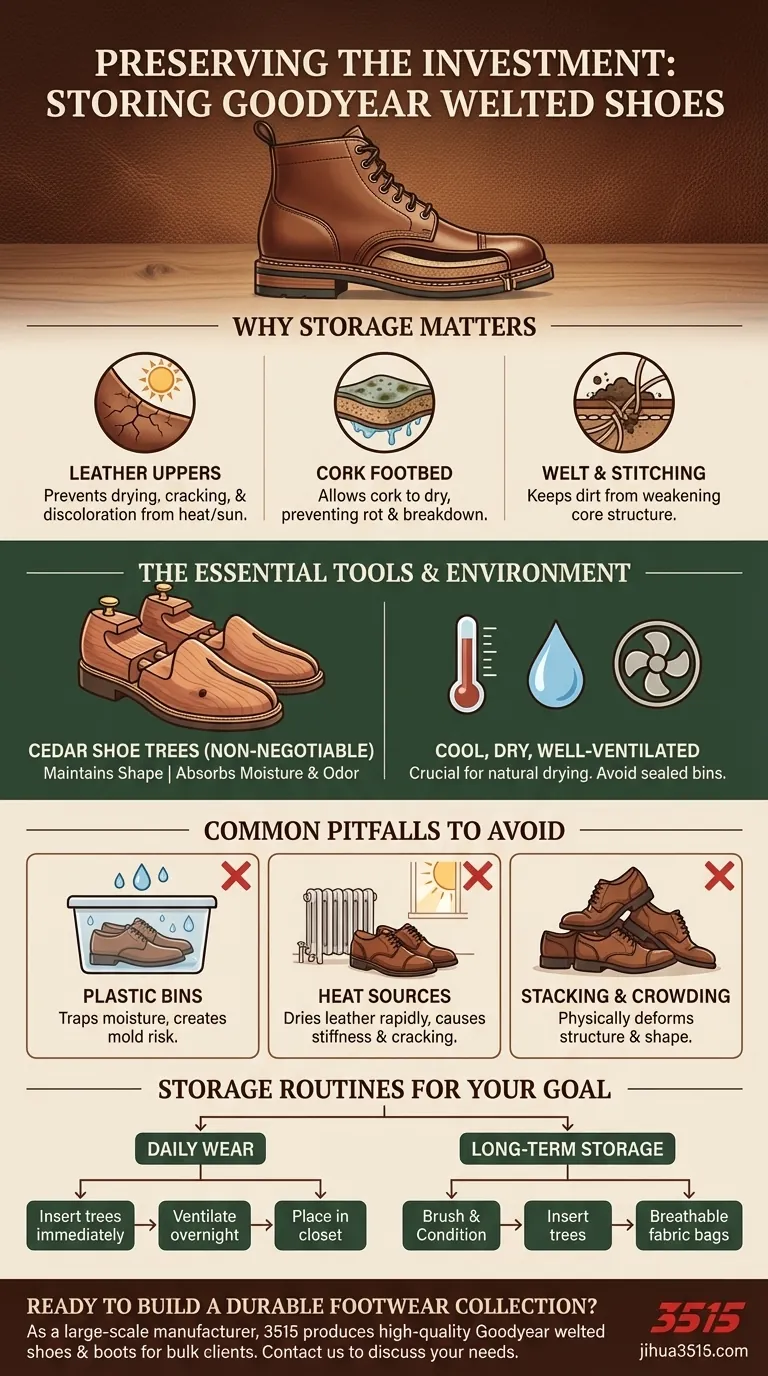
Properly storing Goodyear welted shoes is about creating the right environment to preserve their structure, leather, and longevity. The essentials are using cedar shoe trees to maintain shape and absorb moisture, keeping them in a cool, dry place with good air circulation, and avoiding direct sunlight or extreme heat.
The goal of storage is not simply to put your shoes away, but to actively help them recover after a day's wear. For a Goodyear welted shoe, this means managing moisture and preserving the structural integrity that makes it uniquely comfortable and durable.
Why Storage is a Critical Part of Shoe Care
Goodyear welted shoes are an investment in a specific type of construction designed to mold to your foot and last for decades. Your storage habits directly determine whether you realize that value.
Protecting the Leather Uppers
Leather is a natural skin that is highly susceptible to its environment.
Direct sunlight or high heat will dry out the natural oils in the leather, leading to brittleness, cracking, and discoloration. Conversely, excessive humidity can promote mold growth.
Maintaining the Cork Footbed
A key feature of a Goodyear welted shoe is the layer of cork filling between the insole and outsole. This is what gradually molds to the shape of your foot, creating a custom fit.
Improper storage in a damp environment can compromise this cork layer, preventing it from drying properly and potentially leading to rot or breakdown over time.
Preserving the Welt and Stitching
The welt is the strip of leather stitched to the upper and the sole, creating the shoe's durable and resoleable foundation.
Dirt and grime can accumulate in the channel of this stitching. Storing shoes without cleaning them allows this debris to work its way into the threads, potentially weakening the shoe's core structure.
The Essential Tools for Proper Storage
You only need a few key items to create an ideal storage environment that protects your investment.
Cedar Shoe Trees are Non-Negotiable
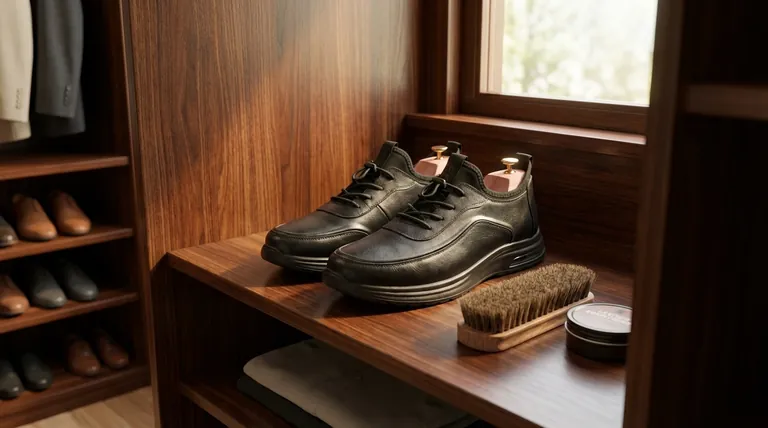
A pair of unfinished cedar shoe trees is the single most important tool for shoe preservation.
They perform two critical functions. First, they provide the internal structure needed to smooth out creases that form during wear. Second, the cedar naturally absorbs moisture and odor from the leather and lining, which is essential for allowing the shoe to dry out completely.
The Need for Air Circulation
Your shoes need to breathe. After absorbing moisture all day, the leather and internal components must be allowed to dry naturally.
This is why you should never stack your shoes or keep them in sealed plastic containers. Place them on a rack or shelf with space around them to allow for adequate airflow.
Common Pitfalls to Avoid
Many common storage methods can actively damage high-quality footwear. Understanding what to avoid is as important as knowing what to do.
The Problem with Plastic Bins
While convenient, sealed plastic containers are the worst environment for leather shoes. They trap moisture completely, creating a humid microclimate that can lead to mold and break down the shoe’s natural materials.
The Danger of Heat Sources
Never store your shoes near a radiator, heating vent, or in direct sunlight from a window. Intense, direct heat will rapidly extract moisture from the leather, causing it to become stiff and prone to cracking.
The Impact of Stacking and Crowding
Piling shoes on top of each other or cramming them into a tight space will physically deform their structure. This permanently misshapes the heel counters and uppers, undoing the benefits of their careful construction.
Making the Right Choice for Your Goal
Your storage routine should adapt slightly based on how frequently you wear the shoes.
- If your primary focus is daily wear: Insert shoe trees the moment you take the shoes off and leave them in an open, well-ventilated area overnight before placing them in a closet.
- If your primary focus is long-term storage: First, brush the shoes thoroughly and apply a leather conditioner. Then, insert shoe trees and place them in breathable fabric shoe bags to protect them from dust.
A consistent and thoughtful storage routine is the key to ensuring your Goodyear welted shoes last a lifetime.
Summary Table:
| Storage Consideration | Key Action | Why It Matters |
|---|---|---|
| Moisture Control | Use cedar shoe trees | Absorbs moisture, prevents mold, maintains shape |
| Environment | Store in cool, dry, well-ventilated area | Protects leather and cork footbed from damage |
| Common Pitfalls | Avoid plastic bins, heat sources, and stacking | Prevents deformation, cracking, and structural failure |
Ready to build a durable footwear collection? As a large-scale manufacturer, 3515 produces a comprehensive range of high-quality Goodyear welted shoes and boots for distributors, brand owners, and bulk clients. Our expertise ensures your products are built to last. Contact us today to discuss your footwear needs and benefit from our extensive production capabilities.
Visual Guide
Related Products
- Durable Goodyear Welt Leather Work Boots for Wholesale & Private Label
- Wholesale Durable Leather Work Boots | 8-Inch Goodyear Welt Manufacturer
- Wholesale Durable & Breathable Training Shoes for Custom Brands
- Wholesale Breathable Training Shoes Custom Athletic Footwear Manufacturer
- Custom OEM Training Shoes Wholesale Manufacturer Durable & Breathable
People Also Ask
- What is the difference between full-grain and top-grain leather? Premium Material Guide for Boot Manufacturers
- What are the advantages of leather as an upper material for work boots? Unmatched Durability & Custom Comfort
- Why is it important to waterproof leather work boots? Protect Your Investment and Performance
- How should new leather work boots be broken in? A Guide to Comfort and Durability
- What are the advantages of leather uppers in work boots? Unmatched Durability & Protection