While often considered the gold standard in footwear, Goodyear welted shoes are not always the best option. The ideal choice is not determined by a single construction method but by your specific priorities for durability, comfort, climate, and style. A Goodyear welt offers exceptional longevity and repairability, but these benefits come with distinct trade-offs.
The Goodyear welt excels at long-term durability and the ability to be resoled multiple times, making it a sustainable investment. However, this robust construction introduces trade-offs in flexibility and initial comfort that may make other options superior for specific situations.
What Defines a Goodyear Welted Shoe?
To understand if a Goodyear welt is right for you, you must first understand its fundamental structure. It's a method of shoe construction, not a style.
The Core Construction
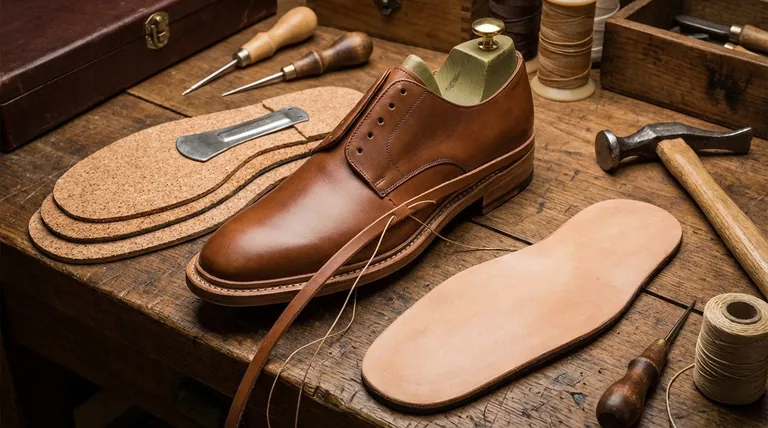
The process involves a strip of leather—the welt—which is stitched to the shoe's upper. A separate stitch then attaches this welt to the outsole. This creates a durable, secure bond between the upper and the sole of the shoe.
The Path to Custom Comfort
Between the insole and the outsole, a cavity is filled with a layer of granulated cork. Over time and with wear, this cork filling compresses and molds to the unique shape of your foot, creating a custom-like fit. A steel shank is also embedded in the midsole, providing essential arch support and structural integrity.
The Benefit of Unmatched Repairability
Because the outsole is stitched to the welt and not directly to the upper, a cobbler can easily remove the old sole and stitch on a new one. This process, known as resoling, can be done multiple times, dramatically extending the life of the footwear far beyond that of other constructions.
The Real-World Performance Breakdown
The unique construction of a Goodyear welted shoe translates into specific performance characteristics you will feel and experience.
Superior Durability
The two-level stitching and robust materials create an exceptionally durable shoe. This construction is built to withstand years of hard wear, making it a common choice for high-quality dress shoes and work boots.
Moderate Water Resistance
The welt acts as a small barrier between the upper and the outsole, offering better water resistance than construction methods where the upper is stitched directly through to the interior (like a Blake stitch). However, it is not waterproof. For consistently wet conditions, a rubber sole or a sealed waterproof construction is more practical.
The Required Break-in Period
The inherent stiffness of the multiple layers—the insole, cork, midsole, and outsole—means most Goodyear welted shoes require a break-in period. They may feel rigid at first but will become progressively more comfortable as the leather softens and the cork bed conforms to your foot.
Understanding the Trade-offs
No single construction method is perfect for every scenario. The strengths of the Goodyear welt are balanced by clear compromises.
Flexibility vs. Structure
A Goodyear welted shoe is inherently less flexible out of the box than a Blake-stitched or cemented shoe. The additional layers that provide durability also create rigidity. If your priority is a shoe that feels flexible and lightweight from the very first wear, other methods may be preferable.
Profile vs. Bulk
The external welt adds a visible, and often wider, profile to the shoe. This creates a sturdy, substantial look. In contrast, construction methods like Blake stitching allow for a much closer-trimmed, sleeker, and more low-profile silhouette.
Investment vs. Initial Cost
The labor-intensive process and quality materials make Goodyear welted shoes more expensive upfront. While their longevity can make them more economical over a lifetime of use, the initial purchase price is a significant factor to consider.
How to Apply This to Your Goal
Use these principles to align your purchase with your primary objective.
- If your primary focus is maximum longevity and sustainability: The unmatched repairability of a Goodyear welt makes it the superior choice.
- If your primary focus is immediate comfort and a sleek profile: A Blake-stitched shoe may be a more suitable option for its flexibility and close-cut sole.
- If your primary focus is performance in wet weather or varied terrain: Prioritize a shoe with a durable rubber sole, which is a more critical factor than the welt construction itself.
Ultimately, understanding the core principles of shoe construction empowers you to invest in footwear that truly serves your purpose.
Summary Table:
| Feature | Goodyear Welted Shoes | Key Takeaway |
|---|---|---|
| Durability | Exceptional | Can be resoled many times, offering long-term value. |
| Comfort | Requires break-in | Less flexible initially; cork molds to your foot over time. |
| Water Resistance | Moderate | The welt provides a barrier, but it is not waterproof. |
| Profile | Bulkier | The external welt adds a sturdy, substantial look. |
| Best For | Longevity & Repairability | Ideal if your priority is a long-lasting, sustainable investment. |
Still Unsure Which Shoe Construction is Right for Your Needs?
As a large-scale manufacturer, 3515 produces a comprehensive range of footwear for distributors, brand owners, and bulk clients. Our production capabilities encompass all types of shoes and boots, including Goodyear welted, Blake stitched, and cemented constructions.
Let us help you make the perfect choice. We can guide you on the best construction method to meet your specific priorities for durability, comfort, and style.
Contact our experts today to discuss your project and discover how we can deliver the quality and value your customers demand.
Visual Guide

Related Products
- Durable Goodyear Welt Leather Work Boots for Wholesale & Private Label
- Wholesale Durable Leather Work Boots | 8-Inch Goodyear Welt Manufacturer
- Wholesale Durable & Breathable Training Shoes for Custom Brands
- Wholesale Breathable Training Shoes Custom Athletic Footwear Manufacturer
- Custom OEM Training Shoes Wholesale Manufacturer Durable & Breathable
People Also Ask
- What is the difference between full-grain and top-grain leather? Premium Material Guide for Boot Manufacturers
- What are the advantages of leather as an upper material for work boots? Unmatched Durability & Custom Comfort
- Why is it important to waterproof leather work boots? Protect Your Investment and Performance
- How should new leather work boots be broken in? A Guide to Comfort and Durability
- What are the advantages of leather uppers in work boots? Unmatched Durability & Protection