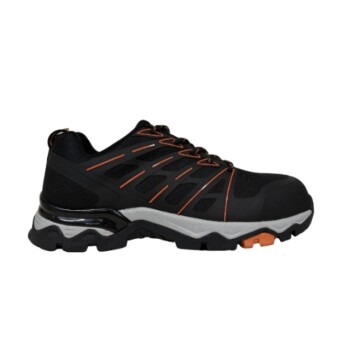
Standardized measurement tools are critical because they replace subjective estimation with repeatable, objective data regarding protective performance. These precision instruments capture essential metrics—such as slip resistance, compression limits, and impact absorption—to rigorously verify that safety footwear meets established benchmarks. By utilizing these tools, manufacturers can generate clinical-grade evidence of a shoe’s ability to prevent workplace injuries and reduce muscle fatigue.
The core value of standardization lies in verifiability. It moves quality assurance from a visual inspection to a data-driven science, ensuring that every pair of shoes provides a consistent, quantified level of protection and support.
The Role of Objective Data in Safety
To understand the importance of these tools, one must look beyond simple compliance. The goal is to establish a "clinical-grade" understanding of how a shoe interacts with physical hazards.
Eliminating Variability
Subjective quality checks differ from person to person. Standardized tools provide a repeatable means of verification.
This ensures that a safety test performed today yields the same result as one performed next month, regardless of the operator.
Quantifying Protection
You cannot manage what you cannot measure. Precision instruments allow manufacturers to accurately capture data on specific protective functions.
Key metrics include slip resistance (friction coefficients), compression limits (crush resistance), and impact absorption. These data points serve as the concrete proof that a shoe can withstand industrial hazards.
Evidence-Based Fatigue Reduction
Safety is not just about preventing acute accidents; it is about preventing wear and tear on the human body.
By establishing objective benchmarks, manufacturers can prove a shoe's ability to minimize muscle fatigue. This shifts the narrative from marketing claims to proven performance.
Precision in Ergonomics and Fit
While the primary focus is often on external hazards, the internal fit is equally critical for safety. Standardized tools are now evolving to map the anatomy of the foot itself.
High-Precision Foot Scanning
Modern quality assessment utilizes non-contact measurement devices to capture accurate anatomical parameters.
These tools measure foot length, width, the Clarke angle (longitudinal arch), and the Heel angle (transverse arch).
Designing for Real Anatomy
Data from these scans allows for the creation of shoe lasts—the forms upon which shoes are molded—that accurately reflect diverse foot structures.
This ensures a precise fit between the industrial safety shoe and the wearer, which is essential for stability. A proper fit prevents sliding within the boot and ensures the protective elements align correctly with the foot.
Understanding the Trade-offs
While standardized tools offer immense precision, they are not a complete substitute for human factors.
Laboratory vs. Real-World Feel
A tool can measure the compression limit of a toe cap, but it cannot fully quantify the subjective feeling of "comfort" over a 12-hour shift.
As noted in practical guidelines, feet swell throughout the day. A boot that passes a scanner test for "precise fit" might still feel too tight if the standardized measurement does not account for physiological changes like end-of-day swelling.
The Limits of Static Measurement
Scanning tools often capture static parameters. However, workplace movement is dynamic.
While tools quantify the Clarke angle, they may not fully predict how that arch support feels during complex movements. Quality control must balance high-tech data with practical user trials to ensure true safety.
Making the Right Choice for Your Goal
When evaluating safety footwear or implementing quality control processes, rely on the specific data needs of your environment.
- If your primary focus is Hazard Resistance: Prioritize footwear verified by tools that measure slip resistance, compression limits, and impact absorption to ensure clinical-grade protection.
- If your primary focus is Long-Term Ergonomics: Look for manufacturers using high-precision scanning to define the Clarke and Heel angles, ensuring the shoe structure accommodates foot deformities and reduces fatigue.
True safety is achieved when objective data validates physical design.
Summary Table:
| Metric Category | Measurement Tool Purpose | Key Data Points Captured |
|---|---|---|
| Physical Hazards | Verifying protective limits against external impact | Slip resistance, compression limits, impact absorption |
| Ergonomics | Mapping foot anatomy for superior stability | Foot length/width, Clarke angle, Heel angle |
| Durability | Ensuring consistent performance over time | Material fatigue, wear resistance, structural integrity |
| Fit Science | Developing shoe lasts for diverse foot types | 3D anatomical parameters, transverse arch support |
Partner with 3515 for Data-Driven Footwear Excellence
As a large-scale manufacturer serving professional distributors and brand owners, 3515 utilizes precision measurement tools and clinical-grade evidence to guarantee the safety of every pair. Our comprehensive production capabilities cover all footwear types, from our flagship Safety Shoes and Tactical Boots to professional Dress & Formal shoes and high-performance Sneakers.
Why choose 3515?
- Verified Protection: Rigorous testing for slip, compression, and impact resistance.
- Anatomical Precision: High-precision scanning for superior ergonomics and reduced muscle fatigue.
- Bulk Manufacturing Expertise: Scalable solutions for global distributors and large-scale brands.
Contact Us Today to Discuss Your Bulk Requirements
References
- Neil J. Meigh, Evelyne Rathbone. Effects of supervised high-intensity hardstyle kettlebell training on grip strength and health-related physical fitness in insufficiently active older adults: the BELL pragmatic controlled trial. DOI: 10.1186/s12877-022-02958-z
This article is also based on technical information from 3515 Knowledge Base .
Related Products
- Premium Suede Sport Safety Shoes for Wholesale & Bulk Orders
- Premium Lightweight Safety Shoes for Wholesale & Bulk Orders
- Wholesale Anti-Smash & Puncture-Proof Safety Shoes Custom Manufacturing for Brands
- Premium KPU Injection Athletic Style Safety Shoes
- Premium Safety Shoes with Rotating Buckle Safety Sneakers
People Also Ask
- What industries have specific OSHA footwear requirements? Ensure Compliance & Protect Your Workforce
- What are the primary functions of professional safety shoes? Maximize Safety in Water Supply Confined Spaces
- What role do specialized safety shoes play in preventing falls? Engineering Stability in Industrial Environments
- How do gait analysis algorithms ensure accuracy in footwear? Master Step Length Precision for Boots & Sneakers
- What are the main components of safety shoes? A Guide to Protective Footwear Design