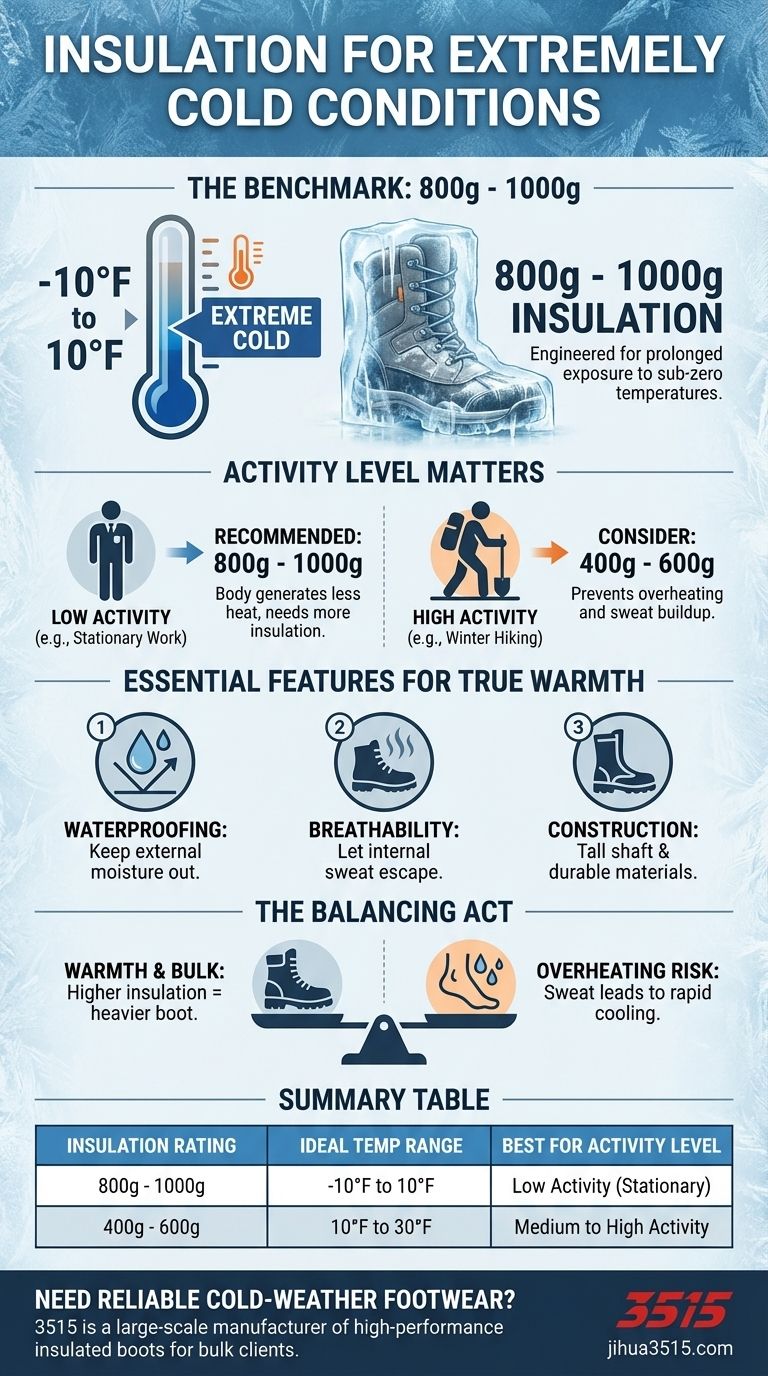
For extremely cold conditions, the recommended insulation rating for footwear is typically 800 to 1000 grams. This level of insulation is specifically engineered to provide warmth in temperatures ranging from approximately -10°F to 10°F, especially during periods of prolonged exposure.
The gram rating of insulation is a critical starting point, but true effectiveness is determined by the balance between that rating, your personal activity level, and moisture management. Simply choosing the highest number is not always the best strategy.
Decoding Insulation: What the Gram Rating Really Means
Understanding the context behind insulation ratings is key to ensuring your feet remain warm and safe. The number refers to the weight of the insulation material in a square meter of fabric.
The Standard for Extreme Cold: 800g - 1000g
An insulation rating of 800g to 1000g is the industry benchmark for footwear intended for extremely cold environments.
This range is designed to trap a significant amount of air, which your body then heats, creating a thermal barrier against sub-zero temperatures.
The Critical Role of Activity Level
The effectiveness of any insulation is directly tied to how much heat your body is generating.
Boots with 800g to 1000g of insulation are often ideal for low-activity individuals, such as security personnel or utility workers who may be standing or sitting for long periods. Their bodies generate less heat, requiring more help from their gear.
Comparing Insulation Levels
For context, 400g insulation is a common choice for moderate cold (around 10°F to 30°F) when paired with medium activity levels, like outdoor maintenance or active forestry tasks.
An active person generates substantial body heat, which can lead to overheating and sweating in a heavily insulated boot, even in freezing temperatures.
Beyond the Grams: Factors That Define True Warmth
The insulation rating is only one part of the equation. Several other features are non-negotiable for performance in extreme cold.
Waterproofing is Essential
Wet feet lose heat exponentially faster than dry feet. A boot for cold conditions must have a reliable waterproof membrane to keep external moisture like snow and slush out.
The Importance of Breathability
Just as you must keep external water out, you must let internal moisture—sweat—escape. Quality boots use technology that allows perspiration to evaporate, keeping your socks and feet dry from the inside.
Construction and Materials
The overall build of the boot contributes significantly to its warmth and durability. A taller boot shaft (e.g., 9 inches or more) provides better coverage and protection from deep snow. Materials like leather and durable Cordura fabric offer protection against the elements.
Understanding the Trade-offs
Choosing the right insulation involves balancing competing factors. There is no single "best" boot for every situation.
Warmth vs. Bulk
Higher insulation ratings mean a heavier and bulkier boot. While a 1000g boot is exceptionally warm for stationary use, its weight and stiffness can cause fatigue during long-distance walking or hiking.
The Risk of Overheating
The most common mistake is choosing too much insulation for your activity level. If your feet begin to sweat, that moisture will get trapped. The moment you stop moving, that moisture will rapidly cool, leaving your feet colder and more vulnerable than if you had worn less insulation.
Making the Right Choice for Your Goal
Select your insulation based on a realistic assessment of your environment and how much you'll be moving.
- If your primary focus is stationary work in extreme cold (e.g., ice fishing, security): Target the 800g to 1000g insulation range to compensate for low heat generation.
- If your primary focus is active work in extreme cold (e.g., winter hiking, snow removal): Consider a lower rating like 400g to 600g and pair it with a quality wool sock system to prevent overheating and sweat buildup.
- If you will face wet conditions like snow or slush: Prioritize a boot with a proven waterproof and breathable membrane as your most critical feature.
Choosing the right insulation is about matching the gear to the mission, not just the thermometer.
Summary Table:
| Insulation Rating | Ideal Temperature Range | Best For Activity Level |
|---|---|---|
| 800g - 1000g | -10°F to 10°F | Low Activity (e.g., stationary work) |
| 400g - 600g | 10°F to 30°F | Medium to High Activity (e.g., winter hiking) |
Need Reliable Cold-Weather Footwear for Your Team?
As a large-scale manufacturer, 3515 produces a comprehensive range of insulated boots for distributors, brand owners, and bulk clients. Our production capabilities encompass all types of shoes and boots, including models engineered with the precise insulation, waterproofing, and breathability detailed in this article.
Contact us today for a consultation to discuss your specific needs and discover how we can deliver durable, high-performance footwear to keep your workforce safe and productive in extreme conditions.
Visual Guide