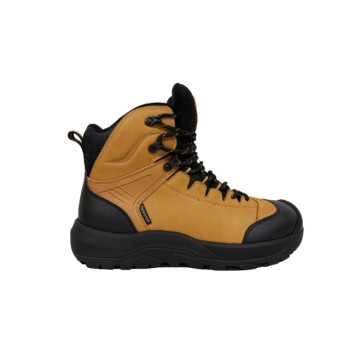
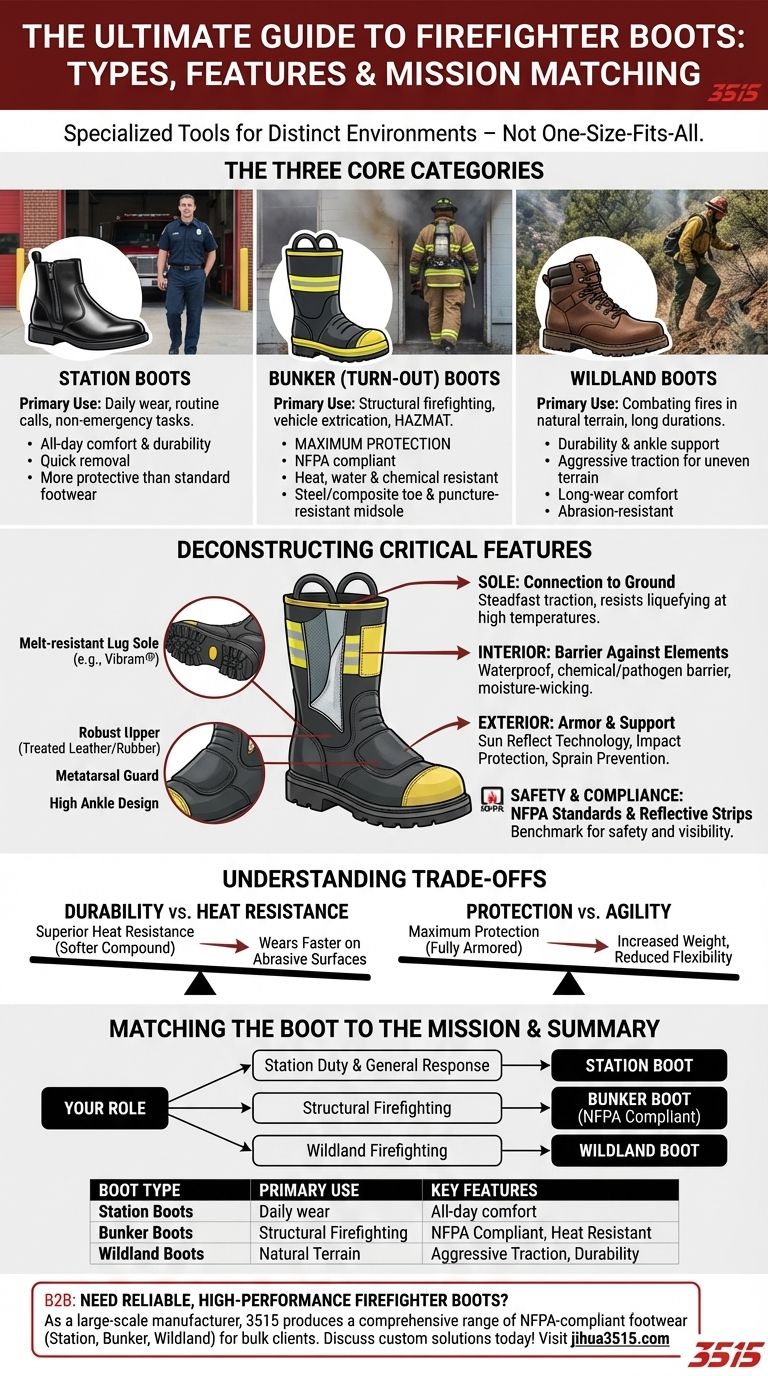
To be direct, firefighter boots are not a single category but a set of highly specialized tools designed for distinct environments. The three primary types are Station Boots for daily wear, Bunker (or Turn-out) Boots for structural firefighting, and Wildland Boots for combating fires in natural terrain. Each is engineered with specific materials and features to counter the unique hazards of its intended use.
The core principle to understand is that a firefighter's boot is a piece of mission-critical equipment. The right choice is not about a single "best" boot, but about correctly matching the boot's specific protective features—from sole compound to internal liner—to the precise operational demands you will face.
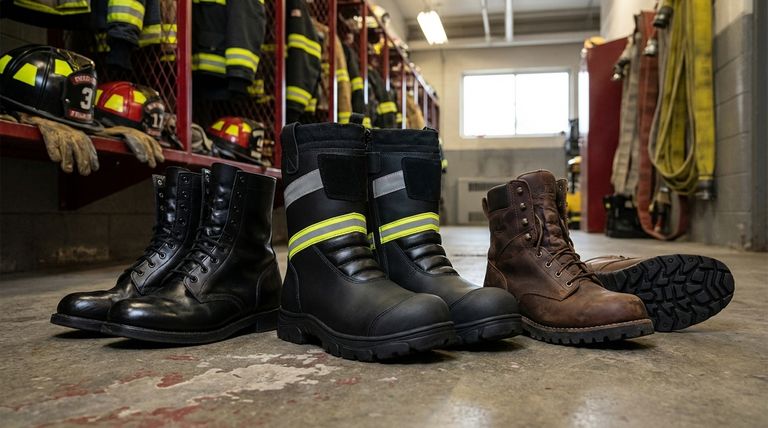
The Three Core Categories of Firefighter Boots
Choosing the wrong boot for the job introduces unnecessary risk. Each category is built around a different set of priorities, balancing protection, durability, and comfort for its specific environment.
Station Boots: The Daily Foundation
Station boots are designed for the non-emergency tasks that make up a significant part of a firefighter's day. They are the general-duty footwear worn around the station and on routine calls.
The primary focus here is all-day comfort and durability. While more protective than standard footwear, they are not intended for direct firefighting and can often be quickly removed to don bunker gear.
Bunker (Turn-out) Boots: The Structural Fortress
These are the boots most people picture when they think of firefighting. Bunker boots are an integral part of the turn-out gear worn for structural fires and other intense emergency responses like vehicle extrication or HAZMAT incidents.
Their design prioritizes maximum protection. Key features include reinforced steel or composite toe caps, puncture-resistant midsoles, and materials highly resistant to extreme heat, water, and chemicals. Compliance with NFPA standards is mandatory for this category.
Wildland Boots: The All-Terrain Workhorse
Wildland firefighting involves long hours on your feet, navigating steep, uneven, and unpredictable terrain. These boots are built to handle this unique ergonomic and environmental stress.
The emphasis is on a combination of durability, ankle support, and long-wear comfort. They feature aggressive lug soles for superior traction and are typically made of heavy-duty leather to withstand abrasion from rocks and brush.
Deconstructing the Critical Features
The effectiveness of a firefighter boot comes from the synthesis of its components. Each feature serves a distinct protective or performance-enhancing purpose.
The Sole: Your Connection to the Ground
The outsole is your primary interface with hazardous environments. It must provide steadfast traction while resisting extreme heat.
Many high-performance boots use melt-resistant lug soles, such as those from Vibram. These are made from a specialized rubber compound that remains stable and does not liquefy at high temperatures, ensuring a firefighter's footing remains secure.
The Interior: A Barrier Against the Elements
The inside of the boot is just as critical as the outside. Modern boots often feature advanced liners like GORE-CROSSTECH.
This type of liner serves a dual purpose: it is waterproof to keep feet dry, but it also provides a barrier against dangerous chemicals and bloodborne pathogens. Additionally, moisture-wicking properties help manage sweat during intense exertion.
The Exterior: Armor and Support
The boot's upper is constructed from robust materials like specially treated leather and rubber to provide a primary shield.
Features like Sun Reflect technology can be integrated into the leather to reflect solar radiation, keeping the foot cooler. Metatarsal guards add another layer of protection against impact and compression, while a high ankle design is crucial for preventing sprains and fractures.
Safety and Compliance: The Non-Negotiables
Compliance with standards from the National Fire Protection Association (NFPA) is the benchmark for safety and reliability. These standards dictate minimum performance requirements for heat resistance, puncture protection, and more.
Features like reflective strips are also common, enhancing the firefighter's visibility in low-light conditions and smoke-filled environments.
Understanding the Trade-offs
There is no single boot that excels in every scenario. Understanding the inherent compromises in boot design is key to making an informed decision.
Durability vs. Heat Resistance
A critical trade-off exists in the outsole. The specialized rubber compounds that offer superior melt resistance are often softer than standard work boot soles.
This means that while they perform exceptionally well under heat, they tend to wear out more quickly with regular use on abrasive surfaces like asphalt and concrete. Frequent inspection and potential resoling are part of the ownership cycle.
Protection vs. Agility
A fully-armored bunker boot offers unparalleled protection against heat, impact, and punctures. However, this level of protection comes with increased weight and reduced flexibility.
This can limit a firefighter's agility and increase fatigue over long durations compared to a lighter, more flexible wildland or station boot. The key is applying the right level of protection for the specific hazard.
Matching the Boot to the Mission
Your choice should be dictated entirely by your primary role and the environment you will operate in.
- If your primary role is station duty and general response: Prioritize a high-quality station boot that offers all-day comfort, durability, and a secure fit.
- If your primary role is structural firefighting: Your only choice is an NFPA-compliant bunker boot with maximum thermal, puncture, and impact protection.
- If your primary role is wildland firefighting: Select a durable wildland boot specifically designed for stability, aggressive traction, and long-wear comfort on rugged terrain.
Ultimately, choosing the right boot is a critical decision that directly impacts your safety, endurance, and effectiveness on the ground.
Summary Table:
| Boot Type | Primary Use | Key Features |
|---|---|---|
| Station Boots | Daily wear, station duties | All-day comfort, durability, quick removal |
| Bunker Boots | Structural firefighting, HAZMAT | NFPA compliant, steel toe, heat/chemical resistant |
| Wildland Boots | Natural terrain firefighting | Aggressive traction, ankle support, rugged durability |
Need reliable, high-performance firefighter boots for your team? As a large-scale manufacturer, 3515 produces a comprehensive range of NFPA-compliant footwear for distributors, brand owners, and bulk clients. Our production capabilities encompass all types of safety boots, including specialized Station, Bunker, and Wildland designs—ensuring durability, protection, and comfort tailored to your operational needs. Contact us today to discuss custom solutions and bulk orders!
Visual Guide
Related Products
- High Performance Fire-Retardant Waterproof Safety Boots
- Premium Flame-Retardant Waterproof Safety Boots and Shoes
- Durable Military Combat Boots with Water Drainage for Wholesale & OEM
- Wholesale Lightweight Tactical Boots Custom Manufacturer for Desert & Combat Use
- High-Traction Suede Tactical Boots Wholesale & Custom Manufacturing
People Also Ask
- Why are waterproof safety boots recommended for certain work environments? Essential Protection for Wet & Hazardous Jobs
- What roles do 3D vision systems and industrial robots play in the manufacturing of fire safety boots? Smart Automation
- What is a drawback of waterproof boots? The Hidden Cost of Trapped Sweat and Heat
- What are the primary benefits of incorporating waterproof technology into professional and outdoor boots? Boost Value
- What materials make waterproof boots durable? The Ultimate Guide to Long-Lasting Footwear