
To properly care for your Clarks desert boots, your approach must be tailored to the specific material of the upper. For suede models, the priority is using a dedicated suede protector spray and brush to guard against stains and moisture. For leather versions, regular cleaning followed by the application of a quality conditioner and polish will keep the material supple and prevent cracking.
The key to maintaining your desert boots is not a single product, but a consistent routine that addresses the distinct needs of its two primary components: the leather or suede upper and the unique crepe rubber sole.
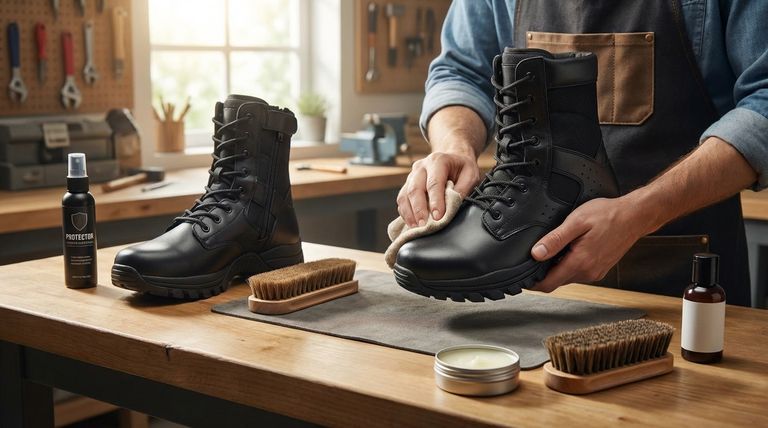
The Foundation of Proper Care: Upper vs. Sole
Effective maintenance requires treating the boot as two separate parts. The care your upper needs is fundamentally different from the care required for the sole.
Caring for the Upper: Leather vs. Suede
The material of your boot's upper dictates the tools and techniques you will use.
For leather boots, the goal is to keep the material clean and hydrated. Use a damp cloth or soft brush to remove surface dirt. Every few months, apply a small amount of leather conditioner to prevent the hide from drying out. A quality boot polish can be used afterward to restore shine.
For suede boots, the process is about protection and restoration, not moisture. A suede-specific brush is essential for removing dirt and reviving the nap. For tougher marks, a suede eraser can be effective. Crucially, apply a suede protector spray before the first wear and reapply periodically to create a barrier against water and stains.
Maintaining the Signature Crepe Sole
Clarks desert boots are known for their natural crepe rubber outsoles, which provide exceptional comfort and traction.
This material is naturally porous and soft, which means it will inevitably pick up dirt and darken over time. This is a characteristic of the boot, not a defect. Regular cleaning with a stiff brush can remove the worst of the debris.
Core Principles for Longevity
Beyond material-specific care, a few core habits will dramatically extend the life of your boots.
The Importance of Regular Cleaning
A quick wipe-down with a cloth or brush after a day of wear prevents dirt from becoming ground into the material, making deeper cleans less frequent and more effective.
The Power of Drying and Rotation
If your boots get wet, allow them to air dry completely away from direct heat sources like radiators, which can crack the leather. Rotating between two pairs of boots gives each pair a full day to dry and recover, significantly reducing wear and tear.
Proper Storage Matters
When not in use, store your boots in a cool, dry place. Using shoe trees will help them maintain their shape and absorb any lingering moisture, preventing odors and creases.
Understanding the Trade-offs
While iconic, the design and materials of desert boots come with specific considerations.
The Vulnerability of Suede
Suede offers a distinct look but is far less resistant to weather than leather. Without a protective spray, suede is highly susceptible to water spots and stains, making it a poor choice for rainy or muddy conditions.
The Nature of the Crepe Sole
The comfort of a crepe sole comes at a cost: it is a magnet for dirt. Owners must accept that the sole will develop a darker "patina" with use and will never look as clean as it did out of the box.
The Risk of Over-Conditioning
With leather boots, more is not always better. Applying conditioner too frequently can oversaturate the leather, clogging its pores and leaving a greasy finish that attracts more dust and dirt.
Making the Right Choice for Your Boots
Your maintenance routine should be simple and targeted to your specific pair and goals.
- If you have Suede Desert Boots: Your priority is prevention; use a suede protector before the first wear and clean regularly with a dedicated brush.
- If you have Leather Desert Boots: Your focus is on moisture; clean and condition the leather every few months to keep it from drying out and cracking.
- If you want to maximize lifespan for either type: The key is rotation and proper drying; avoid wearing them on consecutive days and always let them air dry completely after exposure to moisture.
A consistent care routine is the most effective way to protect your investment and enjoy your boots for years to come.
Summary Table:
| Care Aspect | Leather Boots | Suede Boots |
|---|---|---|
| Primary Goal | Hydration & Cleaning | Stain & Water Protection |
| Key Tools | Damp cloth, leather conditioner, polish | Suede brush, eraser, protector spray |
| Key Habit | Condition every few months | Apply protector spray before first wear |
Ready to build a durable footwear collection? As a large-scale manufacturer, 3515 produces a comprehensive range of high-quality boots and shoes for distributors, brand owners, and bulk clients. Our production capabilities ensure you get the durable, easy-to-maintain footwear your customers demand. Contact our team today to discuss your manufacturing needs!
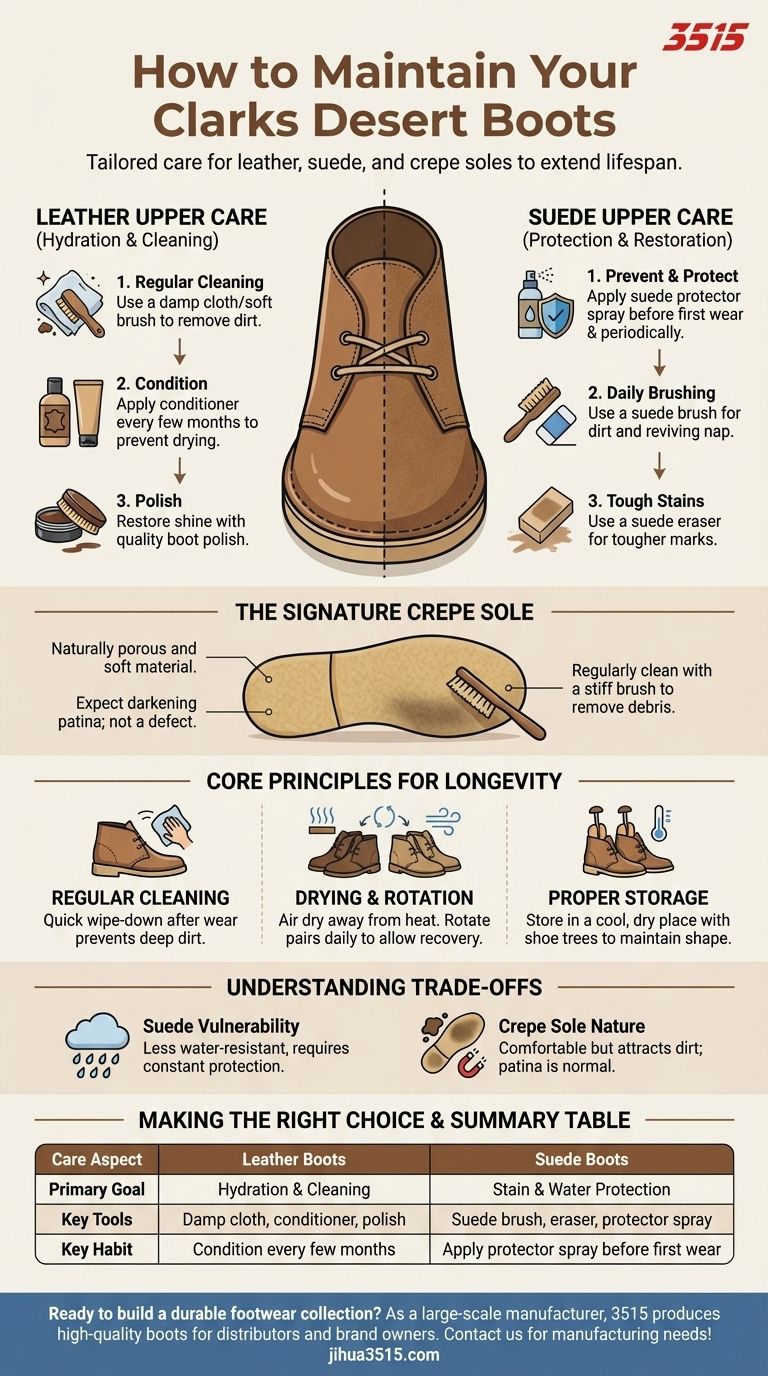
Visual Guide
Related Products
- Wholesale Lightweight Tactical Boots Custom Manufacturer for Desert & Combat Use
- Wholesale High-Traction Camo Boots - Custom Manufacturer for Brands
- Durable Waterproof Rain Boots | Custom Manufacturer for Wholesale & Brands
- Durable Military Combat Boots with Water Drainage for Wholesale & OEM
- Factory Direct Wholesale Rain Boots Durable Waterproof & Fully Customizable
People Also Ask
- What are the common types of combat boots? Find the Right Boot for Your Mission
- What specialized protections do tactical boots offer? Maximize Endurance with High-Performance Footwear
- What are the main construction similarities between tactical boots and tactical sneakers? Built for Performance & Durability
- How is the compatibility of polymer materials demonstrated in smart footwear? Enhancing Tactical & Training Performance
- What are the different types of tactical boots available? Find the Right Boot for Your Mission



















