
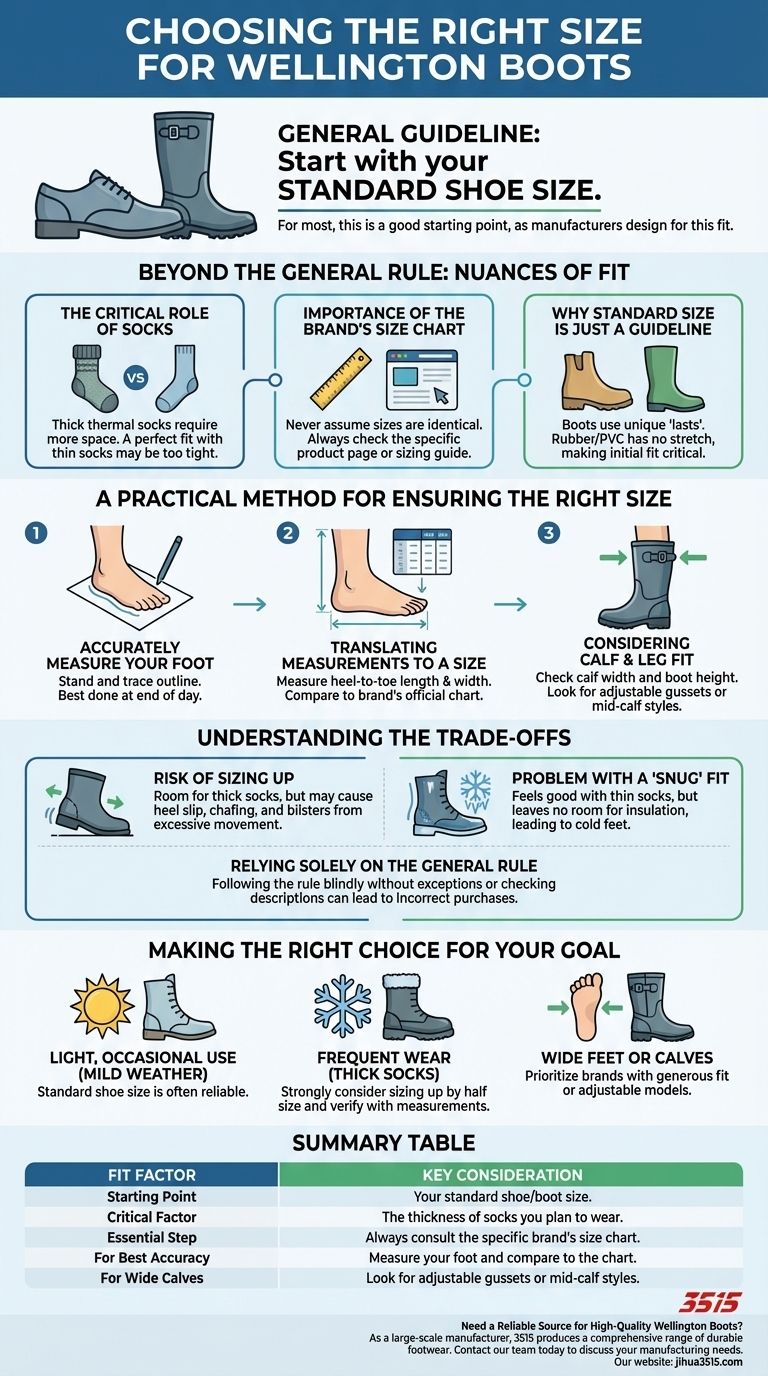
As a general guideline, you should start with the size you would wear in a normal shoe or boot. For the majority of cases, this will be the correct size for your wellington boots, as manufacturers typically design them to accommodate this standard sizing.
The key to a perfect fit is to treat your standard shoe size as a starting point, not a final answer. A truly accurate fit requires you to consider sock thickness, consult the specific brand's size chart, and in some cases, measure your own foot.
Beyond the General Rule: The Nuances of Fit
While the "start with your shoe size" rule is a solid foundation, several factors can influence the ideal fit. Understanding these nuances is the difference between a comfortable boot and a source of frustration.
Why Your Standard Size is a Guideline
Wellington boots are often made on unique molds, or "lasts," that can vary significantly between brands. Unlike leather, the rubber or PVC materials used in most wellies have no stretch, so a precise initial fit is critical.
The Critical Role of Socks
The thickness of the socks you intend to wear has a major impact on fit. A boot that feels perfect with a thin sock may become painfully tight with a thick, thermal wool sock for winter.
The Importance of the Brand's Size Chart
Never assume that a size 8 in one brand is identical to a size 8 in another. Always check the individual product page or the manufacturer's dedicated sizing guide for specific notes or measurements.
A Practical Method for Ensuring the Right Size
To move beyond guesswork, you can take a more precise, measurement-based approach. This simple process eliminates most of the uncertainty.
How to Accurately Measure Your Foot
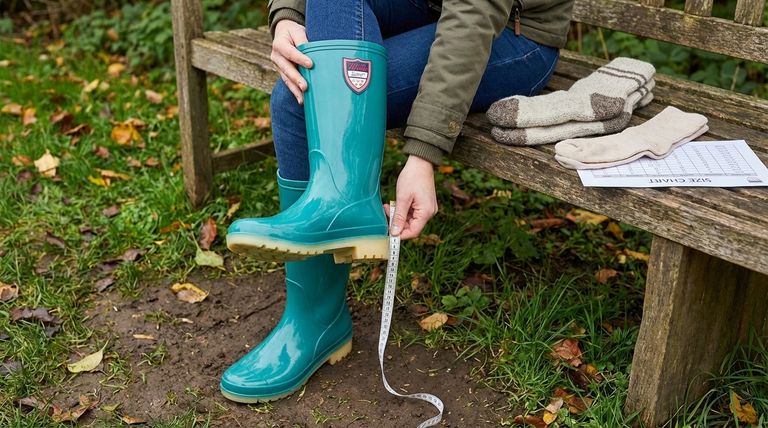
Stand on a piece of paper and carefully trace the outline of your foot. For the most accurate result, do this at the end of the day when your feet are slightly larger.
Translating Measurements to a Size
Measure the length from your heel to the tip of your longest toe and the width at the widest part of your foot. Compare these measurements directly against the brand's official size chart to find your recommended size.
Considering Calf and Leg Fit
A proper fit isn't just about your foot. Consider the calf width and boot height. If you have wider calves, look for boots with adjustable side gussets or shorter "mid-calf" styles to avoid a restrictive fit.
Understanding the Trade-offs
Choosing a boot size often involves balancing competing factors. Being aware of the potential pitfalls can help you make a more informed decision.
The Risk of Sizing Up
While sizing up provides room for thick socks, it can also lead to excessive movement inside the boot. This can cause your heel to lift with every step, a phenomenon known as heel slip, which often leads to chafing and blisters.
The Problem with a "Snug" Fit
Choosing a size that feels snug with a thin sock is a common mistake. This leaves no room for insulation from thicker socks, leading to cold feet, and eliminates the layer of air needed for proper thermal regulation.
Relying Solely on the General Rule
The most significant pitfall is blindly following the "use your shoe size" rule without considering exceptions. Product lines can and do fit differently, and failing to check the product description can lead to an incorrect purchase.
Making the Right Choice for Your Goal
Your intended use for the boots should guide your final decision. Use these principles to select the best fit for your specific needs.
- If your primary focus is light, occasional use in mild weather: Starting with your standard shoe size is often a reliable and straightforward approach.
- If your primary focus is frequent wear with thick, thermal socks: You should strongly consider sizing up by a half size and always verify your foot measurements against the brand's chart.
- If you have wider feet or calves: Prioritize brands known for a more generous fit or select a model with an adjustable gusset to ensure comfort around your leg.
Ultimately, taking a moment to measure and consult the manufacturer's guide will always yield a more comfortable and functional fit than relying on a general rule alone.
Summary Table:
| Fit Factor | Key Consideration |
|---|---|
| Starting Point | Your standard shoe/boot size. |
| Critical Factor | The thickness of socks you plan to wear. |
| Essential Step | Always consult the specific brand's size chart. |
| For Best Accuracy | Measure your foot and compare to the chart. |
| For Wide Calves | Look for adjustable gussets or mid-calf styles. |
Need a Reliable Source for High-Quality Wellington Boots?
As a large-scale manufacturer, 3515 produces a comprehensive range of durable footwear for distributors, brand owners, and bulk clients. Our production capabilities encompass all types of boots, including wellingtons designed for comfort and performance.
Let us help you equip your customers with the perfect fit. Contact our team today to discuss your manufacturing needs.
Visual Guide
Related Products
- Durable Waterproof Rain Boots | Custom Manufacturer for Wholesale & Brands
- Durable Goodyear Welt Leather Work Boots for Wholesale & Private Label
- Wholesale Durable Leather Work Boots | 8-Inch Goodyear Welt Manufacturer
- Premium Wholesale Tactical Style Safety Shoes Boots with Quick Lacing
- Durable High-Ankle Tactical Boots Wholesale Manufacturer for Custom & Bulk Orders
People Also Ask
- What are the main materials for waterproof rain boots? Choose the Right Material for Durability & Comfort
- What is the overall recommendation for choosing rain boot materials? A Guide to Rubber vs. PVC
- How does boot height affect waterproofing? Choose the Right Height for Ultimate Protection
- Why are rain boots more flexible and comfortable than snow boots? The Key Differences Explained
- What are the best types of shoes for different gardening conditions? Find Your Perfect Match.



















