
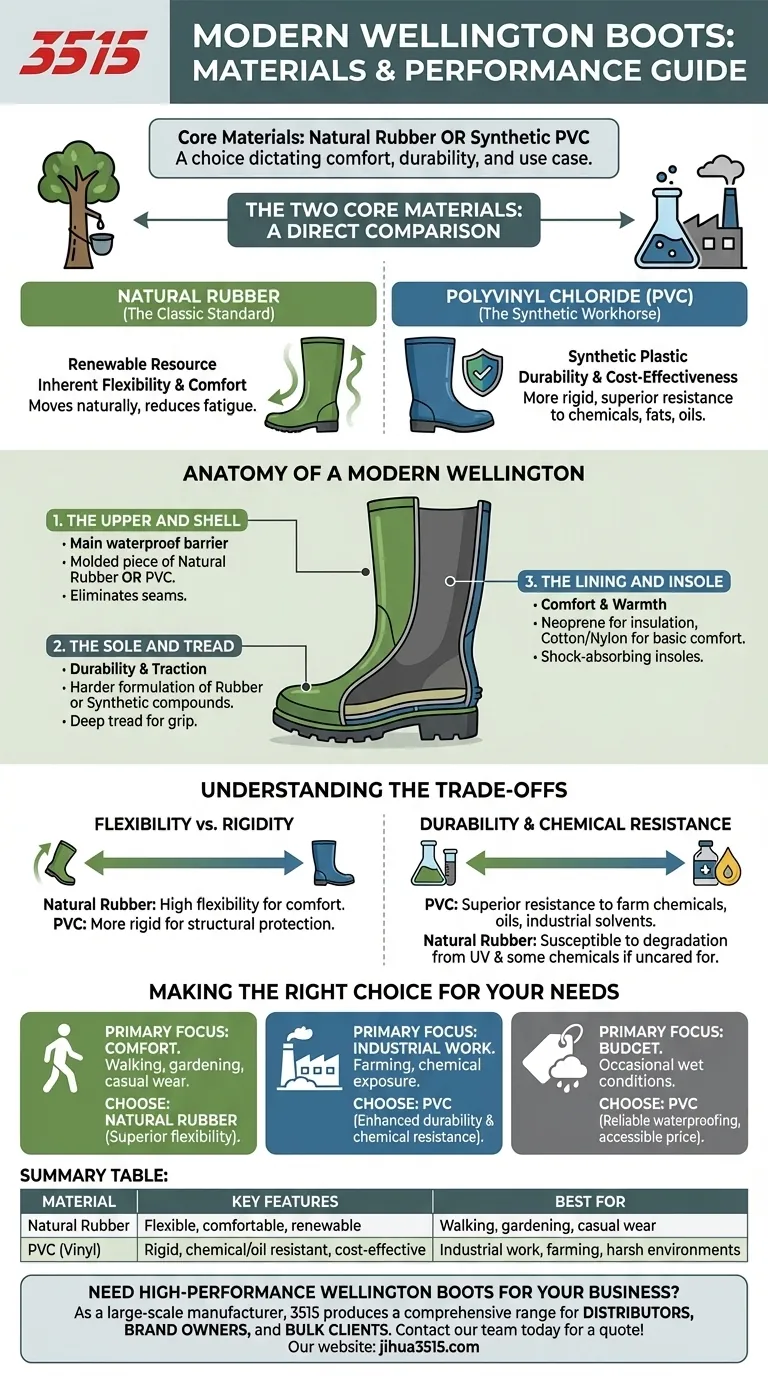
At their core, modern Wellington boots are made from one of two primary materials: natural rubber or a synthetic plastic called polyvinyl chloride (PVC). While both materials create a fully waterproof shell, the choice between them dictates the boot's comfort, durability, and ideal use case.
The fundamental difference in Wellington boots comes down to a choice between natural rubber and synthetic PVC. This decision isn't just about cost; it's a critical trade-off between flexibility, long-term durability, and resistance to environmental factors.
The Two Core Materials: A Direct Comparison
The entire structure and performance of a Wellington boot stem from its main shell material. Understanding the two dominant options is key to choosing the right boot.
Natural Rubber: The Classic Standard
Natural rubber is the traditional material for high-quality Wellingtons. It is harvested as latex from rubber trees, making it a natural, renewable resource.
This material is prized for its inherent flexibility and comfort. Rubber boots tend to move more naturally with your foot, reducing fatigue during extended wear.
Polyvinyl Chloride (PVC): The Synthetic Workhorse
PVC is a type of plastic, also known as vinyl, that is widely used for its durability and cost-effectiveness. It is entirely synthetic and produced through chemical processes.
PVC boots are generally more rigid than their rubber counterparts but often offer superior resistance to chemicals, fats, and oils, making them a common choice for industrial and agricultural settings.
Anatomy of a Modern Wellington
Beyond the main shell, several components work together to define the boot's performance and comfort.
The Upper and Shell
This is the main body of the boot, providing the primary waterproof barrier. It is almost always a single, molded piece of either natural rubber or PVC to eliminate seams where water could penetrate.
The Sole and Tread
The sole is designed for durability and traction. It is typically made of a harder, more solid formulation of rubber or synthetic compounds. High-quality boots feature deep, aggressive tread patterns to ensure a secure grip on wet and muddy surfaces.
The Lining and Insole
To enhance comfort and warmth, many Wellingtons include an interior lining. Neoprene is a popular choice for insulated boots as it provides excellent warmth, while cotton or nylon linings offer basic comfort for general use. Some models also feature shock-absorbing insoles.
Understanding the Trade-offs
Choosing between rubber and PVC involves balancing comfort, durability, and cost. Neither material is universally superior; the right choice depends entirely on your intended use.
Flexibility vs. Rigidity
Natural rubber's key advantage is its flexibility, which translates directly to user comfort, especially when walking long distances. PVC is significantly more rigid, which can feel less comfortable but provides more structural protection.
Durability and Chemical Resistance
While both materials are tough, PVC often has an edge in harsh environments. It stands up better against farm chemicals, oils, and industrial solvents. Natural rubber, if not properly cared for, can degrade and crack over time when exposed to UV light and certain chemicals.
Cost and Manufacturing
PVC is generally less expensive to produce than natural rubber. This makes PVC Wellingtons a more budget-friendly option, particularly for occasional use or in applications where boots are replaced frequently.
Making the Right Choice for Your Needs
Your primary activity should guide your material choice.
- If your primary focus is comfort for walking, gardening, or frequent casual wear: Choose boots made from natural rubber for their superior flexibility.
- If your primary focus is industrial work, farming, or exposure to chemicals: Select PVC boots for their enhanced durability and chemical resistance.
- If your primary focus is budget and occasional use in wet conditions: A PVC boot provides reliable waterproofing at a more accessible price point.
Ultimately, understanding the material science behind the boot empowers you to select footwear that truly serves its purpose.
Summary Table:
| Material | Key Features | Best For |
|---|---|---|
| Natural Rubber | Flexible, comfortable, renewable resource | Walking, gardening, casual wear |
| PVC (Vinyl) | Rigid, chemical/oil resistant, cost-effective | Industrial work, farming, harsh environments |
Need High-Performance Wellington Boots for Your Business?
As a large-scale manufacturer, 3515 produces a comprehensive range of Wellington boots for distributors, brand owners, and bulk clients. Whether your market demands the superior comfort of natural rubber or the industrial strength of PVC, our production capabilities ensure top-quality footwear tailored to your needs.
Let's discuss your specific requirements and how we can deliver the perfect boot for your customers.
Contact our team today for a quote!
Visual Guide
Related Products
- Durable Waterproof Rain Boots | Custom Manufacturer for Wholesale & Brands
- Durable Goodyear Welt Leather Work Boots for Wholesale & Private Label
- Wholesale Durable Leather Work Boots | 8-Inch Goodyear Welt Manufacturer
- High-Traction Suede Tactical Boots Wholesale & Custom Manufacturing
- Premium Wholesale Tactical Style Safety Shoes Boots with Quick Lacing
People Also Ask
- What are the main materials for waterproof rain boots? Choose the Right Material for Durability & Comfort
- What is the overall recommendation for choosing rain boot materials? A Guide to Rubber vs. PVC
- How does boot height affect waterproofing? Choose the Right Height for Ultimate Protection
- Why are rain boots more flexible and comfortable than snow boots? The Key Differences Explained
- What are the best types of shoes for different gardening conditions? Find Your Perfect Match.



















