
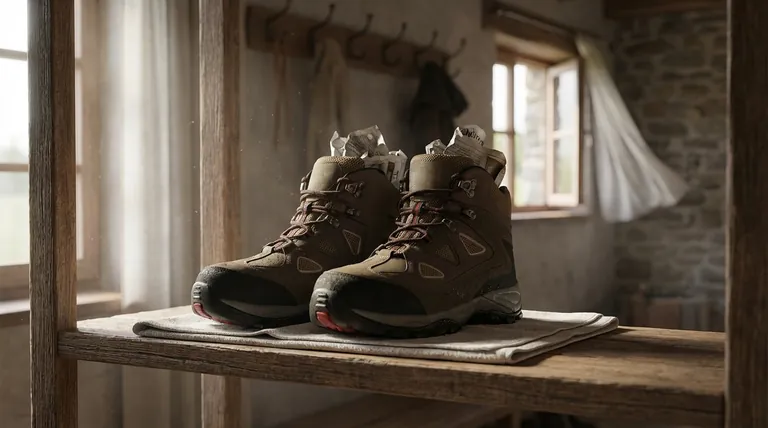
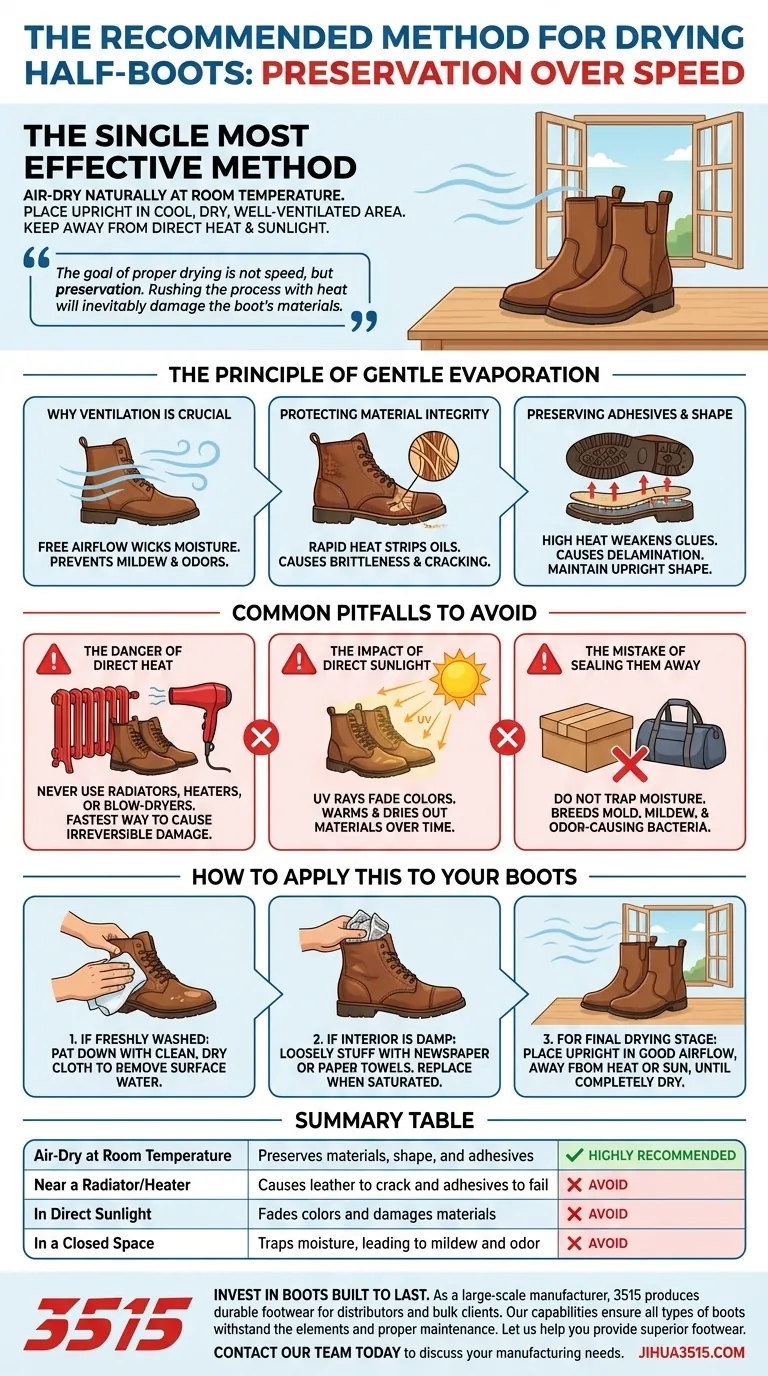
The single most effective method for drying half-boots is to let them air-dry naturally at room temperature. Place them upright in a cool, dry, and well-ventilated area, ensuring they are kept away from any direct heat sources or sunlight.
The goal of proper drying is not speed, but preservation. Rushing the process with heat will inevitably damage the boot's materials, shortening its lifespan and compromising its structural integrity.
The Principle of Gentle Evaporation
Properly drying your boots after cleaning is a critical step in their long-term care. The core principle is to allow moisture to evaporate slowly and evenly, which protects the leather, synthetics, and adhesives that hold the boot together.
Why Ventilation is Crucial
A well-ventilated area allows air to circulate freely around the boots. This constant, gentle airflow wicks moisture away from the material's surface, preventing the damp, stagnant conditions that can lead to mildew and unpleasant odors.
Protecting Material Integrity
Boot materials, especially leather, contain natural oils and moisture. Rapid drying from a direct heat source strips these oils away, causing the material to become brittle, stiff, and prone to cracking.
Preserving Adhesives and Shape
The high heat from sources like radiators or blow-dryers can also weaken the glues and adhesives used in modern boot construction. This can lead to sole delamination. Allowing boots to dry naturally while stored upright also helps them maintain their intended shape.
Common Pitfalls to Avoid
Understanding what not to do is as important as knowing the correct method. Most damage occurs when owners try to speed up the drying process.
The Danger of Direct Heat
Never place your boots near a radiator, heater, fireplace, or use a blow-dryer on them. This is the fastest way to cause irreversible damage to the materials, leading to cracks and a ruined fit.
The Impact of Direct Sunlight
Leaving boots to dry in direct sunlight is also detrimental. The sun's UV rays can fade colors and, just like a heater, its warmth can dry out and damage leather and synthetic fabrics over time.
The Mistake of Sealing Them Away
Do not place wet boots in a closed box, a stuffy closet, or a gym bag to dry. Without proper airflow, the moisture remains trapped, creating a perfect breeding ground for mold, mildew, and odor-causing bacteria.
How to Apply This to Your Boots
Follow these steps to ensure your boots are dried correctly and safely after every cleaning.
- If your boots are freshly washed: First, use a clean, dry cloth to pat down the entire exterior and remove as much surface water as possible.
- If the interior is also damp: Loosely stuff the boots with crumpled newspaper or paper towels. This will draw moisture out from the inside. Replace the paper once it becomes saturated.
- For the final drying stage: Place the boots upright in an area with good air circulation, away from direct heat or sun, until they are completely dry to the touch.
By following this patient, gentle process, you ensure your boots are not just clean, but preserved for years of reliable use.
Summary Table:
| Drying Method | Result | Recommendation |
|---|---|---|
| Air-Dry at Room Temperature | Preserves materials, shape, and adhesives | Highly Recommended |
| Near a Radiator/Heater | Causes leather to crack and adhesives to fail | Avoid |
| In Direct Sunlight | Fades colors and damages materials | Avoid |
| In a Closed Space | Traps moisture, leading to mildew and odor | Avoid |
Invest in Boots Built to Last
Proper care extends the life of your footwear, but it starts with a quality product. As a large-scale manufacturer, 3515 produces a comprehensive range of durable boots and shoes for distributors, brand owners, and bulk clients. Our production capabilities encompass all types of footwear designed to withstand the elements and proper maintenance.
Let us help you provide your customers with superior footwear.
Contact our team today to discuss your manufacturing needs and discover how we can bring value and reliability to your product line.
Visual Guide
Related Products
- Wholesale Durable Mid-Cut Tactical Boots for Custom & Private Label Brands
- Wholesale Lightweight Tactical Boots Custom Manufacturer for Desert & Combat Use
- Wholesale Lightweight Tactical Boots with Dial Closure OEM & Bulk Orders
- Wholesale Durable Camouflage Canvas Shoes with High-Traction Cleated Rubber Sole
- Durable Goodyear Welt Leather Work Boots for Wholesale & Private Label
People Also Ask
- What are the main construction similarities between tactical boots and tactical sneakers? Built for Performance & Durability
- Can tactical boots be stylish for everyday wear? Yes, with the right styling and features.
- How does the extended self theory explain high-value footwear? Build Your Professional Identity and Status
- How should tactical boots be stored to maintain their condition? Protect Your Gear Investment
- What are the general characteristics of tactical boots? Lightweight, Agile Footwear for Professionals



















