For workers in muddy conditions, the most critical features in a work boot are an aggressive, deep-tread outsole for superior traction and a fully waterproof upper to keep your feet dry and comfortable. These two elements work together as a system to ensure both your safety and your ability to perform your job effectively.
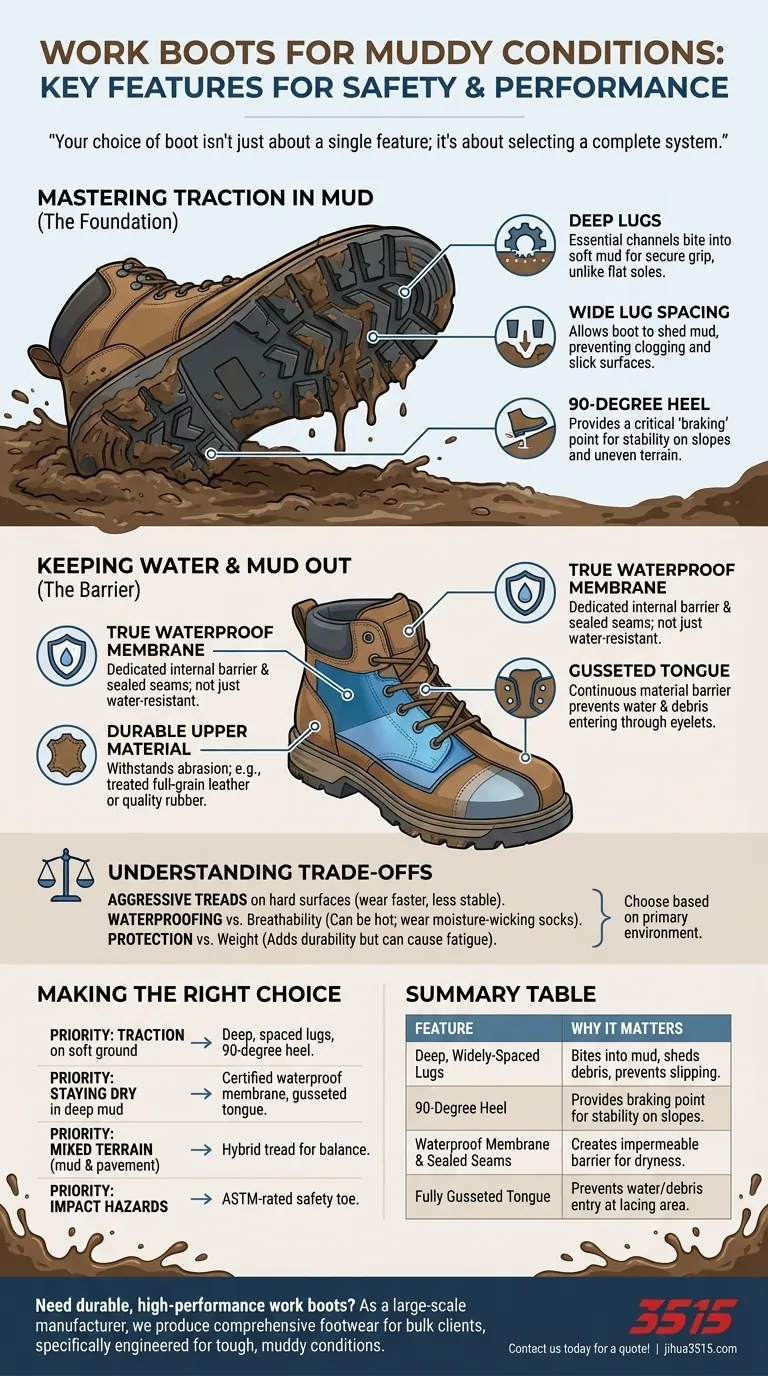
Your choice of boot isn't just about a single feature; it's about selecting a complete system. An effective mud boot combines an aggressive outsole to physically grip the terrain with a sealed, waterproof construction to protect you from the elements.
The Foundation: Mastering Traction in Mud
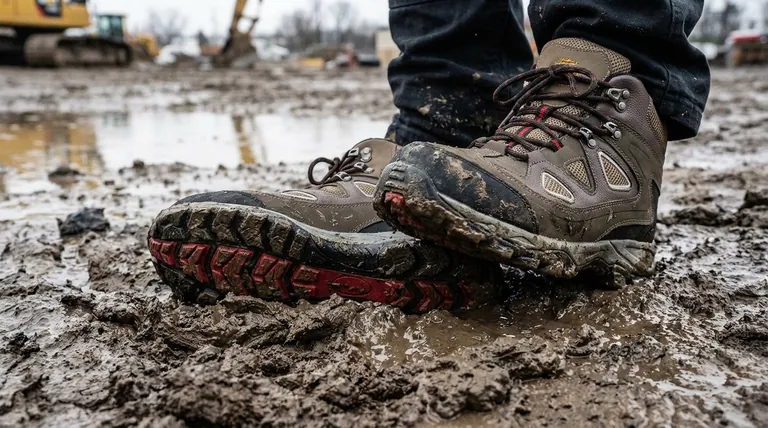
The primary danger in mud is a lack of stable footing. The design of your boot's outsole is the single most important factor in preventing slips and falls on soft, unstable ground.
Why Deep Lugs are Non-Negotiable
Deep, prominent channels and blocks on the sole, known as lugs, are essential. Unlike flatter soles designed for hard surfaces, deep lugs bite into the soft mud, providing a secure grip where a smoother sole would simply slide.
The Importance of Lug Spacing
Look for soles with wide spacing between the lugs. Tightly packed treads will quickly clog with mud, effectively turning your sole into a flat, heavy, and dangerously slick surface. Wider spacing allows the boot to shed mud as you walk, maintaining its gripping capability.
Understanding Heel Design for Stability
A defined heel, often called a 90-degree heel, provides a critical "braking" point. This edge is especially useful for stability when walking down muddy slopes or navigating uneven terrain, as it can dig in and prevent your foot from sliding forward.
The Barrier: Keeping Water and Mud Out
Traction is only half the battle. If your feet are wet, you face discomfort, blisters, and more serious foot health issues over time. A boot's upper construction is your primary defense.
True Waterproofing vs. Water Resistance
Do not confuse "water-resistant" with "waterproof." Water-resistant materials will shed light moisture but will eventually fail in sustained wet conditions. True waterproofing involves a dedicated membrane (like Gore-Tex or a proprietary equivalent) and sealed seams that create an impermeable barrier.
The Critical Role of a Gusseted Tongue
A gusseted tongue is a piece of material that connects the tongue to the upper along the sides of the lacing area. This small feature is crucial, as it creates a continuous barrier that prevents water, mud, and debris from entering the boot through the eyelets.
Upper Material Durability
The material of the boot's upper must withstand the abrasion and moisture of a muddy environment. Full-grain leather, when properly treated, offers excellent durability and can be waterproofed. High-quality rubber or synthetic uppers provide inherent waterproofing but may offer less breathability.
Understanding the Trade-offs
No single boot is perfect for every condition. Being aware of the compromises inherent in boot design will help you make a more informed decision.
Aggressive Treads on Hard Surfaces
The deep lugs that excel in mud can be a liability on hard, flat surfaces like concrete or asphalt. They may wear down faster and can sometimes feel less stable than a sole with more surface contact.
Waterproofing and Breathability
A truly waterproof boot is, by nature, less breathable than a non-waterproof one. In hot weather, this can lead to sweaty feet. Mitigate this by wearing high-quality, moisture-wicking wool or synthetic socks, never cotton.
Protection vs. Weight
Features like thick leather, aggressive outsoles, and safety toes add weight. While these components are vital for durability and protection, a heavier boot can contribute to fatigue over a long workday.
Making the Right Choice for Your Worksite
Analyze your specific environment and tasks to prioritize the most important features for your needs.
- If your primary focus is maximum traction on soft ground and slopes: Prioritize boots with deep, widely-spaced lugs and a defined 90-degree heel.
- If your primary focus is staying completely dry in deep mud or standing water: Insist on a boot with a certified waterproof membrane and a fully gusseted tongue.
- If you frequently move between muddy fields and hard pavement: Look for a hybrid tread that balances aggressive lugs with enough surface area for stability on flat ground.
- If your job involves impact or compression hazards: Ensure any boot you choose also includes the necessary ASTM-rated safety toe (steel, composite, or alloy).
By focusing on this system of traction and waterproofing, you can select a boot that works as a reliable tool, keeping you safe and productive in the toughest conditions.
Summary Table:
| Key Feature | Why It Matters for Muddy Conditions |
|---|---|
| Deep, Widely-Spaced Lugs | Bites into soft mud and sheds debris to prevent clogging and slipping. |
| 90-Degree Heel | Provides a braking point for stability on slopes and uneven terrain. |
| Waterproof Membrane & Sealed Seams | Creates an impermeable barrier to keep feet dry in sustained wetness. |
| Fully Gusseted Tongue | Prevents water, mud, and debris from entering through the lacing area. |
Need durable, high-performance work boots for muddy environments?
As a large-scale manufacturer, 3515 produces a comprehensive range of footwear for distributors, brand owners, and bulk clients. Our production capabilities encompass all types of safety and work boots, including models specifically engineered with the aggressive traction and true waterproofing needed for the toughest muddy conditions.
We can provide the reliable, durable footwear your workers need to stay safe and productive.
Contact us today to discuss your specific requirements and get a quote!
Visual Guide
Related Products
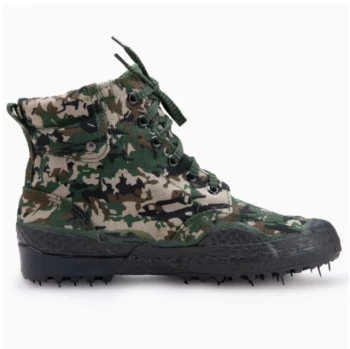
- Durable Spiked Camouflage Boots Wholesale & Factory Production
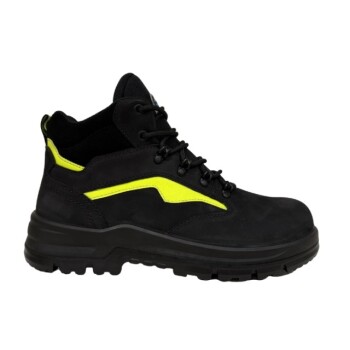
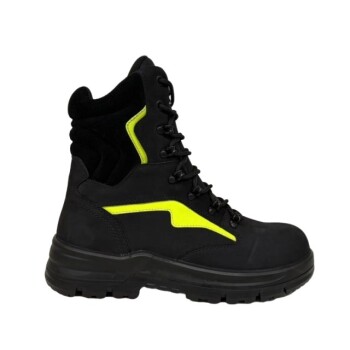
- Wholesale Premium Waterproof Nubuck Safety Shoes Boots
- Factory Direct Wholesale Rain Boots Durable Waterproof & Fully Customizable
- Durable Moc-Toe Wedge Work Boots | Wholesale Manufacturing for Brands
- Durable Leather Moc Toe Work Boots for Wholesale & Custom Manufacturing
People Also Ask
- How does boot height affect waterproofing? Choose the Right Height for Ultimate Protection
- What are the best types of shoes for different gardening conditions? Find Your Perfect Match.
- What role does camouflage play in hunting boots? It's More Than Just a Pattern
- What should you look for to ensure boots are fully waterproof? The Essential 2-Part System
- How does boot construction affect waterproofing? The Science Behind Truly Dry Feet