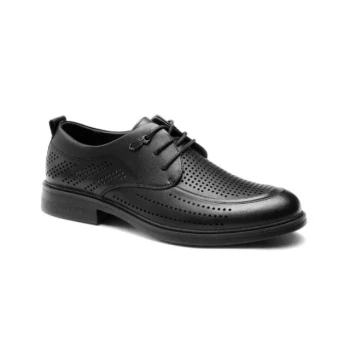
To prevent deep snake fang penetration, the effectiveness of a leather boot shaft depends on material thickness, structural "dead space," and the presence of secondary barriers. While the physical properties of the leather—such as stiffness and density—are fundamental, the mechanical gap between the boot and the leg, along with the angle of the strike, determines whether a fang reaches the wearer’s skin.
For distributors and brand owners, understanding that snake protection is a multi-layered engineering challenge—combining high-density material selection with strategic construction—is vital for delivering a reliable safety product to high-risk markets.
Engineering Material Integrity for Maximum Resistance
The Role of Leather Thickness and Density
The most immediate defense against fang penetration is the gauge of the leather. Thicker leather acts as a physical barrier that can exceed the length of many snake fangs, preventing them from reaching the internal lining.
Since 1951, our manufacturing processes have prioritized high-density leather sourcing. This ensures that even under the high pressure of a strike, the material resists puncturing rather than merely absorbing the force.
Stiffness as a Mechanical Deterrent
Stiffness significantly increases the energy required for a fang to pierce the surface. A rigid boot shaft does not "give" during a strike, which can often cause the snake's fangs to glance off or fail to gain the purchase necessary for deep penetration.
Our state-of-the-art equipment allows for precise control over the tanning and finishing stages. This ensures that the leather maintains the structural rigidity required for safety while meeting international durability certifications.
Structural Design and the "Buffer Zone"
Leveraging "Dead Space" as a Safety Buffer
One of the most critical factors in preventing injury is the amount of dead space between the boot shaft and the wearer’s leg. If the shaft is not flush against the skin, a fang may penetrate the leather but only reach the empty air inside the boot.
This "buffer zone" is a key consideration in our OEM and ODM design services. We engineer boot silhouettes that provide ample internal clearance without compromising the wearer's stability or comfort.
Boot Height as a Primary Defensive Barrier
The vertical coverage of the shaft directly influences the likelihood of a successful strike. Most snake strikes occur below the knee, making a tall, reinforced shaft essential for comprehensive protection.
Large-volume delivery of consistent, high-shaft designs requires a robust supply chain. Our heritage in massive production scale ensures that every unit maintains the height and integrity needed for field-tested safety.
External Variables and Strike Mechanics
Secondary Barriers and Layering
The presence of secondary layers, such as heavy denim jeans worn inside or over the boot, adds an extra level of protection. These layers can snag fangs, reduce their momentum, and absorb a portion of the venom before it reaches the boot material.
Educating distributors on these "systemic" protections helps build trust with end-users. It frames the boot not just as a standalone item, but as the core component of a comprehensive safety ensemble.
The Impact of Strike Angle
The angle and force of the strike play a major role in penetration depth. An indirect or glancing strike significantly reduces the kinetic energy transferred to the leather, often resulting in a failed penetration.
Our design philosophy accounts for these variables by using finishes that promote "deflection." By creating smoother, tougher surfaces, we increase the chances of a strike becoming an indirect hit.
Understanding the Trade-offs
Balancing Protection with Flexibility
Increased leather thickness and stiffness provide superior protection but can lead to a longer break-in period for the end-user. Extremely rigid shafts may also reduce mobility in uneven terrain, which is a common environment for snake encounters.
Weight vs. Fatigue
Massive production of high-gauge leather boots results in a heavier product. For B2B resellers, it is important to balance the safety rating of the boot with the physical fatigue a worker or hiker might face during extended wear.
Making the Right Choice for Your Product Line
How to Apply This to Your Project
When developing or sourcing your next line of protective footwear, consider your target market's specific environmental risks and comfort requirements.
- If your primary focus is Maximum Safety in high-risk zones: Prioritize high-gauge, stiff leather and maximum shaft height to ensure a formidable physical barrier.
- If your primary focus is Professional Utility and Comfort: Focus on designs that optimize "dead space" and incorporate secondary lining materials to provide protection without excessive weight.
- If your primary focus is Supply Chain Reliability and Scale: Leverage a manufacturer with deep heritage and international certifications to ensure consistent quality across large-volume orders.
By integrating material density, strategic structural gaps, and robust manufacturing heritage, you can provide a product that offers definitive protection against the unpredictable nature of snake strikes.
Summary Table:
| Critical Factor | Impact on Snake Protection | Manufacturing Implementation |
|---|---|---|
| Leather Density | Resists puncture force | High-gauge material sourcing since 1951 |
| Shaft Stiffness | Deflects fangs at strike | Precise tanning & structural rigidity control |
| Dead Space | Provides a mechanical buffer | OEM/ODM silhouette engineering for clearance |
| Boot Height | Maximizes coverage area | Consistent large-volume delivery of tall designs |
Scale Your Protective Footwear Line with a Heritage Manufacturer
As a large-scale manufacturer serving distributors and brand owners since 1951, 3515 offers comprehensive production capabilities for all footwear types. Anchored by our flagship Safety Shoes series, our extensive portfolio covers work and tactical boots, outdoor shoes, training shoes, and sneakers, as well as Dress & Formal shoes to meet your diverse bulk requirements.
By partnering with us, you gain access to premium OEM/ODM capabilities, international certifications, and the supply chain stability required for consistent large-volume delivery. We help you balance high-level safety engineering with market-leading comfort and durability.
Ready to elevate your inventory with field-tested quality? Contact us today to discuss your manufacturing needs!
Related Products
- Wholesale Leather Work Boots with Customizable Wedge Sole for Brands
- Wholesale Leather Ankle Boots with Lug Soles for Custom Brand Manufacturing
- Durable Leather Work Boots Wholesale Manufacturer & Custom Factory
- Durable Goodyear Welt Leather Work Boots for Wholesale & Private Label
- Durable Leather Work Boots for Wholesale & Custom Manufacturing
People Also Ask
- What is the difference between full-grain and top-grain leather? Premium Material Guide for Boot Manufacturers
- What are the advantages of leather as an upper material for work boots? Unmatched Durability & Custom Comfort
- How can leather work boots be protected from environmental elements? A 3-Step Guide to Lasting Durability
- What is the complete process for deep cleaning leather work boots? A Step-by-Step Guide to Preserve Your Investment
- What are the key qualities of leather for work boots? Superior Durability, Breathability & Custom Fit