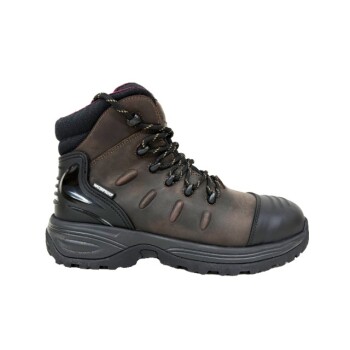
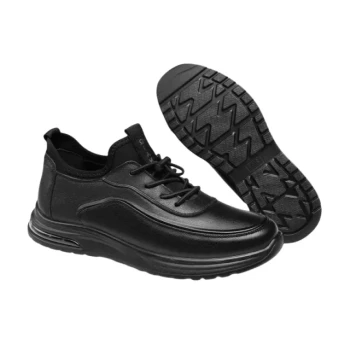
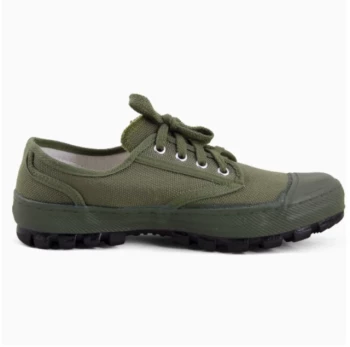
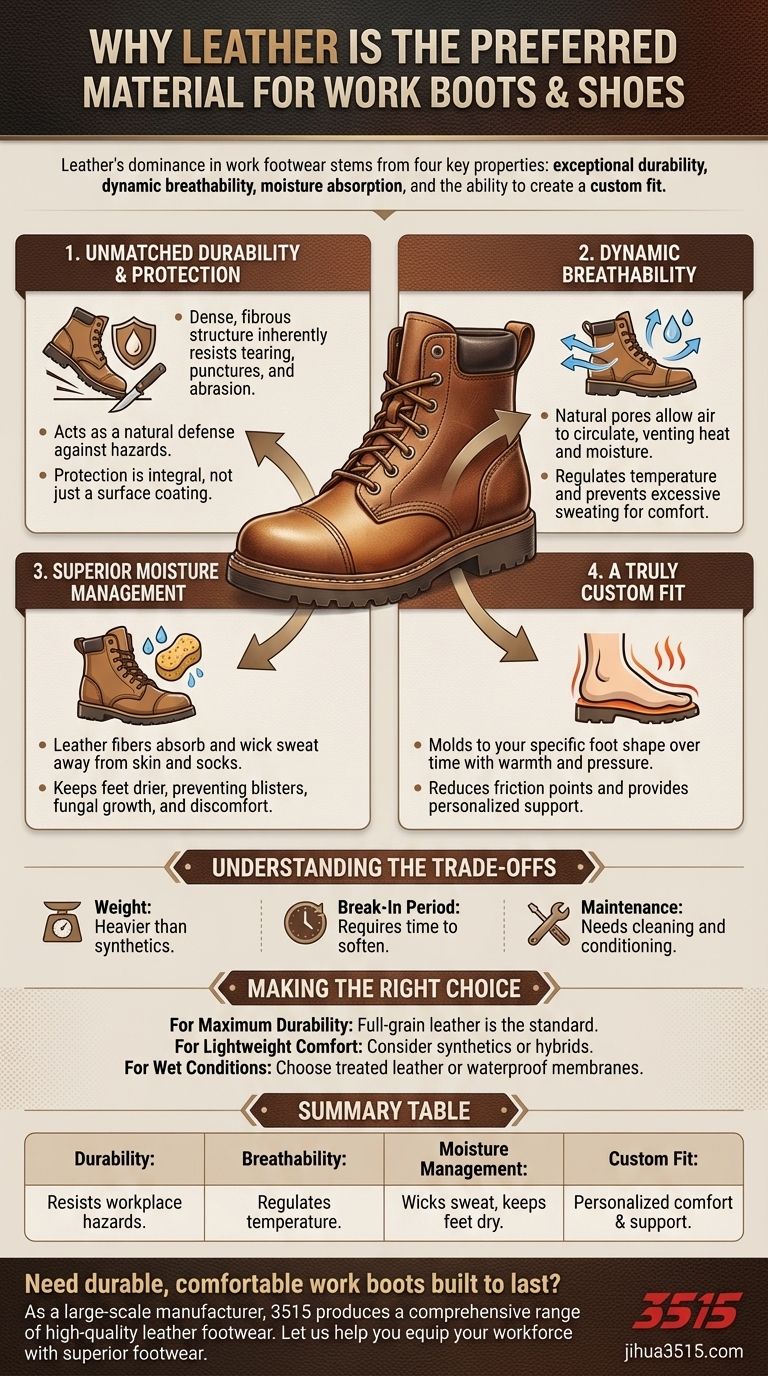
Leather's dominance in work footwear is a direct result of four key properties. It is exceptionally durable, breathable, and capable of absorbing moisture, all while physically molding itself to the wearer's foot over time to create a truly custom and comfortable fit.
While modern synthetic materials have their place, full-grain leather remains the benchmark for high-quality work boots because it offers a unique, all-in-one balance of rugged protection and dynamic, long-term comfort that is difficult to replicate.
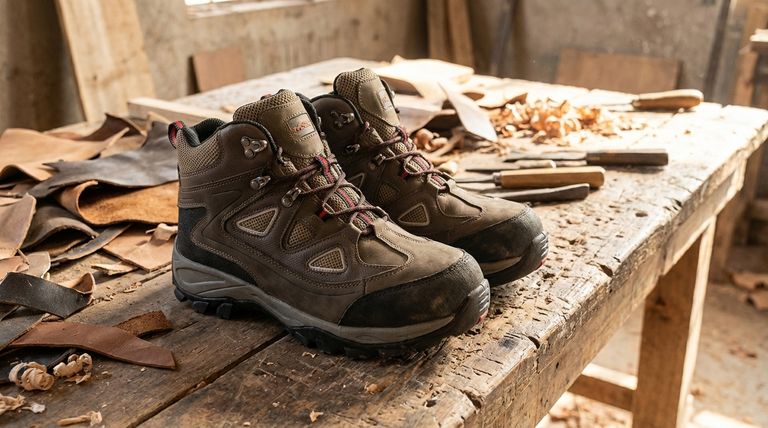
The Core Qualities of Leather Explained
To understand why leather is so trusted, we need to look at how its natural structure translates into performance on the job. Each characteristic solves a specific problem faced by anyone who spends long hours on their feet in a demanding environment.
Unmatched Durability and Protection
Leather has a dense, fibrous structure that inherently resists tearing, punctures, and abrasion. This makes it a natural first line of defense against common workplace hazards like dropped tools or scrapes against sharp objects.
Unlike many woven synthetics, leather's protection is integral to the material itself, not just a surface-level coating.
Dynamic Breathability
Leather is a natural skin, and it contains thousands of tiny pores. These pores allow air to circulate, venting the hot, moist air generated by your feet and allowing fresh, cooler air to enter.
This process is critical for regulating temperature and preventing the excessive sweating that leads to discomfort and foot health issues.
Superior Moisture Management
Beyond just letting air pass through, leather fibers can absorb and hold a significant amount of moisture. This acts to wick sweat directly away from your skin and socks.
By drawing moisture away from the foot, leather helps keep your feet drier, which is essential for preventing blisters, fungal growth, and the general discomfort of a damp boot.
A Truly Custom Fit
Perhaps leather's most unique quality is its ability to conform to the specific shape of your foot. Over an initial "break-in" period, the warmth and pressure from your foot cause the leather to stretch and mold.
This creates a custom pocket for your heel, arch, and toes, reducing friction points and providing support precisely where you need it. A well-broken-in leather boot offers a level of personalized comfort that rigid synthetic materials cannot match.
Understanding the Trade-offs
No material is perfect for every situation. Being an effective advisor means acknowledging where leather has limitations compared to its modern counterparts.
The Issue of Weight
Generally, a high-quality leather boot will be heavier than a comparable boot made primarily from synthetic textiles like nylon or polyester mesh.
For jobs that require constant walking over long distances, this added weight can contribute to fatigue over the course of a day.
The Required Break-In Period
The same quality that allows leather to create a custom fit—its initial stiffness—can be a short-term drawback. Unlike many synthetic boots that are comfortable out of the box, most leather boots require a period of wear before they become truly comfortable.
Maintenance and Weatherproofing
To maintain its strength and suppleness, leather requires occasional cleaning and conditioning. If neglected, it can dry out and crack.
Furthermore, while naturally water-resistant, most leather is not fully waterproof without special treatments or the inclusion of a separate waterproof membrane, which can sometimes reduce its natural breathability.
Making the Right Choice for Your Work Environment
Your ideal material depends entirely on the demands of your job. Use these guidelines to make an informed decision.
- If your primary focus is maximum durability and protection: A full-grain leather boot is the undisputed standard for harsh environments like construction, logging, or heavy manufacturing.
- If your primary focus is lightweight comfort for long hours of walking: Consider boots made from synthetic textiles or hybrid models that use leather only in high-wear areas.
- If your primary focus is all-weather performance in wet conditions: Look for high-quality treated leather or a boot that combines a leather upper with a certified waterproof membrane.
Ultimately, understanding these material properties empowers you to select footwear that functions not just as protection, but as a critical tool for your daily work.
Summary Table:
| Key Quality | Benefit for Work Boots |
|---|---|
| Durability | Resists tears, punctures, and abrasion from workplace hazards. |
| Breathability | Regulates temperature and prevents excessive sweating. |
| Moisture Management | Wicks sweat away to keep feet dry and prevent blisters. |
| Custom Fit | Molds to the foot's shape for personalized comfort and support. |
Need durable, comfortable work boots built to last?
As a large-scale manufacturer, 3515 produces a comprehensive range of high-quality leather footwear for distributors, brand owners, and bulk clients. Our production capabilities encompass all types of durable work shoes and boots designed to meet the demands of any profession.
Let us help you equip your workforce with superior footwear. Contact our team today to discuss your needs and explore our catalog.
Visual Guide
Related Products
- Durable Leather Work Boots for Wholesale & Custom Manufacturing
- Wholesale Leather Work Boots with Customizable Wedge Sole for Brands
- Durable Leather Work Boots for Wholesale & Custom OEM Manufacturing
- Durable Goodyear Welt Leather Work Boots for Wholesale & Private Label
- Durable Leather Work Boots Wholesale Manufacturer & Custom Factory
People Also Ask
- What is the difference between full-grain and top-grain leather? Premium Material Guide for Boot Manufacturers
- What are the common workplace hazards that can be mitigated with the right work boots? Protect Your Workforce
- What are the common foot issues workers face due to uncomfortable work boots? Prevent Pain & Deformities
- What are the advantages of leather versus synthetic work boots? A Guide to Choosing the Right Material
- What are the key components of modern work boots? Engineered for Ultimate Durability and Comfort