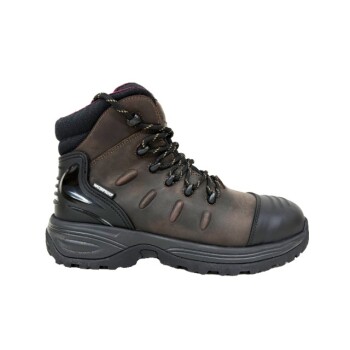
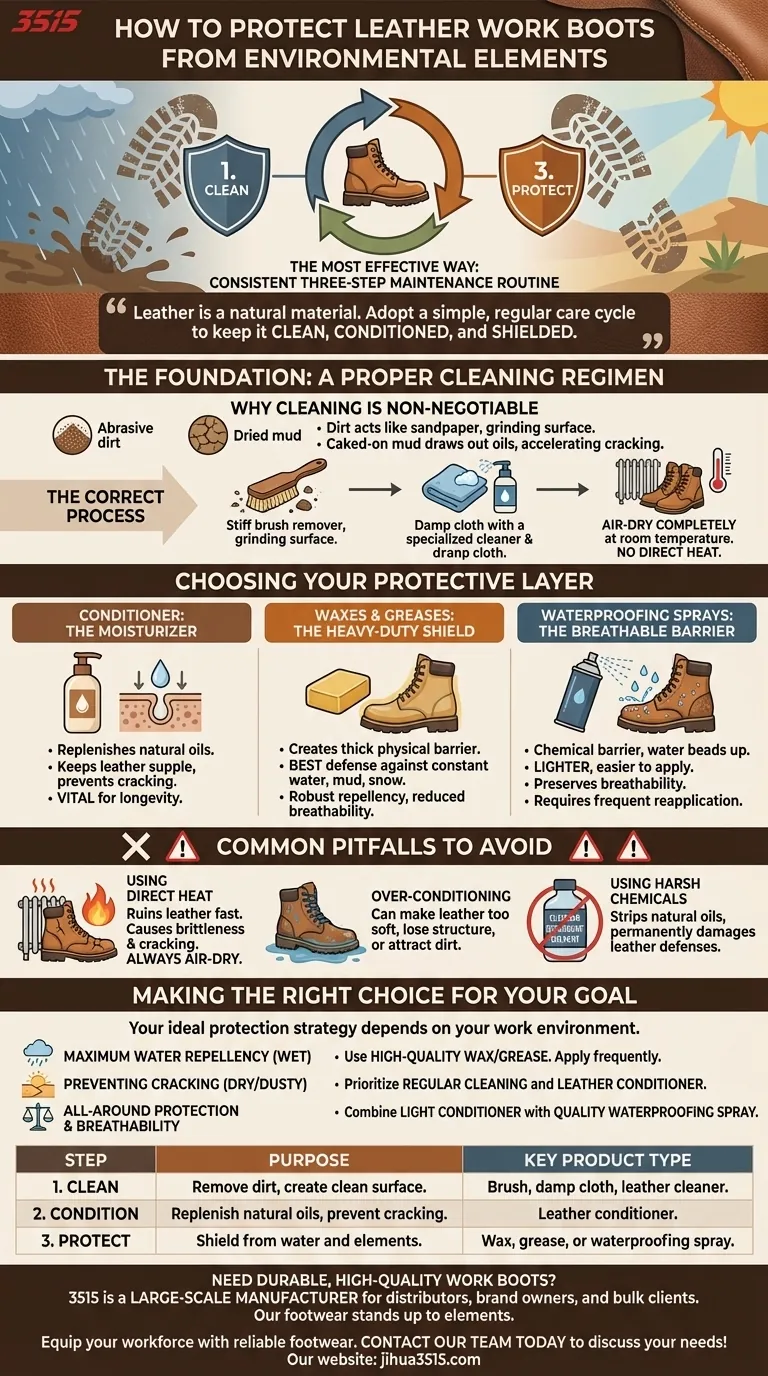
The most effective way to protect leather work boots is through a consistent three-step maintenance routine: thoroughly cleaning them, nourishing the leather with a conditioner, and then applying a dedicated waterproofing product like a wax or spray. This layered approach not only shields them from external elements like water, mud, and sun but also preserves the leather's natural durability and flexibility.
Leather is a natural material that can dry, crack, and lose its protective qualities if neglected. The goal isn't to find a single solution but to adopt a simple, regular care cycle that keeps the leather clean, conditioned, and shielded from the environment.
The Foundation: A Proper Cleaning Regimen
Before you can protect your boots, you must create a clean surface. Applying products over dirt and grime traps abrasive particles against the leather and hinders absorption.
Why Cleaning is Non-Negotiable
Dirt and mud act like sandpaper, slowly grinding away at the leather's surface with every step you take.
Additionally, caked-on mud can draw out the natural oils from the leather as it dries, accelerating cracking and damage.
The Correct Cleaning and Drying Process
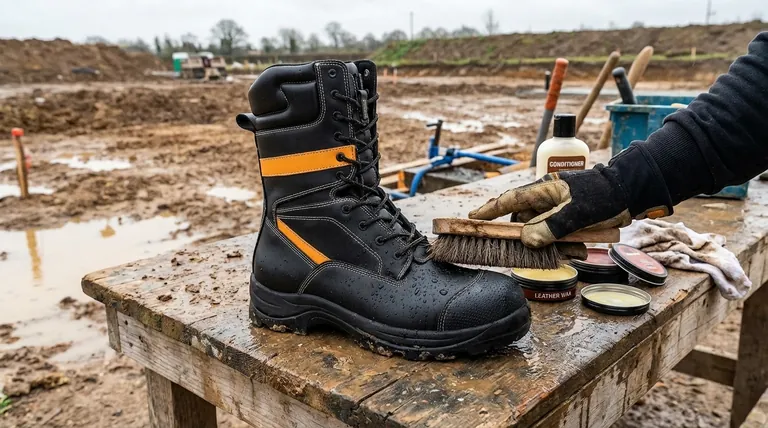
First, use a brush to remove all loose dirt and debris. For stubborn grime, use a damp cloth and, if necessary, a specialized leather cleaner.
Crucially, you must let the boots air-dry completely at room temperature. Never place them near a direct heat source like a radiator or fire, as this will shrink and crack the leather.
Choosing Your Protective Layer
Once your boots are clean and dry, you have to decide what kind of protection to apply. The three main categories—conditioners, waxes, and sprays—serve different primary purposes.
Leather Conditioner: The Moisturizer
Think of conditioner as a moisturizer for the leather. Its main job is to penetrate the hide and replenish the natural oils that are lost over time.
This process keeps the leather supple, prevents it from drying out and cracking, and is the most important step for long-term durability.
Waxes and Greases: The Heavy-Duty Shield
Waxes, greases, and heavy-duty oils create a thick physical barrier on the surface of the leather.
These are your best defense against constant exposure to water, mud, and snow. They offer the most robust water repellency but can sometimes reduce the leather's breathability.
Waterproofing Sprays: The Breathable Barrier
Waterproofing sprays create a chemical barrier on the leather's surface that causes water to bead up and roll off.
They are lighter than waxes, easier to apply, and do a better job of preserving the material's natural breathability. However, they typically require more frequent reapplication.
Common Pitfalls to Avoid
Applying the right product is only half the battle. Avoiding common mistakes is just as critical to extending the life of your boots.
Using Direct Heat to Dry Boots
This is the fastest way to ruin leather boots. Intense, direct heat cooks the leather, causing it to become brittle and crack, sometimes after a single exposure. Always air-dry.
Over-Conditioning or Oiling
While conditioning is vital, using too much can be counterproductive. Oversaturated leather can become too soft, losing its supportive structure, or it can become sticky and attract even more dirt.
Using Harsh Chemicals
Never use household cleaners, detergents, or solvents on your leather boots. These products are designed to strip away oils and will permanently damage the leather by removing its natural defenses.
Making the Right Choice for Your Goal
Your ideal protection strategy depends entirely on your work environment. A consistent routine is always more effective than a single, intensive treatment.
- If your primary focus is maximum water repellency in wet conditions: Use a high-quality wax or grease after cleaning and apply it frequently to maintain the barrier.
- If your primary focus is preventing cracking in dry, dusty environments: Prioritize regular cleaning and application of a leather conditioner to keep the material nourished.
- If your primary focus is all-around protection while maintaining breathability: Combine a light leather conditioner with a quality waterproofing spray, reapplying the spray as needed.
Ultimately, treating your leather boots with consistent care is the best investment you can make in their performance and longevity.
Summary Table:
| Step | Purpose | Key Product Type |
|---|---|---|
| 1. Clean | Remove dirt and grime to create a clean surface. | Brush, damp cloth, leather cleaner. |
| 2. Condition | Replenish natural oils to prevent cracking. | Leather conditioner. |
| 3. Protect | Shield from water and elements. | Wax, grease, or waterproofing spray. |
Need durable, high-quality work boots that stand up to the elements? As a large-scale manufacturer, 3515 produces a comprehensive range of footwear for distributors, brand owners, and bulk clients. Our production capabilities encompass all types of durable shoes and boots built for demanding work environments. Let us help you equip your workforce with reliable footwear. Contact our team today to discuss your needs!
Visual Guide
Related Products
- Durable Leather Work Boots for Wholesale & Custom Manufacturing
- Wholesale Leather Work Boots with Customizable Wedge Sole for Brands
- Durable Leather Work Boots for Wholesale & Custom OEM Manufacturing
- Durable Goodyear Welt Leather Work Boots for Wholesale & Private Label
- Durable Leather Work Boots Wholesale Manufacturer & Custom Factory
People Also Ask
- What is the difference between full-grain and top-grain leather? Premium Material Guide for Boot Manufacturers
- What are the common workplace hazards that can be mitigated with the right work boots? Protect Your Workforce
- What are the common foot issues workers face due to uncomfortable work boots? Prevent Pain & Deformities
- What are the advantages of leather versus synthetic work boots? A Guide to Choosing the Right Material
- What are the key components of modern work boots? Engineered for Ultimate Durability and Comfort