
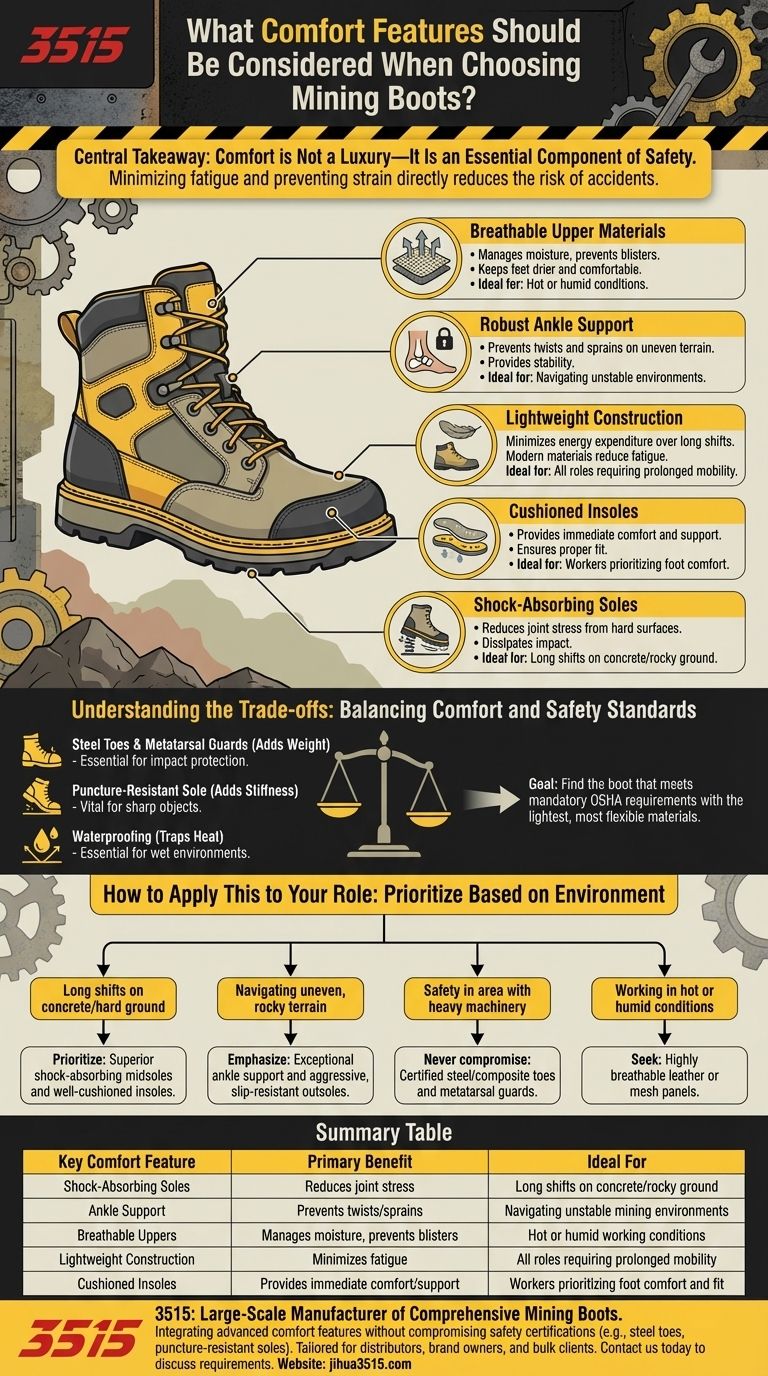
When choosing mining boots, the most critical comfort features to consider are shock-absorbing soles, cushioned insoles, robust ankle support, breathable upper materials, and a lightweight overall construction. These elements work together to reduce physical stress and fatigue over long, demanding shifts in hazardous environments.
The central takeaway is that comfort in a mining boot is not a luxury—it is an essential component of safety. A boot that minimizes fatigue and prevents strain directly reduces the risk of slips, trips, and other accidents caused by physical exhaustion.
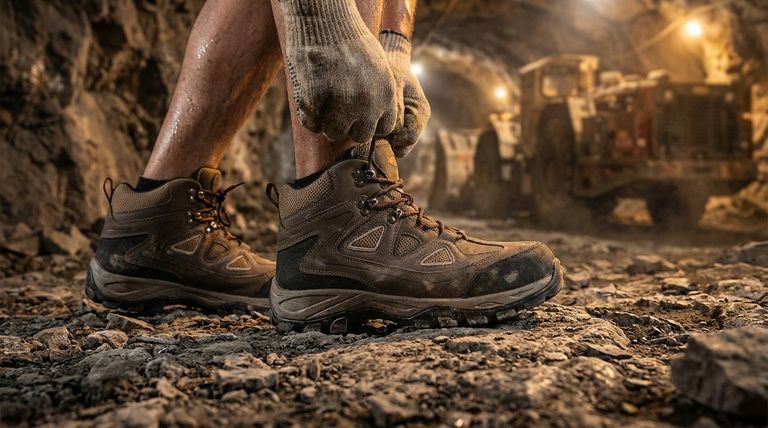
How Comfort Directly Impacts Performance and Safety
In the demanding world of mining, comfort translates directly to endurance and focus. Each feature is designed to solve a specific physical challenge posed by the environment.
Reducing Fatigue with Lightweight Construction
Every ounce on your feet matters over a 12-hour shift. Modern composite materials can offer protection comparable to steel but at a significantly lower weight, minimizing the energy you expend with every step.
Absorbing Impact with Advanced Midsoles
Constantly walking on hard, uneven surfaces sends repetitive shocks through your feet, knees, and back. Shock-absorbing soles, often made of polyurethane or specialized foams, are crucial for dissipating this impact and preventing long-term joint stress.
Managing Moisture with Breathable Uppers
Feet that can't breathe become damp, leading to blisters, discomfort, and fungal infections. Uppers made from high-quality leather or advanced synthetic mesh allow sweat vapor to escape, keeping your feet drier and more comfortable.
Ensuring Stability with Ankle Support
Uneven ground is a constant in mining, creating a high risk of twists and sprains. A well-structured boot with strong ankle support locks your heel in place and provides the stability needed to prevent injury.
The Foundation of Comfort: Insoles and Fit
The insole is the direct point of contact for your foot. A quality cushioned insole provides an immediate layer of comfort, but a proper fit is paramount. A boot that is too tight restricts blood flow, while one that is too loose can cause blisters.
Understanding the Trade-offs
Selecting the right boot requires balancing comfort with non-negotiable safety standards. Understanding these compromises is key to making an informed choice.
The Weight of Protection
Features like steel toes and metatarsal guards are essential for protecting against compression and falling objects, but they inherently add weight. The goal is to find a boot that meets mandatory OSHA requirements while using the lightest materials possible for the job.
The Stiffness of Puncture Resistance
A puncture-resistant sole is vital for preventing injuries from sharp objects on the ground. However, this reinforcement adds rigidity and can reduce the boot's flexibility, which may feel less comfortable initially.
The Heat of Waterproofing
A truly waterproof boot is essential for wet environments, but the membranes that block water can also trap heat and limit breathability. This can lead to sweaty feet if you work in a hot, dry mine.
How to Apply This to Your Role
Your specific job and environment dictate which features you should prioritize.
- If your primary focus is working long shifts on concrete or hard ground: Prioritize boots with superior shock-absorbing midsoles and well-cushioned insoles.
- If your primary focus is navigating uneven, rocky terrain: Emphasize exceptional ankle support and aggressive, slip-resistant outsoles.
- If your primary focus is safety in an area with heavy machinery: Never compromise on certified steel/composite toes and metatarsal guards, even if it means accepting a heavier boot.
- If your primary focus is working in hot or humid conditions: Seek out boots with highly breathable leather or mesh panels to manage moisture effectively.
Ultimately, the right boot provides the highest level of safety for your specific hazards while minimizing the physical toll on your body.
Summary Table:
| Key Comfort Feature | Primary Benefit | Ideal For |
|---|---|---|
| Shock-Absorbing Soles | Reduces joint stress from hard surfaces | Long shifts on concrete/rocky ground |
| Ankle Support | Prevents twists/sprains on uneven terrain | Navigating unstable mining environments |
| Breathable Uppers | Manages moisture, prevents blisters | Hot or humid working conditions |
| Lightweight Construction | Minimizes fatigue over extended wear | All roles requiring prolonged mobility |
| Cushioned Insoles | Provides immediate comfort and support | Workers prioritizing foot comfort and fit |
As a large-scale manufacturer, 3515 produces a comprehensive range of mining boots tailored for distributors, brand owners, and bulk clients. Our boots integrate advanced comfort features—like shock-absorbing soles, breathable materials, and robust ankle support—without compromising on safety certifications (e.g., steel toes, puncture-resistant soles). Whether you need durable footwear for harsh mining conditions or customized solutions for your workforce, we ensure superior performance and endurance. Contact us today to discuss your specific requirements and benefit from our expert manufacturing capabilities!
Visual Guide
Related Products
- Durable Leather Work Boots for Wholesale & Custom Manufacturing
- Durable Leather Work Boots for Wholesale & Custom OEM Manufacturing
- Durable Leather Work Boots Wholesale Manufacturer & Custom Factory
- Premium Waterproof High-Cut Industrial Safety Boots for Wholesale and Bulk Orders
- Wholesale Leather Work Boots with Customizable Wedge Sole for Brands
People Also Ask
- What is the difference between full-grain and top-grain leather? Premium Material Guide for Boot Manufacturers
- What are the common workplace hazards that can be mitigated with the right work boots? Protect Your Workforce
- What are the common foot issues workers face due to uncomfortable work boots? Prevent Pain & Deformities
- What are the advantages of leather versus synthetic work boots? A Guide to Choosing the Right Material
- What are the key components of modern work boots? Engineered for Ultimate Durability and Comfort


















