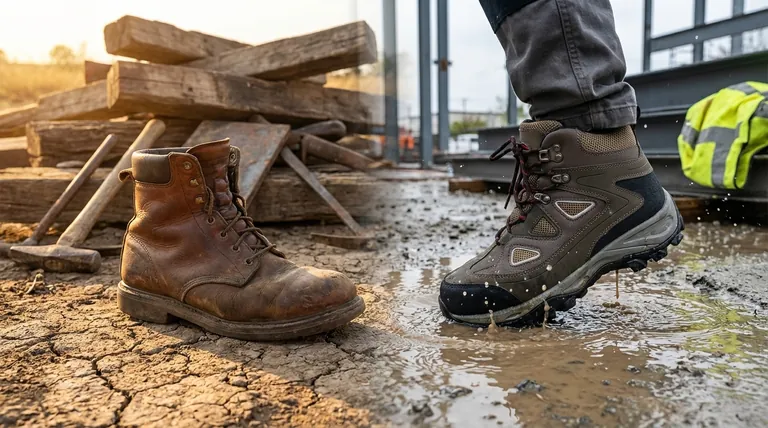
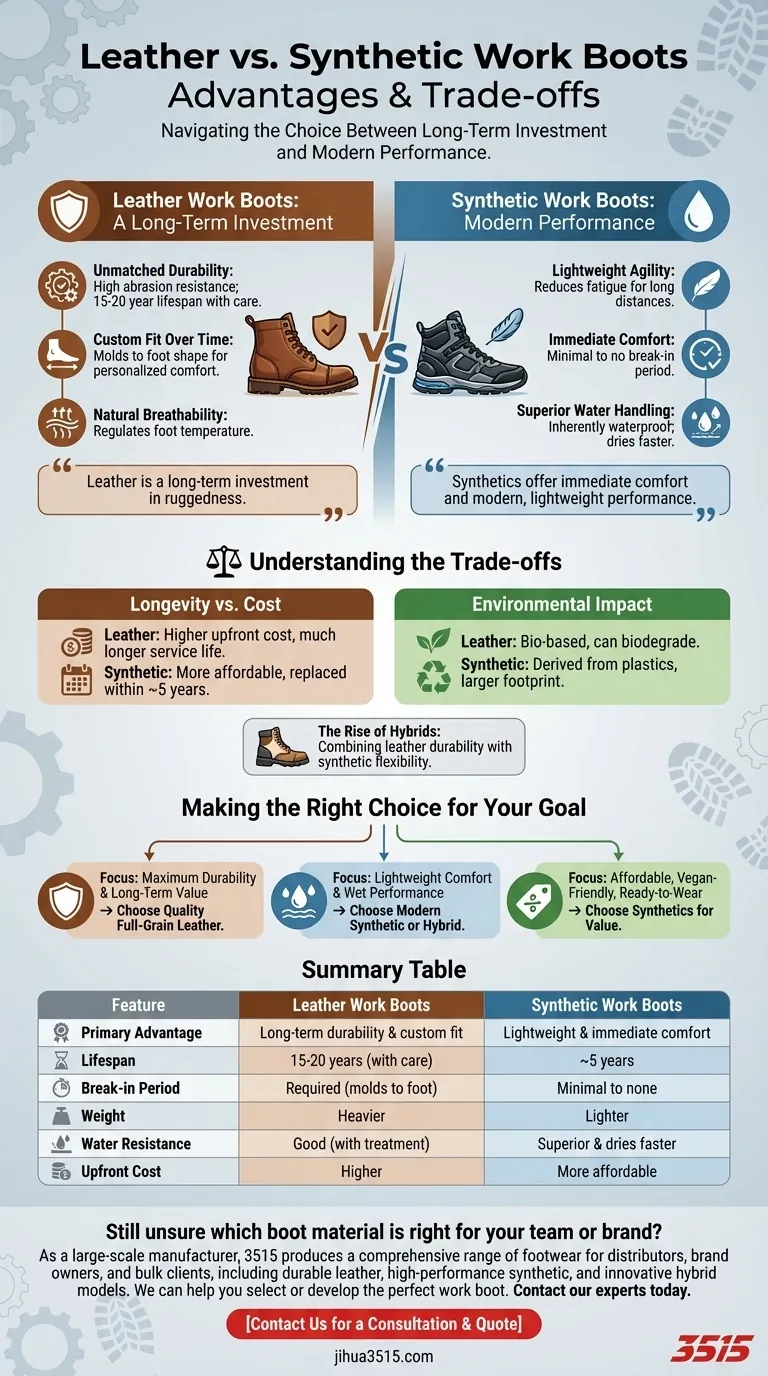
At a glance, the primary advantage of leather work boots is their exceptional long-term durability and ability to mold to your foot for a custom fit. In contrast, synthetic work boots excel by being lightweight, more affordable, and comfortable right out of the box, often with superior performance in wet conditions.
The decision between leather and synthetic boots is no longer about which is universally "better," but which set of trade-offs aligns with your specific needs. Leather is a long-term investment in ruggedness, while synthetics offer immediate comfort and modern, lightweight performance.
The Case for Leather: A Long-Term Investment
Leather has been the traditional material for work boots for good reason. It’s a natural material that offers a unique combination of toughness and comfort when properly cared for.
Unmatched Durability and Lifespan
Full-grain leather is renowned for its high resistance to abrasion and ruggedness, making it ideal for heavy-duty work environments.
With proper care, a quality pair of leather boots can last 15 to 20 years, far outstripping the typical lifespan of their synthetic counterparts.
A Custom Fit Over Time
The most significant comfort advantage of leather is its ability to break in and conform to the unique shape of your foot.
This molding process creates a personalized fit that can reduce friction and improve comfort during long days on your feet.
Natural Breathability
As a natural material, leather allows for a degree of breathability that helps regulate foot temperature and manage moisture, which is crucial for all-day comfort.
The Rise of Synthetics: Modern Performance
Synthetic materials have revolutionized footwear, offering performance characteristics that are difficult or impossible to achieve with traditional leather.
Lightweight Agility
Synthetic boots are consistently lighter than leather boots of a similar style. This reduction in weight minimizes fatigue, a critical factor for anyone who covers long distances on foot.
Immediate Comfort
One of the most appealing features of synthetic boots is the minimal to non-existent break-in period. They are built to be comfortable from the very first wear.
Superior Water Handling
While leather can be treated for water resistance, many synthetic materials are inherently waterproof and dry much faster. This makes them a superior choice for consistently wet or damp working conditions.
Understanding the Trade-offs
Choosing the right boot means understanding the compromises you're making with either material. The historic gap in quality has narrowed, but fundamental differences remain.
Longevity vs. Cost
Leather boots represent a higher upfront cost but deliver a much longer service life, making them a better long-term value investment.
Synthetic boots are more affordable but typically need to be replaced within five years, as the materials degrade and lose their shape and support irreversibly once they begin to fail.
Environmental Impact
Real leather, depending on the tanning process, is a bio-based material that can biodegrade. Most synthetic materials, derived from plastics, do not break down effectively and have a larger environmental footprint at the end of their life.
The Rise of Hybrids
Many modern boots use a combination of leather and synthetic panels. This approach aims to provide the best of both worlds: the durability of leather in high-wear areas and the lightweight, breathable flexibility of synthetics elsewhere.
Making the Right Choice for Your Goal
While materials are a key factor, the ultimate decision should be guided by fit, construction, and your specific job requirements. A poorly fitting leather boot is worse than a perfectly fitting synthetic one.
- If your primary focus is maximum durability and long-term value: Choose a high-quality, full-grain leather boot and commit to its care.
- If your primary focus is lightweight comfort and performance in wet environments: A modern synthetic or synthetic-leather hybrid boot is your best option.
- If you need an affordable, vegan-friendly, or ready-to-wear boot for moderate use: Synthetics provide excellent value and immediate comfort.
Ultimately, the best work boot is the one that fits your foot, your job, and your priorities perfectly.
Summary Table:
| Feature | Leather Work Boots | Synthetic Work Boots |
|---|---|---|
| Primary Advantage | Long-term durability & custom fit | Lightweight & immediate comfort |
| Lifespan | 15-20 years (with proper care) | ~5 years |
| Break-in Period | Required (molds to your foot) | Minimal to none |
| Weight | Heavier | Lighter |
| Water Resistance | Good (with treatment) | Superior & dries faster |
| Upfront Cost | Higher | More affordable |
Still unsure which boot material is right for your team or brand?
As a large-scale manufacturer, 3515 produces a comprehensive range of footwear for distributors, brand owners, and bulk clients. Our production capabilities encompass all types of shoes and boots, including durable leather, high-performance synthetic, and innovative hybrid models.
We can help you select or develop the perfect work boot that aligns with your specific job requirements, comfort needs, and budget. Contact our experts today to discuss your project and get a quote.
Contact Us for a Consultation & Quote
Visual Guide
Related Products
- Durable Leather Work Boots for Wholesale & Custom Manufacturing
- Durable Leather Work Boots for Wholesale & Custom OEM Manufacturing
- Durable Leather Work Boots Wholesale Manufacturer & Custom Factory
- Durable Leather Moc Toe Work Boots for Wholesale & Custom Manufacturing
- Wholesale Leather Work Boots with Customizable Wedge Sole for Brands
People Also Ask
- What is the difference between full-grain and top-grain leather? Premium Material Guide for Boot Manufacturers
- What are the common workplace hazards that can be mitigated with the right work boots? Protect Your Workforce
- What are the common foot issues workers face due to uncomfortable work boots? Prevent Pain & Deformities
- What are the key components of modern work boots? Engineered for Ultimate Durability and Comfort
- Is there a definitive answer to whether pull-on or lace-up work boots are better? Choose the Right Boot for Your Job