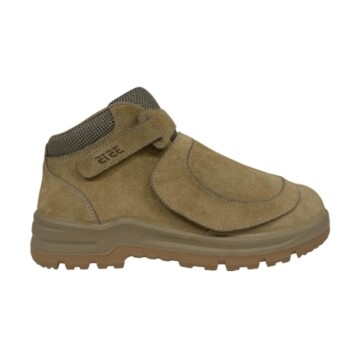
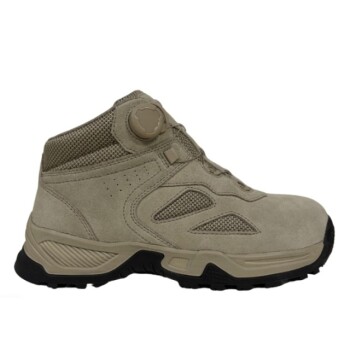
The transition from traditional Polyurethane (PU) to expanded Thermoplastic Polyurethane (eTPU) represents a paradigm shift in industrial safety footwear design. eTPU offers superior resilience and energy feedback, which significantly reduces the metabolic workload of the wearer. By allowing for greater vertical deformation, eTPU midsoles actively support the lower leg muscles, transforming the footwear from a passive protective shell into an ergonomic tool for fatigue reduction.
eTPU midsoles provide a technical advantage over traditional PU by leveraging high-elasticity energy return to reduce muscle strain. This shift from simple shock absorption to active energy recovery is essential for maintaining worker productivity and long-term musculoskeletal health.
The Mechanics of Superior Energy Return
Enhanced Resilience and Elasticity
eTPU is engineered to possess much higher resilience than standard dense PU. This material stores energy during the heel strike and releases it during the toe-off phase of the gait cycle.
Greater Vertical Deformation
The expanded structure of TPU allows for a more significant vertical compression under weight. This increased deformation range provides a softer initial impact while ensuring the material has enough "travel" to return a high percentage of energy to the wearer.
Active Energy Feedback
Unlike traditional materials that simply dissipate impact energy as heat, eTPU acts like a spring. This constant feedback loop provides a consistent "rebound" effect that makes walking on hard industrial surfaces feel more effortless.
Physiological Impact on the Wearer
Reducing Lower Leg Workload
The high-elasticity eTPU midsole provides direct physical support to the soleus and gastrocnemius muscles. By returning energy to the foot, the material reduces the force these muscles must generate to move the body forward.
Mitigation of Cumulative Fatigue
Because the muscles are under less strain during each step, the overall physical burden on the worker is lowered. This is a critical technical advantage for professionals who spend 8 to 12 hours a day on their feet.
Improved Ergonomic Support
By optimizing the gait cycle, eTPU helps maintain proper form throughout a work shift. This reduces the likelihood of "slumping" or gait changes that occur when a worker becomes tired, which often leads to secondary injuries.
Synergistic Materials in Safety Footwear
Lightweight Puncture Resistance
Modern safety shoes often pair eTPU with puncture-resistant composite midsoles. These fiber-based structures offer equivalent protection to steel but with significantly less weight and better fatigue resistance.
The Role of PU in Outsoles
While eTPU is ideal for the midsole, traditional PU remains a preferred choice for the outsole due to its durability. PU outsoles are significantly lighter than rubber and align with ESG (Environmental, Social, and Governance) goals due to their faster degradation rates and cleaner production processes.
Total System Weight Reduction
Combining an eTPU midsole, a composite puncture plate, and a PU outsole creates a high-performance system. This combination minimizes the "pendulum effect" of heavy footwear, further reducing the energy required for every step.
Understanding the Trade-offs
Stability vs. Rebound
The high elasticity of eTPU can sometimes create a feeling of instability for workers on highly irregular or jagged terrain. In these specific cases, a firmer traditional PU might be preferred for its lateral stiffness.
Cost of Manufacturing
eTPU production is more technically demanding than standard PU injection. This typically results in a higher price point, though this is usually offset by the long-term benefits of reduced worker fatigue and fewer musculoskeletal complaints.
Temperature Sensitivity
While eTPU is generally robust, its rebound characteristics can vary slightly in extreme temperature fluctuations. However, it generally maintains its properties better than many traditional foam alternatives in standard industrial environments.
How to Apply This to Your Project
Recommendations for Footwear Selection
- If your primary focus is reducing worker fatigue on hard floors: Prioritize footwear with eTPU midsoles to maximize energy return and support the lower leg muscles.
- If your primary focus is lightweight puncture protection: Choose models that integrate high-strength composite fiber plates rather than traditional steel inserts.
- If your primary focus is corporate sustainability and ESG: Look for designs utilizing PU outsoles, which offer a cleaner manufacturing footprint and better end-of-life degradability.
By integrating eTPU technology, safety footwear evolves from basic PPE into a sophisticated ergonomic intervention that protects both the foot and the wearer's long-term physical capacity.
Summary Table:
| Feature | Traditional PU Midsole | expanded TPU (eTPU) Midsole |
|---|---|---|
| Core Function | Passive Shock Absorption | Active Energy Feedback (Spring-like) |
| Resilience | Moderate | High (Superior Rebound) |
| Worker Benefit | Basic Impact Protection | Reduced Muscle Strain & Fatigue |
| Deformation | Limited Compression | High Vertical Deformation |
| Best Use Case | Jagged/Irregular Terrain | Hard Industrial Floors & Long Shifts |
Partner with 3515 for High-Performance Footwear Solutions
As a large-scale manufacturer serving distributors and brand owners, 3515 offers comprehensive production capabilities for all footwear types, anchored by our flagship Safety Shoes series. Our expertise in integrating cutting-edge materials like eTPU and lightweight composite plates ensures your product line delivers maximum ergonomic value to the end-user.
Our extensive portfolio covers:
- Work & Tactical Boots
- Outdoor & Training Shoes
- Sneakers & Athletic Footwear
- Dress & Formal Shoes
Ready to upgrade your inventory with superior fatigue-reduction technology? Contact us today to discuss your bulk requirements and custom manufacturing needs.
References
- Judith Osterloh, Rainer Bader. The effect of different midsole materials in safety shoes on perceived comfort, muscle activities, and biomechanical parameters during walking – a musculoskeletal modelling approach. DOI: 10.1080/19424280.2025.2472249
This article is also based on technical information from 3515 Knowledge Base .
Related Products
- Premium Suede Metatarsal Guard Safety Boots Work Shoes
- High Performance Fire-Retardant Waterproof Safety Boots
- Premium Wholesale Wheat Nubuck Safety Boot with Rapid Lacing System
- Premium Wholesale Waterproof Safety Boots High Performance Protection for Industrial Markets
- Advanced KPU Athletic Safety Shoe with Steel Toe Cap Anti-Slip Rotary Lacing System
People Also Ask
- How does metatarsal protection in safety footwear work? The Essential Guide to Foot Safety
- What is a metatarsal guard in safety boots? Essential Protection for Your Entire Foot
- How do metatarsal guards enhance work shoe safety? Prevent Crushing Foot Injuries on the Job
- What does the 'MT' in ASTM F2413-18 stand for? Essential Metatarsal Protection Explained
- What is metatarsal protection in safety boots? Essential Defense for Top-of-Foot Hazards