Properly maintaining and storing your lace-up boots is a straightforward process that hinges on three key actions. You must regularly clean the exterior and laces, treat the boot's material to preserve its integrity, and store them in a way that maintains their physical shape and protects them from environmental damage.
The goal of boot care is not just cleaning, but preservation. A consistent cycle of cleaning away damaging dirt, treating the material to keep it supple and protected, and storing it correctly to prevent degradation is what transforms a pair of boots into a long-term investment.
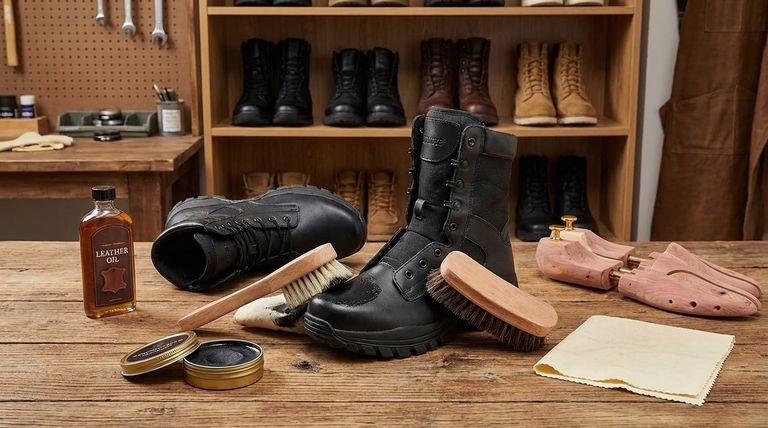
The Three Pillars of Boot Maintenance
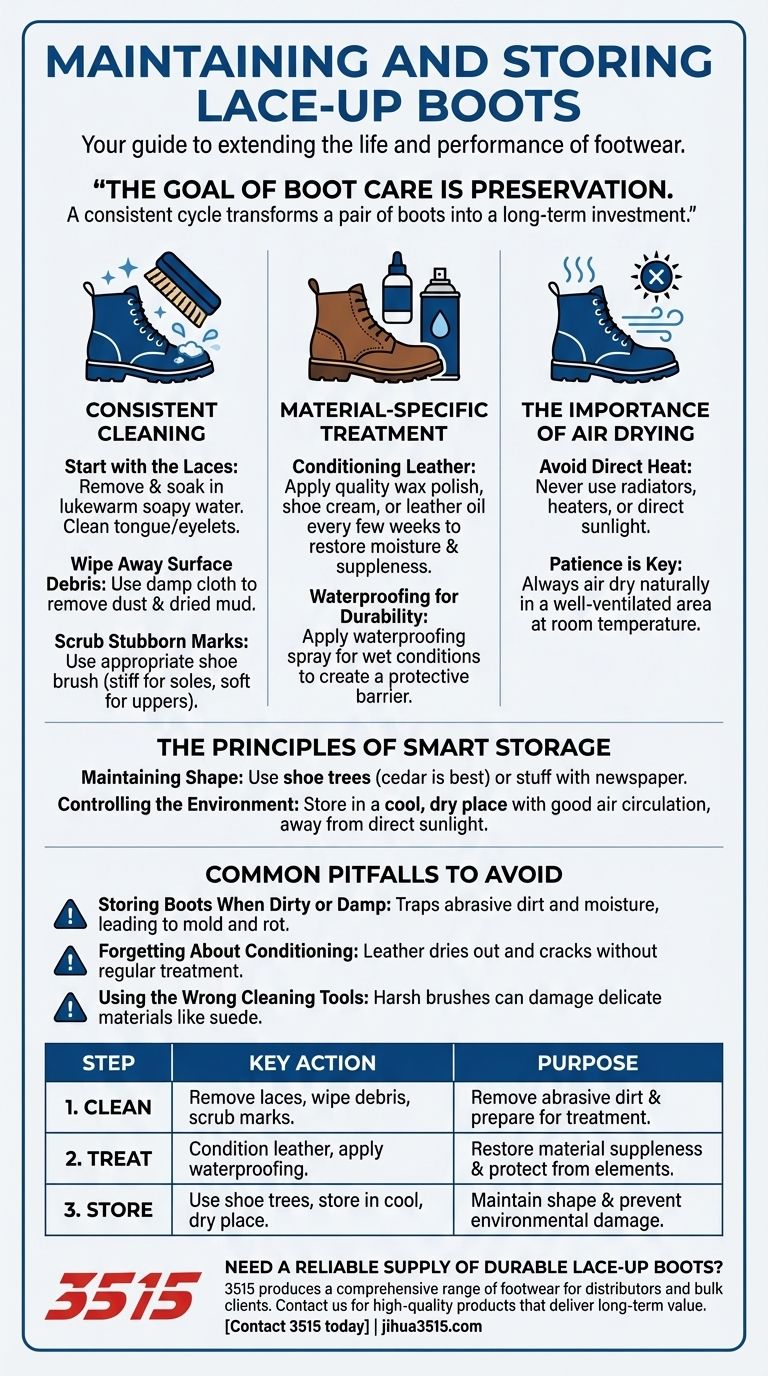
Effective care isn't a single action but a consistent routine. By breaking it down into three stages—cleaning, treating, and drying— you create a simple yet powerful system for extending the life and performance of your footwear.
Pillar 1: Consistent Cleaning
Cleaning is the essential first step that removes abrasive elements and prepares the boot for any conditioning or protective treatments.
Start with the Laces Before cleaning the boot itself, remove the laces. This allows you to clean the tongue and eyelets properly. Soak the laces in a small bowl of lukewarm water with a bit of laundry detergent.
Wipe Away Surface Debris Use a damp cloth to wipe down the entire surface of both boots. This removes the initial layer of dust and dried mud that can abrade the material over time.
Scrub Stubborn Marks For caked-on mud or scuff marks, use a dedicated shoe brush. A stiff brush works well for soles and welts, while a softer brush is better for leather or suede uppers.
Pillar 2: Material-Specific Treatment
Once clean, the boot's material needs care to restore its natural properties and protect it from the elements.
Conditioning Leather Leather is a natural skin that dries out over time, leading to stiffness and cracks. Apply a quality wax polish, shoe cream, or leather oil every few weeks to restore moisture and keep it supple.
Waterproofing for Durability For boots exposed to wet conditions, such as military or garden boots, applying a waterproofing spray is crucial. This creates a barrier that prevents water from soaking into the material, which can cause damage and discomfort.
Pillar 3: The Importance of Air Drying
Never move directly from cleaning to storage. Proper drying is a critical intermediate step.
Avoid Direct Heat Never place boots near a radiator, heater, or in direct sunlight to speed up drying. Intense heat can crack leather, warp synthetics, and damage adhesives.
Patience is Key Always let your boots air dry naturally in a well-ventilated area at room temperature. This is the safest method for all materials.
The Principles of Smart Storage
How you store your boots is just as important as how you clean them. Improper storage can undo all your hard work, leading to loss of shape and material degradation.
Maintaining Shape is Non-Negotiable
When not in use, boots are susceptible to creasing and collapsing under their own weight.
Use shoe trees, preferably made of cedar, to help the boot maintain its intended shape. Cedar also has the benefit of absorbing residual moisture and odor. If you don't have shoe trees, stuffing the boots with crumpled newspaper is an effective alternative.
Controlling the Environment
The storage environment can either preserve or destroy your boots.
Find a cool, dry place with good air circulation for storage. Closets are often ideal. Avoid damp basements or hot attics. Storing boots away from direct sunlight is critical to prevent the material from fading and discoloring over time.
Common Pitfalls to Avoid
Even with the best intentions, common mistakes can shorten the lifespan of your boots. Understanding these pitfalls is key to developing an expert-level care routine.
Storing Boots When Dirty or Damp
Putting boots away immediately after use traps dirt and moisture. Abrasive dirt gets ground into the material, while trapped moisture can lead to mold, mildew, and premature rot.
Forgetting About Conditioning
Simply cleaning leather boots is not enough. Without regular conditioning, the leather will inevitably dry out, become brittle, and develop cracks, especially along flex points like the ankle and toe box.
Using the Wrong Cleaning Tools
Using a brush that is too harsh for a delicate material like suede can cause permanent damage to the nap. Always match your brush and cleaning agents to the specific material of your boot.
Your Maintenance Strategy Based on Boot Type
Apply these principles based on how you use your boots to get the best results.
- If your primary focus is preserving dress leather boots: Emphasize the consistent use of cedar shoe trees and applying a quality shoe cream every few weeks to maintain shape and suppleness.
- If your primary focus is maintaining work or military boots: Prioritize a thorough cleaning after each heavy use and the regular application of waterproofing treatments to ensure performance and durability.
- If your primary focus is caring for casual or suede boots: Focus on gentle brushing to remove surface dirt and diligent storage away from direct sunlight to prevent fading.
This consistent care routine transforms your boots from a simple purchase into a reliable, long-term asset.
Summary Table:
| Step | Key Action | Purpose |
|---|---|---|
| 1. Clean | Remove laces, wipe debris, scrub marks | Remove abrasive dirt and prepare for treatment |
| 2. Treat | Condition leather, apply waterproofing | Restore material suppleness and protect from elements |
| 3. Store | Use shoe trees, store in cool, dry place | Maintain shape and prevent environmental damage |
Need a reliable supply of durable lace-up boots that are built to last?
As a large-scale manufacturer, 3515 produces a comprehensive range of footwear for distributors, brand owners, and bulk clients. Our production capabilities encompass all types of shoes and boots, ensuring you receive high-quality products that stand up to rigorous use and are easy to maintain. Let us help you equip your customers with footwear that delivers long-term value.
Contact 3515 today to discuss your bulk footwear needs!
Visual Guide
Related Products
- Wholesale Classic Leather Lace-Up Ankle Boots for Brand Manufacturing
- Durable Goodyear Welt Leather Work Boots for Wholesale & Private Label
- Premium Wholesale Tactical Style Safety Shoes Boots with Quick Lacing
- Wholesale Lightweight Tactical Boots with Dial Closure OEM & Bulk Orders
- Wholesale Training Shoes with Dial Lacing System Custom OEM Manufacturing
People Also Ask
- How are oils used to waterproof leather boots? A Guide to Deep Conditioning & Protection
- Why is regular maintenance necessary for the performance of leather boots? Boost Durability & Brand Reputation
- Why might it be beneficial to pre-heat the boots before applying wax? Achieve Deeper, Longer-Lasting Protection
- How can leather boots maintain their water resistance? A Guide to Lasting Protection
- What is the biggest enemy of leather boots? Protect Your Investment from Water Damage