To put it simply, keeping your work boots dry is a critical practice for three core reasons: it prevents the growth of bacteria and fungus that can harm your feet, it stops persistent odors from developing, and it preserves the structural integrity and materials of the boots themselves.
The core issue extends beyond simple discomfort. Consistently damp boots create a direct threat to your foot health while actively accelerating the breakdown of your investment, compromising the very protection and durability you rely on.
The Unseen Dangers of Damp Boots
A work boot is a specialized tool designed for protection and support. When moisture is allowed to linger, it systematically undermines the boot's ability to perform its function, creating problems for both the wearer and the equipment.
Health Risks: A Breeding Ground for Microbes
Moisture, warmth, and darkness create the ideal environment for bacteria and fungus to thrive.
The inside of a damp boot becomes a perfect incubator for microbes that can lead to unpleasant and persistent conditions like athlete's foot.
Material Degradation: How Water Breaks Down Your Boots
Water is a powerful solvent that can slowly break down the materials that make your boots durable.
Premium leather can become stiff and crack when repeatedly soaked and dried improperly. Adhesives can weaken, and even robust stitch-down welts can be compromised over time, leading to premature failure.
Compromised Performance and Odor
Beyond the health risks, wet boots are simply uncomfortable and ineffective.
They lose their supportive structure, and the trapped bacteria produce unpleasant odors that are difficult to remove once they have set in.
Proactive Strategies for Dryness and Longevity
Maintaining dry boots isn't about a single action but a consistent routine. By adopting a few simple habits, you can dramatically extend the life of your boots and protect your feet.
The Daily Drying Ritual
The most important step is to ensure your boots dry completely between wears.
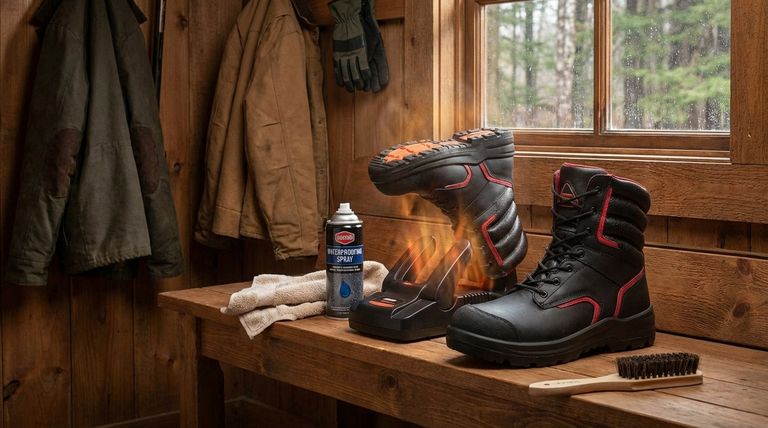
After a wet or snowy shift, clean off any mud or debris and allow the boots to air dry in a well-ventilated area. A dedicated boot dryer is an excellent investment that safely accelerates this process and helps prevent odor.
The Power of Rotation
If your budget allows, owning two pairs of work boots is one of the most effective strategies.
Rotating between pairs ensures each has ample time—at least 24 hours—to dry out completely. This drastically reduces wear and tear and stops moisture-related problems before they start.
Creating a Waterproof Barrier
Prevention is the best defense against moisture.
Regularly applying a waterproofing spray or wax creates a barrier that repels water from the outside. This is especially critical for leather boots to maintain their integrity and keep your feet dry in demanding conditions.
Common Pitfalls to Avoid
Even with the best intentions, common mistakes can shorten the lifespan of your boots. Understanding these pitfalls is key to proper maintenance.
Mistake: Using Direct, High Heat
Never try to speed up drying by placing your boots next to a radiator, heater, or open flame.
Intense, direct heat can crack and shrink leather, melt adhesives, and permanently damage the boot's construction. Slow, gentle drying with airflow is always the correct method.
Mistake: Neglecting Post-Wear Care
Simply taking off your boots and leaving them in a closet or bag traps moisture.
Always take a moment to loosen the laces, pull out the tongue, and place them where air can circulate freely inside and out.
Mistake: Assuming "Waterproof" Means Invincible
A "waterproof" label refers to the boot's initial state.
Over time, waterproof membranes and treatments can wear down. They require regular cleaning and re-treatment with appropriate sprays or waxes to maintain their effectiveness.
How to Apply This to Your Work
Your maintenance strategy should align with your specific work environment and priorities.
- If your primary focus is health and comfort: Make a boot dryer and a daily drying routine your top priority.
- If your primary focus is maximizing boot lifespan: Emphasize regular cleaning, conditioning, and reapplying waterproofing treatments to preserve the materials.
- If you work in consistently wet or snowy conditions: Combining a proactive waterproofing barrier with a diligent drying routine is absolutely essential for both protection and longevity.
Proper boot care is a direct investment in your personal health, safety, and daily comfort on the job.
Summary Table:
| Key Reason | Impact |
|---|---|
| Prevents Health Issues | Stops bacteria/fungus growth (e.g., athlete's foot) |
| Preserves Boot Integrity | Prevents leather cracking, adhesive failure, and material breakdown |
| Eliminates Odors & Discomfort | Maintains comfort and supportive structure |
Invest in Quality, Protect Your Workforce
As a large-scale manufacturer, 3515 produces a comprehensive range of durable and protective footwear for distributors, brand owners, and bulk clients. Our production capabilities encompass all types of work boots designed to withstand demanding conditions, but proper care is essential for maximizing their lifespan.
Let us help you equip your team with reliable footwear that supports their safety and comfort. Contact 3515 today to discuss your work boot needs and discover how our manufacturing expertise can benefit your business.
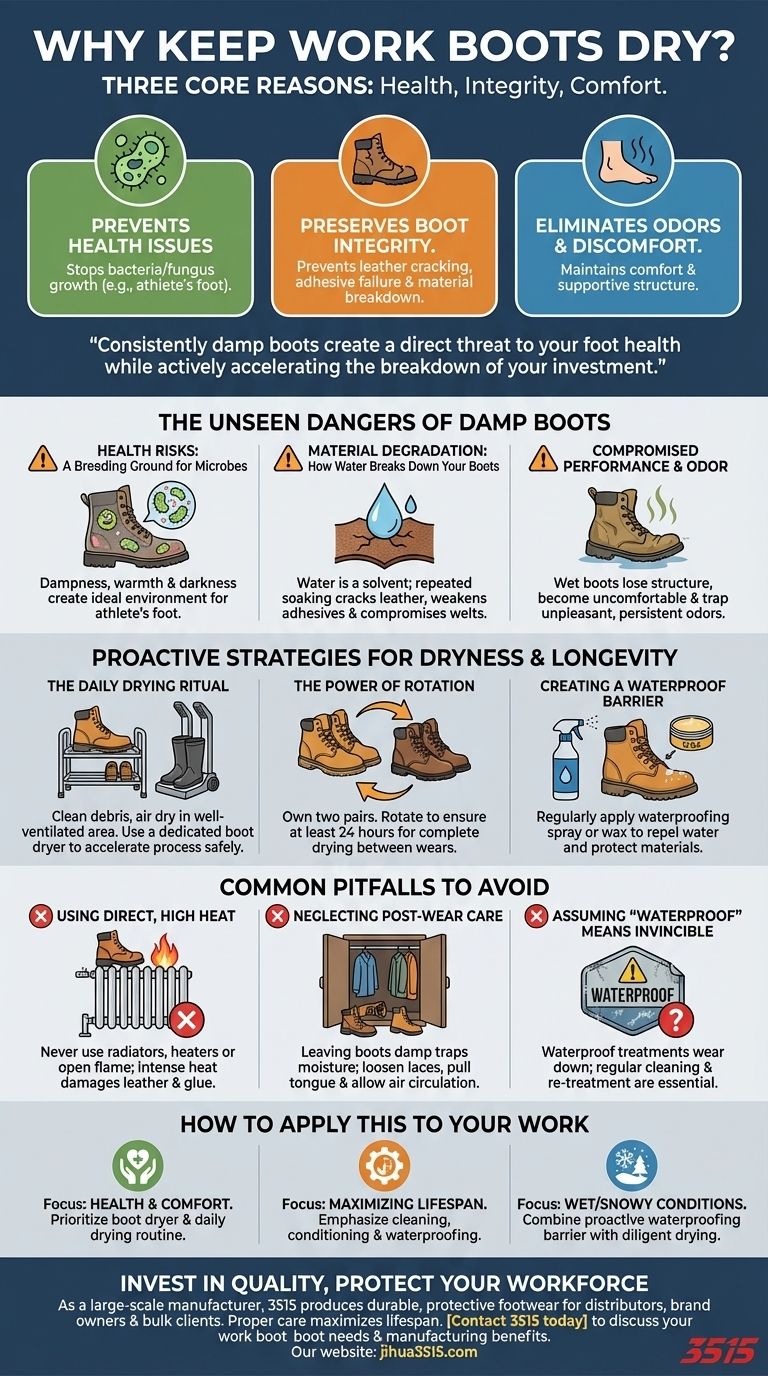
Visual Guide
Related Products
- Durable Leather Work Boots for Wholesale & Custom Manufacturing
- Durable Leather Work Boots for Wholesale & Custom OEM Manufacturing
- Durable Leather Work Boots Wholesale Manufacturer & Custom Factory
- Durable Leather Moc Toe Work Boots for Wholesale & Custom Manufacturing
- Wholesale Leather Work Boots with Customizable Wedge Sole for Brands
People Also Ask
- What is the difference between full-grain and top-grain leather? Premium Material Guide for Boot Manufacturers
- What are the common workplace hazards that can be mitigated with the right work boots? Protect Your Workforce
- What are the common foot issues workers face due to uncomfortable work boots? Prevent Pain & Deformities
- What are the advantages of leather versus synthetic work boots? A Guide to Choosing the Right Material
- What are the key components of modern work boots? Engineered for Ultimate Durability and Comfort