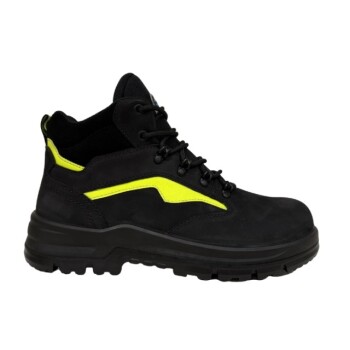
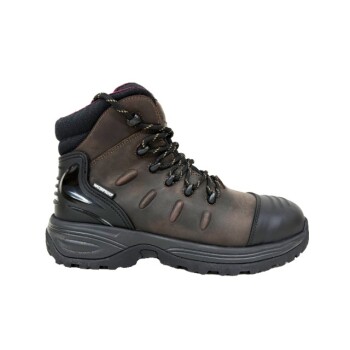
Slip-resistant soles are a fundamental safety requirement in work boots because they are engineered to prevent one of the most common causes of workplace injury: slips, trips, and falls. By using specialized materials and tread designs, these soles provide a secure grip on hazardous surfaces like water, oil, or ice, creating the stability necessary to work safely and confidently.
The effectiveness of a slip-resistant sole is not just about having a deep tread. It’s about the specific combination of a high-friction material compound and a tread pattern engineered to displace contaminants on a particular type of work surface.

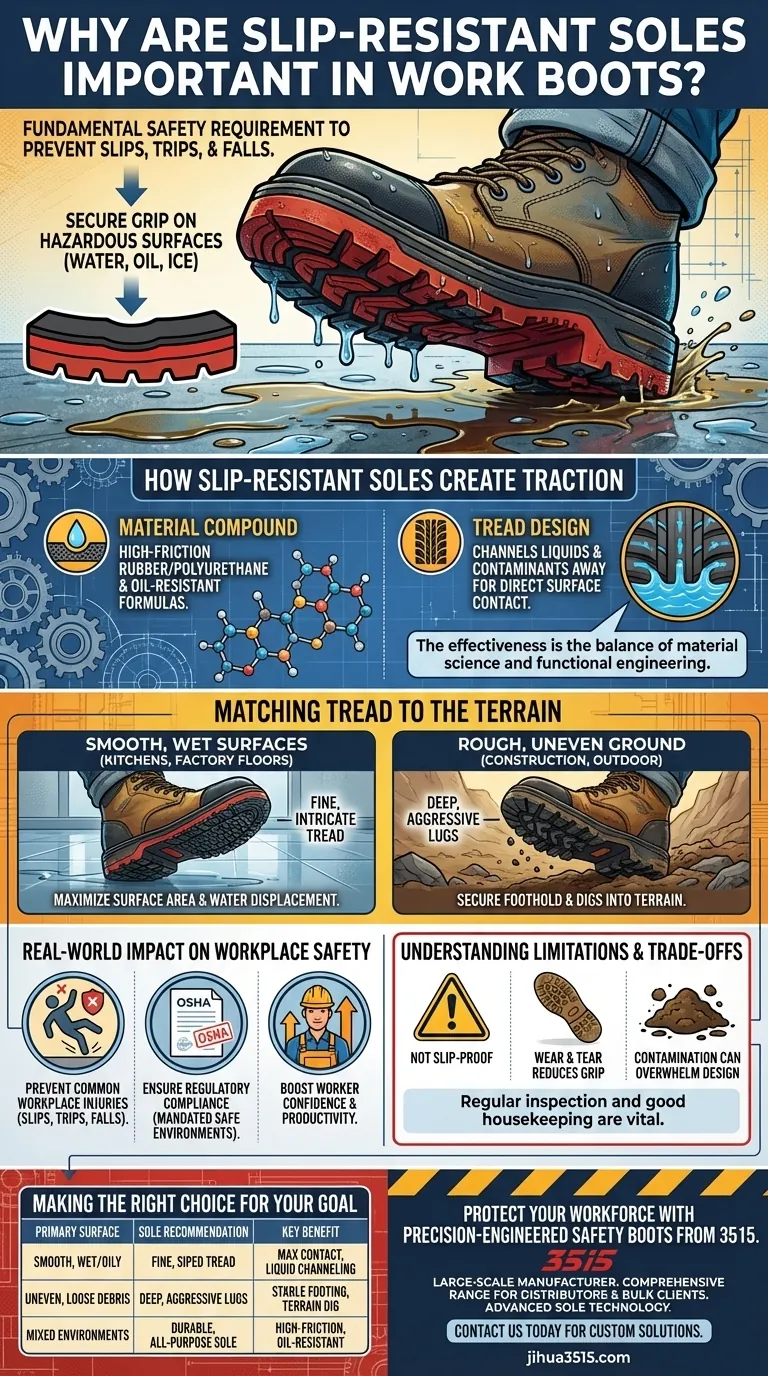
How Slip-Resistant Soles Create Traction
A boot's ability to prevent a fall is determined by the design of its outsole. This involves a careful balance of material science and functional engineering to maximize the shoe's grip.
The Critical Role of Material Compound
The foundation of a slip-resistant sole is its material. Most are made from high-friction rubber or polyurethane, which have a naturally high coefficient of friction.
Many compounds are also specifically formulated to be oil-resistant. This prevents the rubber from degrading or losing its grip when exposed to greasy or oily substances common in industrial settings.
The Science of Tread Design
The pattern on the bottom of the boot is designed to do more than just look rugged. Its primary job is to channel liquids and contaminants away from the point of contact between the sole and the floor.
By creating pathways for water, oil, or other fluids to escape, the tread allows the solid parts of the sole to make direct, firm contact with the surface, dramatically improving traction.
Matching Tread to the Terrain
There is no single tread design that is perfect for every environment. The pattern must match the surface where it will be used.
Boots intended for smooth, wet surfaces often have fine, intricate tread patterns to maximize surface area contact and water displacement.
Conversely, boots designed for rough, uneven ground or loose debris feature deep, aggressive lugs that can dig into the terrain for a more secure foothold.
The Real-World Impact on Workplace Safety
Investing in proper footwear is not a minor detail; it's a core component of a safe work environment. The right soles directly reduce risk and enhance performance.
Preventing Common Workplace Injuries
Slips, trips, and falls are a leading cause of disabling injuries in the workplace. A high-quality slip-resistant sole is the single most effective piece of personal protective equipment for mitigating this specific risk.
Ensuring Regulatory Compliance
Regulatory bodies like the Occupational Safety and Health Administration (OSHA) mandate that employers provide a safe working environment. This includes taking steps to prevent slip-and-fall hazards, making slip-resistant footwear an essential part of compliance.
Boosting Worker Confidence
When workers feel stable and secure on their feet, they can focus more effectively on their tasks. This increased confidence can lead to greater productivity and a higher quality of work.
Understanding the Limitations and Trade-offs
While essential, it's important to recognize that "slip-resistant" does not mean "slip-proof." Understanding the limitations is key to maintaining a safe mindset.
Not All Soles Are Created Equal
The term "slip-resistant" can be broad. A sole that performs exceptionally on a wet warehouse floor may not be effective on an icy loading dock. Its performance is entirely dependent on its specific design and the surface it encounters.
The Impact of Wear and Tear
As a boot's tread wears down, its ability to channel away liquids and grip surfaces diminishes significantly. Regular inspection of the outsoles is critical to ensure they are still capable of providing adequate protection.
Contamination Can Overwhelm Any Design
Even the best-designed sole can be overwhelmed by a thick layer of contaminants. These boots reduce risk but do not eliminate it entirely. Good housekeeping and awareness of surface conditions remain vital safety practices.
Making the Right Choice for Your Goal
To ensure maximum safety, select your work boot based on the primary surface you will be working on.
- If your primary work surface is smooth and often wet or oily (e.g., kitchens, factory floors): Choose a sole with a finer, siped tread pattern designed to maximize surface contact and channel liquids away.
- If your primary work surface is uneven or has loose debris (e.g., construction sites, outdoor terrain): Prioritize boots with deep, aggressive lugs that can provide stable footing on soft or shifting ground.
- If you work in a mixed environment with various hazards: Look for a durable, all-purpose sole made from a high-friction, oil-resistant rubber compound.
Ultimately, selecting a work boot based on its sole design is a direct and critical investment in your personal safety.
Summary Table:
| Feature | Purpose | Key Benefit |
|---|---|---|
| Material Compound | High-friction, oil-resistant rubber | Maintains grip on slick surfaces like oil or water |
| Tread Design | Channels liquids and contaminants away | Ensures direct contact with the ground for stability |
| Tread Type | Fine patterns for smooth surfaces; deep lugs for rough terrain | Matches specific work environments for optimal safety |
| Safety Impact | Reduces slips, trips, and falls | Complies with OSHA standards and boosts worker confidence |
Protect your workforce with precision-engineered safety boots from 3515. As a large-scale manufacturer, we produce a comprehensive range of slip-resistant footwear tailored for distributors, brand owners, and bulk clients. Our boots feature advanced sole technology designed for your specific work environment—whether it's oily factory floors, construction sites, or mixed terrains. Contact us today to discuss custom solutions that enhance safety and compliance for your team!
Visual Guide
Related Products
- Durable Leather Moc Toe Work Boots for Wholesale & Custom Manufacturing
- Factory-Direct Wholesale Canvas Boots with High-Traction Rubber Soles
- Wholesale Durable 6-Inch Work Boots | Custom & Private Label Manufacturer
- Durable Goodyear Welt Leather Work Boots for Wholesale & Private Label
- Durable Leather Work Boots Wholesale Manufacturer & Custom Factory
People Also Ask
- What are moc toe work boots designed for? Superior Comfort and Mobility for Tradespeople
- What are the key features to look for when purchasing moc toe boots? A Guide to Durability & Fit
- How did moc toe boots originate? A Legacy of Workwear Durability and Style
- What clothing items complement the Outdoorsman/Heritage Look with moc toe boots? Build a Timeless, Rugged Wardrobe
- What types of outfits can moc toe boots be worn with? Versatile Style Guide