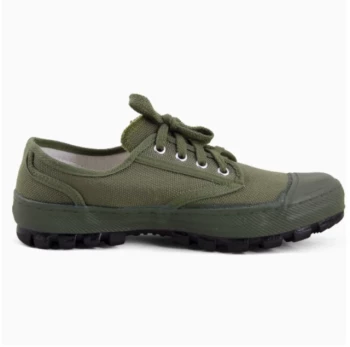
Lace-up work shoes are primarily valued for their highly secure and adjustable fit, which is a critical safety feature for demanding jobs. This custom fit prevents your foot from sliding inside the shoe, reducing the risk of blisters and instability. The main drawbacks are the time required to tie and untie them and the potential tripping hazard if laces become undone.
The decision between lace-up and other work shoe styles is a fundamental trade-off. You are choosing between the superior, customizable security of laces and the sheer convenience of a slip-on design.
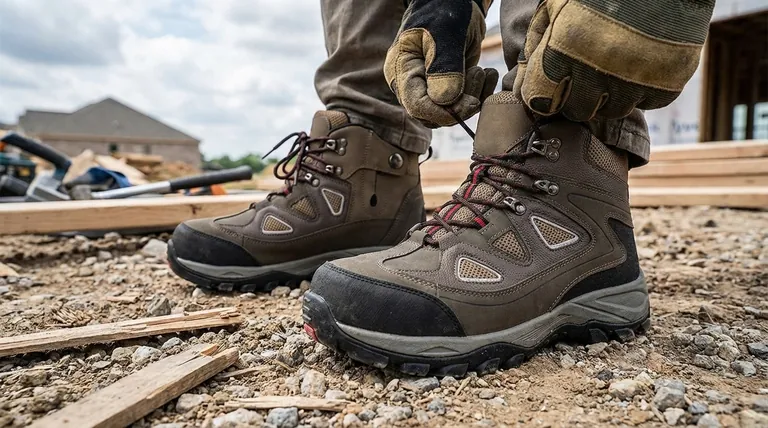
The Core Advantage: A Secure, Customized Fit
The primary reason professionals choose lace-up footwear is its ability to conform precisely to the foot, providing a level of security that other styles cannot match. This is not about aesthetics; it is about functional safety and performance.
Preventing Foot Sliding and Instability
A snug fit, achieved by tightening laces, locks your foot in place. This prevents internal movement, especially on uneven ground or when carrying heavy loads.
This stability is critical for workers like loggers, farmers, and construction professionals, as it significantly reduces the risk of slips, ankle rolls, and fatigue.
Accommodating Foot Shape and Swelling
Laces allow for micro-adjustments throughout the day. Feet naturally swell during long shifts, and the ability to loosen the fit slightly can make the difference between comfort and chronic pain.
This adjustability also means the shoe can accommodate a wider variety of foot shapes, including high arches or wider feet.
Providing Superior Support
In boot-style work footwear, the lacing system is integral to ankle support. By cinching the laces tight, the boot's collar provides a rigid structure around the ankle, protecting it from twists and impacts.
The Practical Drawbacks to Consider
While the security of lace-ups is a major advantage, it comes with practical downsides that are important in certain work environments.
The Inconvenience of Tying
The most obvious con is the time and effort required to tie and untie the laces. For professionals who need to remove their footwear frequently—such as mechanics or cleaners moving between indoor and outdoor spaces—this can become a daily frustration.
The Tripping Hazard
An untied shoelace presents a significant safety risk. It can easily get caught on machinery, scaffolding, or debris, leading to a serious fall or injury. This requires constant vigilance from the wearer.
Understanding the Trade-offs: Lace-Up vs. Slip-On
Choosing a closure system is not about finding the "best" shoe, but the right shoe for the specific demands of your job.
Security vs. Convenience
The central trade-off is clear. Lace-ups offer maximum security, making them ideal for high-risk jobs on variable terrain. Slip-ons offer maximum convenience, perfect for fast-paced roles on predictable, flat surfaces.
Environment Dictates the Choice
A construction worker requires the unyielding stability of a lace-up boot. In contrast, kitchen staff benefit immensely from a slip-on they can easily remove for cleaning or at the end of a shift.
Beyond the Closure System
Remember that the closure is just one component. The choice between a steel or lighter alloy toe for impact protection, or between leather and breathable mesh for climate comfort, are equally critical parts of the decision.
Making the Right Choice for Your Work Environment
Use your primary job function as the deciding factor to select the right footwear closure system.
- If your primary focus is maximum safety and stability on uneven terrain (e.g., construction, logging, firefighting): The secure, adjustable fit of a lace-up boot is the superior and necessary choice.
- If your primary focus is convenience and speed in a controlled environment (e.g., kitchen staff, mechanics): Slip-on shoes offer significant advantages for roles that require frequent footwear changes.
- If your primary focus is all-day comfort for feet that swell: The micro-adjustability of lace-ups provides a clear benefit for maintaining a comfortable fit throughout a long shift.
Ultimately, choosing the right closure system ensures your footwear is a tool that enhances your safety and performance.
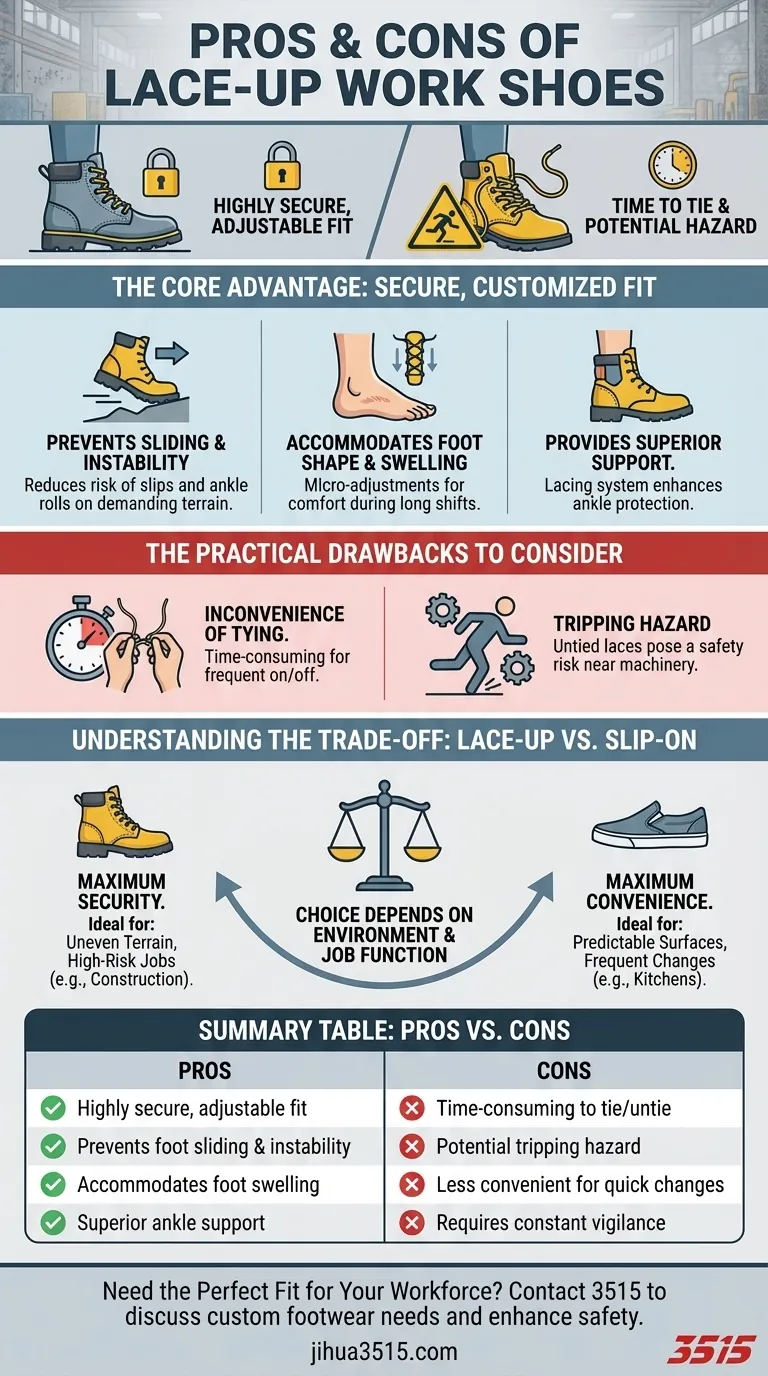
Summary Table:
| Pros | Cons |
|---|---|
| Highly secure, adjustable fit | Time-consuming to tie/untie |
| Prevents foot sliding & instability | Potential tripping hazard |
| Accommodates foot swelling | Less convenient for quick changes |
| Superior ankle support | Requires constant vigilance |
Need the Perfect Fit for Your Workforce?
As a large-scale manufacturer, 3515 produces a comprehensive range of lace-up and slip-on work footwear for distributors, brand owners, and bulk clients. Our production capabilities encompass all types of safety shoes and boots, ensuring your team has the right tool for the job—whether their priority is maximum security or ultimate convenience.
Contact us today to discuss your custom footwear needs and enhance your team's safety and performance.
Visual Guide
Related Products
- Durable Goodyear Welt Leather Work Boots for Wholesale & Private Label
- Wholesale Comfort Leather Business Shoes with Dial Lacing System
- Wholesale Training Shoes with Dial Lacing System Custom OEM Manufacturing
- Wholesale Leather Derby Shoes Manufacturer | Customizable Business & Dress Footwear
- Premium Wholesale Tactical Style Safety Shoes Boots with Quick Lacing
People Also Ask
- What is the difference between full-grain and top-grain leather? Premium Material Guide for Boot Manufacturers
- What are the advantages of leather as an upper material for work boots? Unmatched Durability & Custom Comfort
- Why is it important to waterproof leather work boots? Protect Your Investment and Performance
- How should new leather work boots be broken in? A Guide to Comfort and Durability
- What are the advantages of leather uppers in work boots? Unmatched Durability & Protection