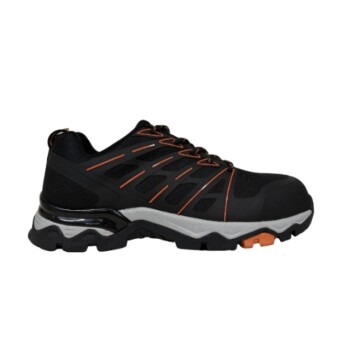
A virtual last acts as the digital DNA of the footwear manufacturing process. It serves as the core digital mold and the foundational carrier for every design parameter, allowing manufacturers to pre-determine the shoe's internal spatial layout before physical production begins. By dynamically adjusting to foot scanning data, it ensures the final safety shoe meets personalized sizing needs while maintaining strict industrial structural standards.
In a customized production system, the virtual last bridges the gap between raw biological data and industrial manufacturing, serving as a mutable digital template that guarantees both ergonomic fit and safety compliance.
The Digital Foundation of Customization
The Carrier of Design Parameters
The virtual last is more than just a 3D shape; it is the foundational carrier for all design data.
It acts as the central reference point where aesthetic design meets technical specifications. Every subsequent step in the production line relies on the geometry defined at this stage.
Dynamic Adjustment Capabilities
Unlike traditional physical lasts, a virtual last can be dynamically adjusted.
It ingests data from foot scanning technology to alter its dimensions automatically. This capability allows for full customization without the time and material costs associated with carving physical molds for every variation.
Pre-determining Internal Space
The primary function of the virtual last is to define the internal spatial layout of the shoe.
By simulating the interior volume digitally, manufacturers can predict exactly how the foot will sit within the shoe. This predictive modeling prevents common fit issues before a single piece of material is cut.
Balancing Comfort and Safety
Ensuring Personalized Fit
The virtual last translates raw scan data into a wearable geometry.
It smooths and modifies the biological data of the foot scan to create a shape that is comfortable for wear, rather than a direct replica of the foot. This ensures the personalized size requirements are met effectively.
Adhering to Structural Standards
Safety shoes differ from standard footwear due to rigid requirements for protection, such as toe caps and puncture-resistant soles.
The virtual last ensures that customization does not compromise these industrial structural standards. It validates that the necessary protective elements fit correctly within the customized internal layout.
Understanding the Trade-offs
Dependence on Input Data
The quality of the virtual last is entirely dependent on the accuracy of the foot scanning data.
If the initial scan data is noisy or incorrectly calibrated, the "core digital mold" will be flawed. This propagates errors down the entire production line, resulting in a safety shoe that fits poorly.
Complexity of Structural Integration
While resizing for comfort is straightforward, maintaining safety ratings during dynamic adjustment is complex.
Changing the geometry of the last too aggressively can interfere with the placement of rigid safety components. System operators must carefully balance personalization with the non-negotiable volume required for safety caps and shanks.
Making the Right Choice for Your Goal
To effectively utilize a virtual last in your production system, you must align the technology with your specific manufacturing objectives.
- If your primary focus is Mass Customization: Prioritize software that allows for rapid, automated dynamic adjustments to process high volumes of scan data quickly.
- If your primary focus is Safety Compliance: Ensure your virtual last system has rigid constraints that prevent the customization process from violating industrial structural standards.
The virtual last is the critical link that transforms a safety shoe from a standard commodity into a precise, protective tool tailored to the user.
Summary Table:
| Key Role | Primary Benefit | Functional Value |
|---|---|---|
| Digital DNA | Foundational Carrier | Stores all design parameters and technical specs. |
| Dynamic Adjustment | High Customization | Automatically modifies dimensions based on scan data. |
| Spatial Simulation | Pre-determined Layout | Predicts internal fit to prevent manufacturing errors. |
| Structural Guard | Safety Compliance | Ensures protective caps and soles meet industrial standards. |
Scale Your Safety Footwear Business with 3515
As a large-scale manufacturer serving global distributors and brand owners, 3515 leverages cutting-edge technology to deliver high-performance footwear. Whether you are looking for our flagship Safety Shoes series or require bulk production for work and tactical boots, outdoor shoes, training shoes, or dress & formal shoes, our comprehensive production capabilities are designed to meet your most rigorous requirements.
Partner with us to bring precision and reliability to your product line. Contact our expert team today to discuss your wholesale or custom production needs!
References
- D. J. Janson, Vimal Dhokia. A Product-Service System for Safety Footwear. DOI: 10.1017/pds.2022.105
This article is also based on technical information from 3515 Knowledge Base .
Related Products
- Premium Suede Sport Safety Shoes for Wholesale & Bulk Orders
- Premium Lightweight Safety Shoes for Wholesale & Bulk Orders
- Wholesale Anti-Smash & Puncture-Proof Safety Shoes Custom Manufacturing for Brands
- Premium KPU Injection Athletic Style Safety Shoes
- Premium Safety Shoes with Rotating Buckle Safety Sneakers
People Also Ask
- What are the primary functions of professional safety shoes? Maximize Safety in Water Supply Confined Spaces
- What industries have specific OSHA footwear requirements? Ensure Compliance & Protect Your Workforce
- What role do specialized safety shoes play in preventing falls? Engineering Stability in Industrial Environments
- What happens during the cutting stage of safety shoes manufacturing? Precision, Process & Quality
- Why should ergonomics and comfort be prioritized when selecting safety shoes? Boost Compliance & Worker Health