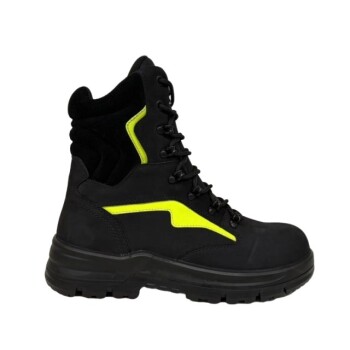
Choosing modular electronic components for the mass manufacturing of smart protective footwear fundamentally transforms the production line by drastically reducing assembly complexity and ensuring high-level product consistency. By integrating standardized sensor modules and control chips, you bridge the gap between delicate electronics and rugged footwear construction, effectively shortening the cycle from initial R&D to full-scale mass production.
The core value of modularity lies in its ability to adapt complex electronic integration to traditional shoemaking processes. This approach optimizes the entire supply chain and minimizes production variance, making it the most reliable path for scaling smart footwear.
Bridging High-Tech and Traditional Manufacturing
The integration of technology into wearables often clashes with established manufacturing workflows. Modularity solves this by compartmentalizing complexity.
Reducing Assembly Difficulty
Traditional footwear manufacturing relies heavily on manual labor and specific mechanical processes. Introducing complex, loose electronics into this environment creates friction and error.
Modular components package these electronics into standardized units. This allows factory workers to treat the tech integration as a standard assembly step rather than a specialized electrical engineering task.
Adapting to Footwear Processes
Footwear production involves heat, pressure, and bonding agents. Delicate, exposed circuits are often damaged during these steps.
Standardized modules are typically pre-packaged and ruggedized. This allows them to withstand the rigors of the assembly line without requiring the factory to overhaul its core machinery or processes.
Accelerating the Production Lifecycle
Beyond the physical assembly, modularity streamlines the logistical and developmental aspects of bringing a smart shoe to market.
Shortening R&D Cycles
Developing custom circuitry for every new boot model is time-consuming and expensive. Modular systems allow for a "plug-and-play" approach during the design phase.
Because the core hardware is already validated, engineering teams can move from the research phase to mass production significantly faster.
Optimizing Supply Chain Efficiency
Managing a supply chain for hundreds of tiny, discrete electronic components is a logistical burden.
By utilizing standardized modules, you reduce the number of SKUs (Stock Keeping Units) required. This simplifies inventory management, makes maintenance more efficient, and secures the supply chain against shortages of specific raw components.
Ensuring Quality at Scale
When manufacturing tactical boots or protective gear, reliability is not optional. Modularity acts as a quality control safeguard.
Improving Product Consistency
Hand-soldering or manual wiring on a footwear line introduces human error and variance between units.
Standardized modules are manufactured to exact specifications before they ever reach the shoe factory. This ensures that every pair of boots leaving the line performs exactly the same way, significantly lowering the defect rate.
Understanding the Trade-offs
While modularity offers immense benefits for scale and consistency, it is important to recognize the limitations inherent in this approach.
Design and Form Factor Constraints
Standardized modules come in fixed shapes and sizes. This can limit design flexibility if you are trying to achieve an extremely slim profile or a non-standard ergonomic fit.
You may have to design the footwear cavity around the module, rather than designing the electronics to fit the shoe.
Cost vs. Customization
Off-the-shelf modules may carry a higher per-unit cost than raw components.
However, this is often offset by the reduction in labor costs, lower defect rates, and faster time-to-market.
Making the Right Choice for Your Goal
To decide if a modular approach is right for your specific project, evaluate your primary manufacturing objectives.
- If your primary focus is Speed to Market: Leverage modular components to bypass lengthy hardware validation phases and move directly to assembly.
- If your primary focus is Quality Assurance: Use standardized modules to eliminate assembly-line soldering errors and ensure identical performance across thousands of units.
By aligning your electronic strategy with your manufacturing capabilities, you turn a complex integration challenge into a scalable competitive advantage.
Summary Table:
| Benefit Category | Impact on Manufacturing | Key Advantage |
|---|---|---|
| Assembly | Reduces manual labor friction | Simplified integration for workers |
| R&D Speed | Plug-and-play validation | Faster transition to mass production |
| Supply Chain | Fewer SKUs and components | Lower logistical costs and risk |
| Quality | Standardized module testing | Consistent performance and low defect rates |
| Durability | Pre-packaged ruggedization | Withstands heat and pressure of bonding |
Scale Your Smart Footwear Vision with 3515
Transitioning from traditional manufacturing to smart protective gear requires a partner who understands both rugged construction and technical integration. As a premier large-scale manufacturer serving global distributors and brand owners, 3515 provides the expertise and production capacity needed to bring high-tech footwear to market at scale.
Our value to you:
- Comprehensive Capabilities: From our flagship Safety Shoes series to tactical boots, outdoor gear, and formal dress shoes, we handle diverse bulk requirements with ease.
- Optimized Integration: We help you leverage modular electronics to ensure every pair of boots meets the highest standards of consistency and durability.
- Reliable Supply Chain: Benefit from our extensive manufacturing infrastructure to reduce lead times and improve your competitive edge.
Ready to elevate your product line? Contact us today to discuss your manufacturing needs!
References
- Gabriel Iluebe Okolo, Naeem Ramzan. Assistive Systems for Visually Impaired Persons: Challenges and Opportunities for Navigation Assistance. DOI: 10.3390/s24113572
This article is also based on technical information from 3515 Knowledge Base .
Related Products
- Premium Safety Shoes with Rotating Buckle Safety Sneakers
- Wholesale Customizable Safety Boots Durable & Protective Footwear Manufacturing
- Wholesale Anti-Smash & Puncture-Proof Safety Shoes Custom Manufacturing for Brands
- Premium Suede Sport Safety Shoes for Wholesale & Bulk Orders
- Premium Lightweight Safety Shoes for Wholesale & Bulk Orders
People Also Ask
- What are the technical advantages of integrating sensors into safety shoes? Achieve Superior Motion Capture Precision
- Why should ergonomics and comfort be prioritized when selecting safety shoes? Boost Compliance & Worker Health
- What are the primary functions of professional safety shoes? Maximize Safety in Water Supply Confined Spaces
- How do gait analysis algorithms ensure accuracy in footwear? Master Step Length Precision for Boots & Sneakers
- What industries have specific OSHA footwear requirements? Ensure Compliance & Protect Your Workforce