
At its core, a rubber outsole provides a combination of high-grip traction, exceptional durability, and resistance to heat and chemicals. This unique balance makes it the most common and trusted material for safety footwear in demanding work environments. Its properties ensure both long-lasting performance and critical protection against slips, heat, and abrasion.
The fundamental reason rubber dominates safety footwear is its versatility. While other materials may excel in a single area like weight, no other outsole material offers such a well-rounded and robust profile of grip, durability, and resistance to heat and oil.
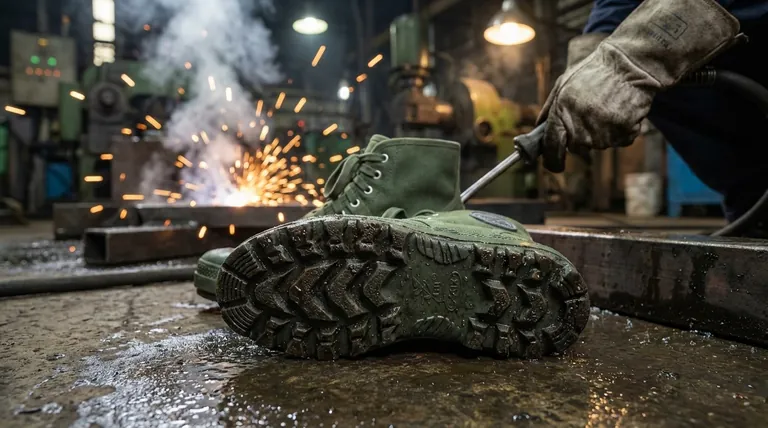
The Core Properties of Rubber Outsoles
Rubber is the benchmark against which other sole materials are measured for a reason. Its inherent physical properties directly translate into critical safety and performance features.
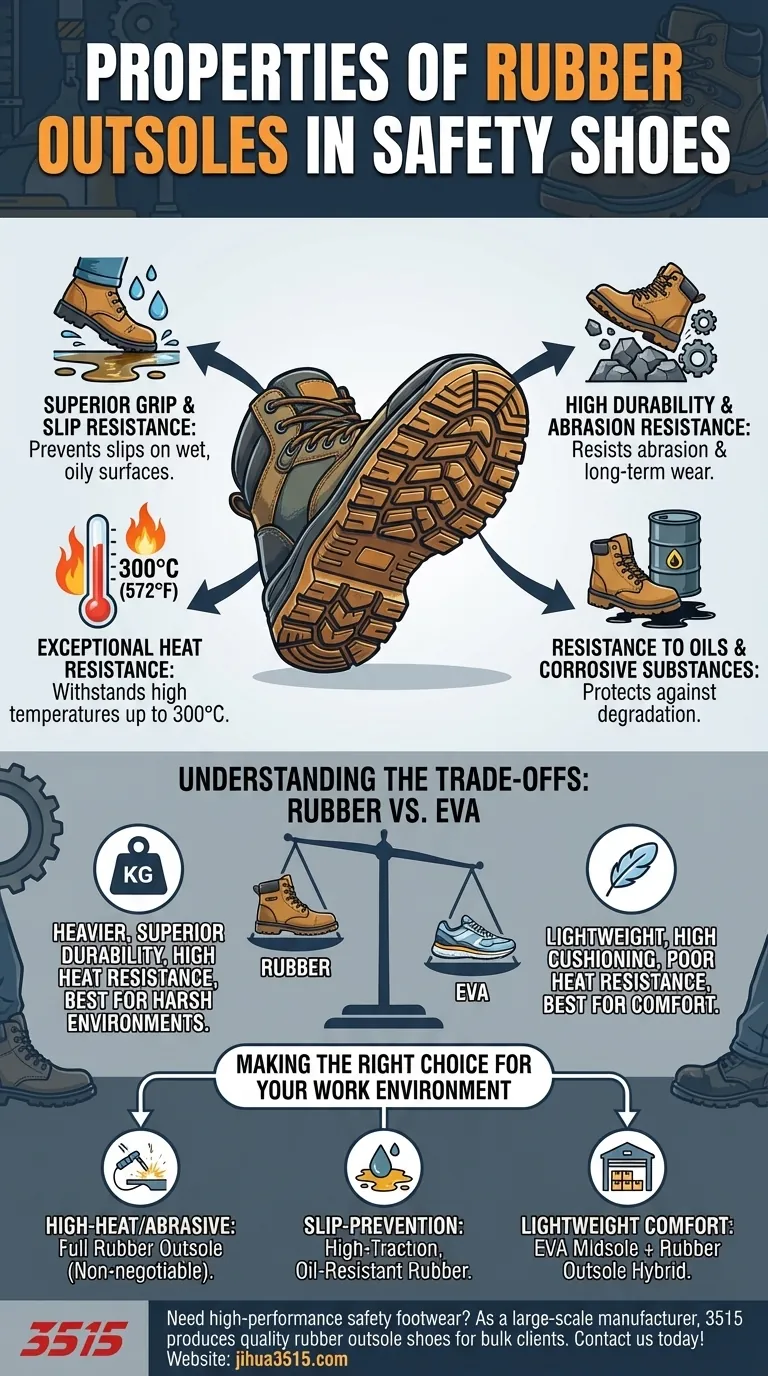
Superior Grip and Slip Resistance
A primary function of any safety shoe is to prevent slips and falls. Rubber excels in this area due to its natural adhesive qualities.
This makes it highly effective at maintaining traction on wet, slippery, or oily surfaces, which is a critical requirement in many industrial and service settings.
High Durability and Abrasion Resistance
Rubber outsoles are exceptionally resistant to wear and tear. This durability ensures the sole maintains its integrity and protective qualities over a long period of heavy use.
This resistance to abrasion means the tread pattern lasts longer, preserving the shoe's grip and overall performance.
Exceptional Heat Resistance
One of rubber's standout features is its ability to withstand high temperatures. Many rubber outsoles are rated to resist heat up to 300°C (572°F).
This makes rubber an essential choice for workers in environments like welding, asphalt paving, or manufacturing where contact with hot surfaces is a risk.
Resistance to Oils and Corrosive Substances
Many work environments expose footwear to oils, chemicals, and other corrosive materials. Rubber provides a reliable barrier against these substances.
This resistance prevents the sole from degrading and helps maintain its structural integrity and slip-resistant properties over time.
Understanding the Trade-offs: Rubber vs. Other Materials
While rubber is a superior all-around choice, specialized materials like EVA (ethylene vinyl acetate) or PU (polyurethane) offer different benefits. Understanding these trade-offs is key to selecting the right shoe.
Rubber vs. EVA: The Weight Factor
The most significant advantage of materials like EVA is their light weight. EVA is a soft, flexible plastic that provides excellent cushioning and makes a shoe feel significantly lighter.
Rubber, by contrast, is a denser and heavier material. This can lead to increased fatigue over a long day compared to a lighter EVA-soled shoe.
Shock Absorption and Cushioning
EVA is engineered for high impact absorption, giving it a very soft, cushioned feel underfoot. This is ideal for environments that involve long periods of walking on hard, flat surfaces.
Rubber provides good cushioning and flexibility, but its primary strengths are durability and grip rather than pure shock absorption. Often, a hybrid approach is used: an EVA midsole for cushioning and a rubber outsole for grip.
The Heat and Durability Divide
This is where rubber demonstrates its clear superiority for harsh environments. Materials like EVA have very low resistance to heat and are easily damaged by abrasion or puncture.
For any job with risks of high temperatures, rough surfaces, or chemical exposure, rubber is the only suitable choice for the outsole.
Making the Right Choice for Your Work Environment
Your specific workplace hazards should always guide your decision. The ideal outsole balances the protection you need with the comfort you desire.
- If your primary focus is high-heat or abrasive environments (e.g., welding, construction, foundries): A full rubber outsole is non-negotiable for its unmatched heat and abrasion resistance.
- If your primary focus is preventing slips on oily or wet surfaces (e.g., auto shops, food processing): A high-traction, oil-resistant rubber sole is the safest and most reliable option.
- If your primary focus is lightweight comfort for long hours on your feet (e.g., warehouse logistics, light assembly): A shoe with an EVA midsole for cushioning and a targeted rubber outsole for grip offers an excellent balance of comfort and safety.
Choosing the right outsole material is a foundational step in ensuring both safety and performance on the job.
Summary Table:
| Property | Benefit for Safety |
|---|---|
| Superior Grip | Prevents slips on wet, oily surfaces |
| High Durability | Resists abrasion and long-term wear |
| Heat Resistance | Withstands temperatures up to 300°C (572°F) |
| Oil & Chemical Resistance | Protects against degradation from substances |
Need high-performance safety footwear for your team?
As a large-scale manufacturer, 3515 produces a comprehensive range of safety shoes and boots with high-quality rubber outsoles for distributors, brand owners, and bulk clients. Our production capabilities ensure your workforce gets the perfect balance of critical protection, durability, and comfort.
Contact us today to discuss your safety footwear needs and get a custom quote!
Visual Guide
Related Products
- Durable Rubber-Soled Utility Shoes for Wholesale & Custom Brand Manufacturing
- Wholesale Durable Camo Canvas Shoes with High-Traction Rubber Soles
- Durable Rubber Sole Outdoor Shoes Wholesale & Custom Manufacturing
- Wholesale Durable Camouflage Canvas Shoes with High-Traction Cleated Rubber Sole
- Premium Safety Shoes with Rotating Buckle Safety Sneakers
People Also Ask
- Why are rubber-soled shoes considered multi-weather footwear? Unlock All-Season Traction & Protection
- Why should we wear rubber soled shoes? Unlock Superior Safety and Durability
- How do rubber soles affect a shoe's appearance? Defining Your Shoe's Style and Formality
- What are the types of rubber sole shoes available? Choose the Right Sole for Durability & Comfort
- When were rubber sole shoes invented? From 1800s Concept to Modern Mainstay

















