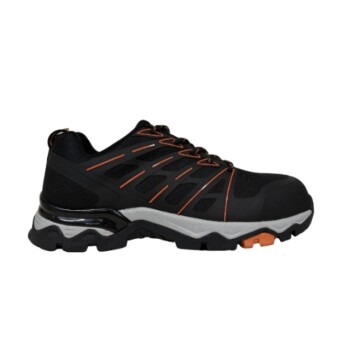
Compliance with OSHA mandates requires safety footwear to meet rigorous performance criteria primarily focused on impact resistance, compression strength, and specific electrical properties. While your query references ANSI Z41, it is critical to understand that modern OSHA regulations now reference ASTM F2413 as the active standard for defining these material performance benchmarks.
Core Insight: Standards like ANSI Z41 and ASTM F2413 act as reliability benchmarks for bulk purchasers and safety managers. They ensure that footwear is not just "tough," but engineered to provide predictable, quantifiable protection against specific physical and electrical hazards.
Core Physical Protection Requirements
To meet these standards, the materials used—particularly in the toe cap and outsole—must pass aggressive testing methods defined by ASTM F2412.
Impact Resistance (I)
The most fundamental requirement involves the protective toe cap. Materials must withstand a specific force delivered by a falling weight without cracking or collapsing inward. This ensures the footwear protects the wearer's toes from heavy, falling objects common in industrial settings.
Compression Resistance (C)
Distinct from impact, this tests the material's ability to withstand sustained heavy pressure. The footwear must maintain a specific clearance height inside the toe area even when subjected to significant crushing loads, simulating a heavy vehicle or object rolling onto the foot.
Metatarsal Protection (Mt)
For environments with risks beyond the toe, materials must offer metatarsal protection. This requires an integrated guard capable of absorbing and deflecting impact from the top of the foot (the metatarsal bones), preventing crushing injuries from dropping hazards.
Puncture Resistance (PR)
Footwear designed for construction or demolition requires specialized midsoles. These materials must resist penetration by sharp objects, such as nails or glass, protecting the sole of the foot from underneath.
Electrical Performance Properties
Material requirements vary significantly based on the electrical environment. A shoe cannot simply be "electrically safe"; it must be tuned to a specific type of electrical interaction.
Electrical Hazard Resistance (EH)
For electricians and utility workers, the outsole materials must be non-conductive. These materials are designed to impede the flow of electricity, providing a secondary source of protection against electric shock in case of accidental contact with live circuits.
Static Dissipative (SD)
In contrast to EH, Static Dissipative footwear uses materials that allow a controlled amount of electricity to flow through the shoe. This prevents the buildup of static electricity on the wearer's body, which is critical in automotive manufacturing or electronics assembly where a spark could destroy sensitive components.
Conductive Protection (Cd)
These materials are designed to offer zero electrical resistance. They are required in highly specialized environments where any static spark could ignite explosive chemicals or volatile gases.
Understanding the Trade-offs
When selecting safety footwear materials, recognizing the inherent compromises is essential for proper application.
Protection vs. Weight and Flexibility
Materials that offer high impact and puncture resistance, such as steel or dense composites, inevitably add weight and reduce flexibility. While modern composites have improved this ratio, the highest levels of metatarsal and compression protection often result in heavier, stiffer footwear that may contribute to wearer fatigue over long shifts.
Mutual Exclusivity in Electrical Standards
You cannot have a "universal" electrical safety shoe. A material cannot be both Electrical Hazard (EH) resistant (insulating) and Conductive (grounding). Misidentifying the electrical requirement—such as wearing conductive shoes while working on live wires—can be a fatal error.
Making the Right Choice for Your Goal
Selecting the correct footwear requires mapping the material performance to your specific environmental risks.
- If your primary focus is Falling or Rolling Objects: Prioritize footwear with high ratings for Impact (I) and Compression (C) resistance, ensuring the toe cap material is verified for your load requirements.
- If your primary focus is Electrical Maintenance: Ensure the footwear is clearly marked EH (Electrical Hazard) to insulate the worker from open circuits.
- If your primary focus is Sensitive Electronics or Paint Lines: Select SD (Static Dissipative) footwear to prevent static discharge that could damage products.
- If your primary focus is Construction/Demolition: Look for the PR (Puncture Resistant) designation to protect against sharp objects piercing the sole.
Ultimately, compliance is not just about the label inside the tongue; it is about matching the engineered material properties of the shoe to the specific realities of your workplace hazards.
Summary Table:
| Hazard Category | Performance Requirement | Primary Material Feature |
|---|---|---|
| Impact (I) | Resists falling weights | Reinforced toe caps (Steel/Composite) |
| Compression (C) | Withstands crushing loads | High-strength structural integrity |
| Electrical (EH) | Insulation from circuits | Non-conductive outsole materials |
| Static (SD) | Prevents static buildup | Controlled conductivity materials |
| Puncture (PR) | Resists sharp objects | Specialized puncture-proof midsoles |
Partner with 3515 for Certified Safety Footwear Solutions
As a premier large-scale manufacturer serving global distributors and brand owners, 3515 delivers footwear that meets the most rigorous international safety standards. Our extensive production capabilities ensure your inventory is equipped with high-performance materials engineered for durability and protection.
Our value to your business:
- Comprehensive Portfolio: From our flagship Safety Shoes and Tactical Boots to training shoes and sneakers.
- Quality Assurance: Footwear designed to exceed ASTM and OSHA benchmarks for impact, compression, and electrical safety.
- Scalability: Reliable bulk production for Dress & Formal shoes and specialized work boots to meet diverse market demands.
Ensure your customers receive the best in industrial protection. Contact us today to discuss your bulk requirements!
References
- Shruti A. Dumbhare, Parag Sancheti. Prevalence of foot problems associated with wearing safety footwear in factory employees. DOI: 10.18203/2394-6040.ijcmph20222013
This article is also based on technical information from 3515 Knowledge Base .
Related Products
- Premium Suede Sport Safety Shoes for Wholesale & Bulk Orders
- Premium Lightweight Safety Shoes for Wholesale & Bulk Orders
- Wholesale Anti-Smash & Puncture-Proof Safety Shoes Custom Manufacturing for Brands
- Premium KPU Injection Athletic Style Safety Shoes
- Premium Safety Shoes with Rotating Buckle Safety Sneakers
People Also Ask
- What are the primary functions of professional safety shoes? Maximize Safety in Water Supply Confined Spaces
- What industries have specific OSHA footwear requirements? Ensure Compliance & Protect Your Workforce
- What role do specialized safety shoes play in preventing falls? Engineering Stability in Industrial Environments
- How do gait analysis algorithms ensure accuracy in footwear? Master Step Length Precision for Boots & Sneakers
- How do specialized safety shoes protect against battery maintenance injuries? Prevent Impact and Chemical Burns