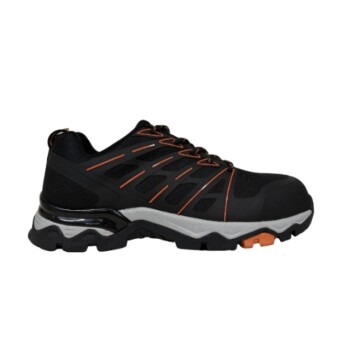
Specialized foot-mounted brackets and integrated structures fundamentally enhance navigation sensor performance by eliminating relative motion between the sensor and the user's foot. By creating a rigid mechanical coupling, these designs ensure that the Inertial Measurement Unit (IMU) captures the exact dynamics of the foot rather than artifacts caused by sliding or looseness. This precise synchronization is essential for minimizing error accumulation in pedestrian navigation systems.
The structural integrity provided by specialized brackets prevents "sensor slip," ensuring that recorded data aligns perfectly with the user's actual gait. This synchronization is the fundamental prerequisite for Zero Velocity Update (ZUPT) algorithms to accurately detect stance phases and reduce navigation drift.
The Mechanics of Sensor Stability
Eliminating Relative Movement
The primary function of specialized brackets or integrated fastening structures is to ensure rigid connectivity.
Without these specialized mounts, a sensor may slide or vibrate independently of the foot. This "relative movement" introduces noise and false acceleration data, which renders high-precision tracking impossible.
Enabling the ZUPT Algorithm
For inertial navigation to remain accurate over time, the system relies on the Zero Velocity Update (ZUPT) algorithm.
This algorithm corrects drift by resetting velocity errors to zero whenever it detects the foot is stationary on the ground (the stance phase).
If the bracket allows the sensor to wobble, the IMU will register motion even when the foot is planted. This failure to detect a "true zero" velocity prevents the algorithm from correcting errors, leading to rapid position divergence.
Physical Protection in Complex Environments
Shielding Against Impact
Tactical boots and safety shoes feature rugged sole structures designed to withstand harsh physical conditions.
This robust construction acts as a physical shield for the IMU and its circuit boards. It prevents direct physical impacts from damaging sensitive micro-electromechanical systems (MEMS) when traversing rough terrain.
Mitigating Vibration Interference
Beyond direct impact, specialized footwear structures dampen high-frequency vibration interference.
By isolating the sensor from the erratic vibrations of complex terrains, the integrated structure ensures the signal remains clean. This allows the system to distinguish between actual gait movements and environmental noise.
Understanding the Trade-offs
Specificity vs. Versatility
The reliance on specialized integrated structures implies that standard footwear cannot simply be retrofitted with tape or basic clips for high-performance navigation.
To achieve the necessary data fidelity for ZUPT, the sensor mounting must be engineered specifically for the boot's geometry. This limits the ability to quickly swap sensors between different pairs of standard shoes without compromising accuracy.
Application Dependency
While rigid mounting is ideal for navigation, it requires a boot design that balances sensor stability with user comfort.
If the integrated structure is too intrusive, it could affect the wearer's natural gait, which would ironically alter the very data the system is trying to measure.
Making the Right Choice for Your Goal
To maximize the effectiveness of your sensor system, align your mounting strategy with your specific operational requirements.
- If your primary focus is Precision Navigation: Prioritize rigid, integrated brackets to ensure the Zero Velocity Update (ZUPT) algorithm can accurately detect the stance phase without drift.
- If your primary focus is Health & Gait Monitoring: Ensure the footwear integration protects the sensor enough to detect subtle signs of fatigue or Peripheral Neuropathy without signal artifacts.
Ultimately, the reliability of a foot-mounted navigation system is defined not just by the sensor's quality, but by the rigidity of its connection to the user.
Summary Table:
| Feature | Impact on Performance | Core Benefit |
|---|---|---|
| Rigid Coupling | Eliminates relative motion & noise | High data fidelity and synchronization |
| ZUPT Optimization | Precise stance phase detection | Drastic reduction in navigation drift |
| Rugged Sole Integration | Shielding from physical impacts | Protection of sensitive MEMS components |
| Vibration Dampening | Filters high-frequency interference | Clean signal for gait analysis |
Partner with 3515 for High-Performance Specialized Footwear
As a large-scale manufacturer serving global distributors and brand owners, 3515 offers comprehensive production capabilities for integrated tactical and safety footwear. Our expertise in embedding advanced structural components ensures that your navigation or health-monitoring sensors achieve peak performance without compromising durability.
From our flagship Safety Shoes series to specialized Tactical Boots, Outdoor Shoes, and Training Sneakers, we provide the engineering precision needed for your bulk requirements.
Ready to elevate your product line with precision-engineered footwear? Contact us today to discuss your manufacturing needs
References
- Chi-Shih Jao, Andrei M. Shkel. Augmented UWB-ZUPT-SLAM Utilizing Multisensor Fusion. DOI: 10.1109/jispin.2023.3324279
This article is also based on technical information from 3515 Knowledge Base .
Related Products
- Premium Suede Sport Safety Shoes for Wholesale & Bulk Orders
- Premium Lightweight Safety Shoes for Wholesale & Bulk Orders
- Wholesale Anti-Smash & Puncture-Proof Safety Shoes Custom Manufacturing for Brands
- Premium KPU Injection Athletic Style Safety Shoes
- Premium Safety Shoes with Rotating Buckle Safety Sneakers
People Also Ask
- What industries have specific OSHA footwear requirements? Ensure Compliance & Protect Your Workforce
- What are the primary functions of professional safety shoes? Maximize Safety in Water Supply Confined Spaces
- What role do specialized safety shoes play in preventing falls? Engineering Stability in Industrial Environments
- What are the technical advantages of integrating sensors into safety shoes? Achieve Superior Motion Capture Precision
- How do complex outsole tread designs in safety shoes work with coated floors? Master Slip Resistance Engineering