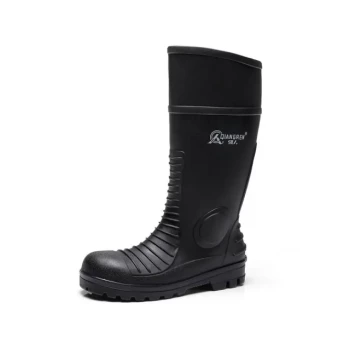
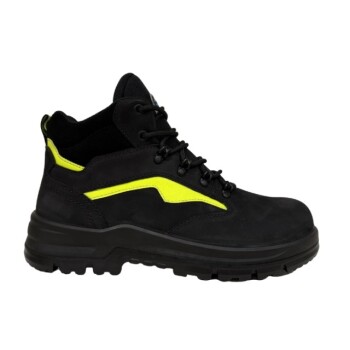
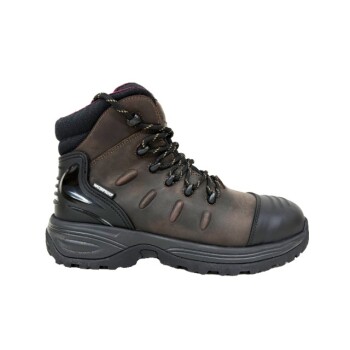
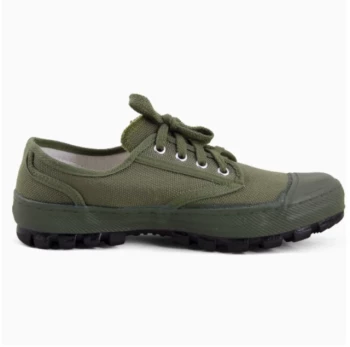
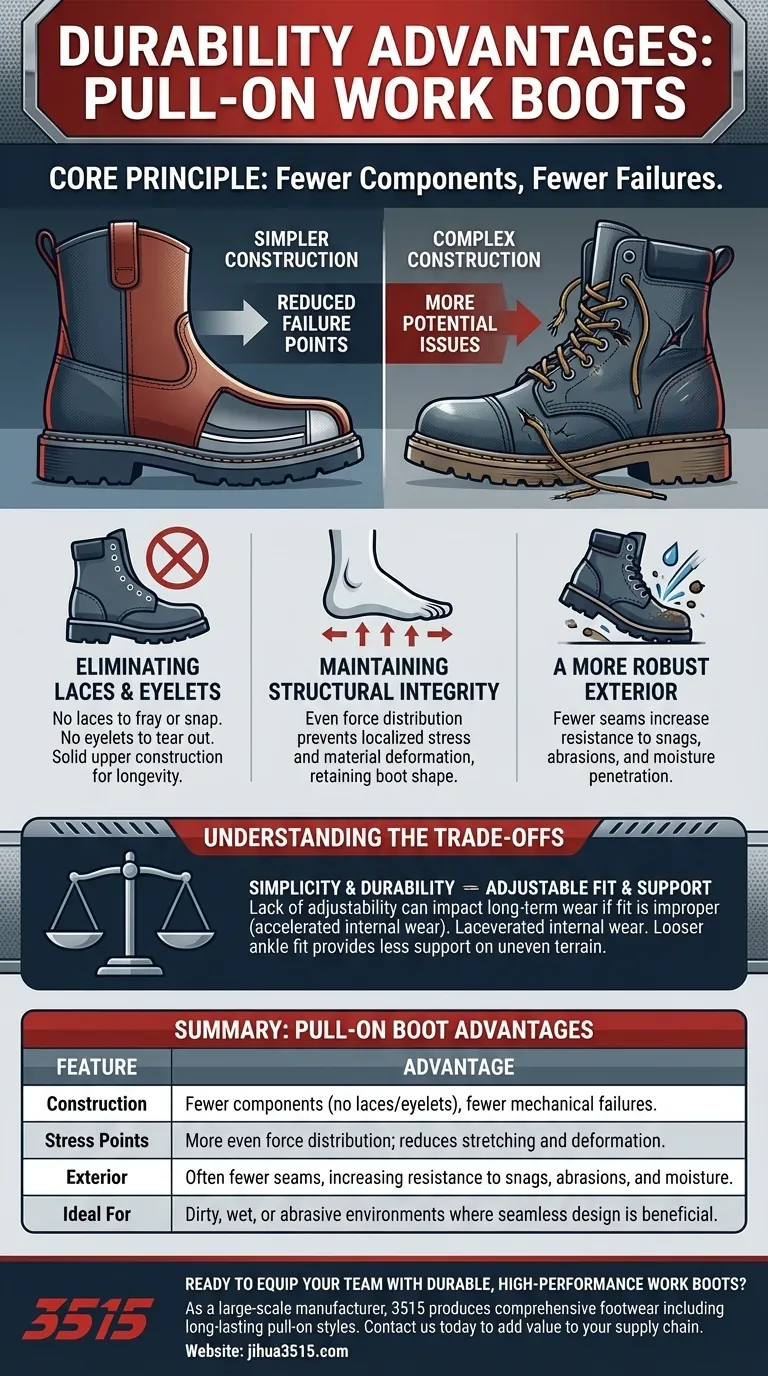
The primary durability advantage of pull-on work boots is their simpler construction. By eliminating laces and eyelets, they remove common points of mechanical failure, reducing the chances of fraying, tearing, and material fatigue that often plague their lace-up counterparts. This streamlined design inherently possesses fewer stress points, contributing to better long-term structural integrity.
The durability of a pull-on boot comes from its minimalist design, which removes the most common failure points. However, this simplicity comes at the cost of an adjustable fit, which can itself impact long-term wear and user support.
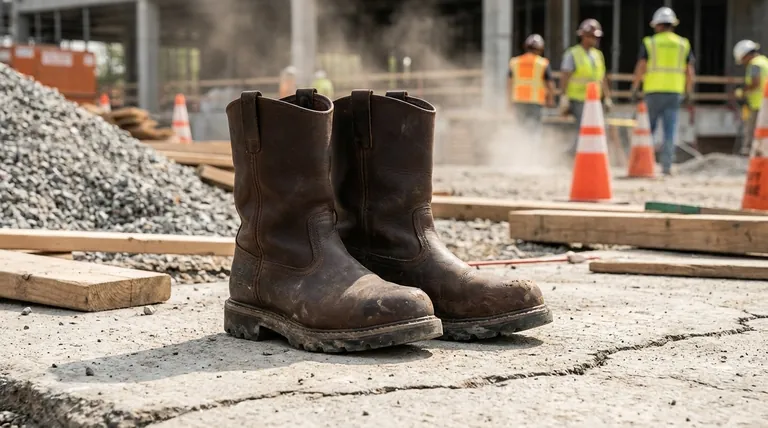
The Core Principle: Fewer Components, Fewer Failures
The case for the durability of pull-on boots rests on a simple engineering principle: the fewer moving or separate parts a system has, the fewer ways it can break.
Eliminating Laces and Eyelets
Laces are a consumable part of any boot; they are subjected to constant friction, moisture, and tension, causing them to fray and eventually snap. The eyelets that hold them can also be a weak point, either tearing out from the leather or deforming under stress.
Pull-on boots completely sidestep this issue. Their solid upper construction means you never have to worry about replacing a broken lace or repairing a torn eyelet.
Maintaining Structural Integrity
The continuous tension from laces creates localized stress around each eyelet, which can cause the boot's material to stretch and deform over time.
A pull-on boot distributes force more evenly across its entire structure when you walk or flex your foot. This helps the boot retain its intended shape and support for a longer period.
A More Robust Exterior
Pull-on boots often feature fewer seams on the upper. Seams are another potential point of failure, where stitching can wear out, break, or allow moisture to penetrate. A smoother, more seamless exterior is inherently more resistant to snags, abrasions, and water intrusion.
Understanding the Trade-offs
While a simpler design offers clear advantages, it's critical to understand that durability is not a one-dimensional issue. The biggest weakness of a pull-on boot is directly linked to its greatest strength.
The Critical Fit-to-Durability Connection
The lack of adjustability is the most significant drawback of pull-on boots. An improper or loose fit is not just a matter of comfort; it actively accelerates the boot's decline.
If your foot slides inside the boot, it creates constant friction that wears down the internal lining and the insole. This movement also puts uneven stress on the sole's adhesive or stitching, potentially leading to premature separation.
The Ankle Support Factor
Lace-up boots allow you to lock your heel in place and provide firm, adjustable ankle support. Pull-on boots, by design, offer a looser fit around the ankle.
For heavy-duty jobs or work on uneven terrain, this lack of support can be a significant issue. It can also cause the boot's collar to stretch and lose its shape, compromising the entire structure.
Material and Construction Quality Reign Supreme
Ultimately, the style of the boot is secondary to the quality of its materials and construction. A high-end, Goodyear-welted lace-up boot made from premium leather will always outlast a cheaply made pull-on boot with a cemented sole. The "pull-on vs. lace-up" debate is only relevant when comparing boots of similar quality.
Making the Right Choice for Your Goal
To select the best boot, you must align its design strengths with the demands of your work environment.
- If your primary focus is durability in dirty, wet, or abrasive environments: A pull-on boot is an excellent choice, as its seamless design is easier to clean and has fewer points for debris or moisture to compromise.
- If your primary focus is ankle support and a precise fit for uneven terrain: A lace-up boot is the superior option, offering the adjustability needed to keep your foot secure and supported all day.
- If your primary focus is convenience and speed for moderate-duty work: A pull-on boot provides unmatched ease of use without a significant compromise in protection for less demanding tasks.
Choosing the right work boot is about matching the tool to the task for the best possible outcome.
Summary Table:
| Feature | Pull-On Boot Advantage |
|---|---|
| Construction | Fewer components (no laces/eyelets) for fewer mechanical failures. |
| Stress Points | More even force distribution; reduces material stretching and deformation. |
| Exterior | Often fewer seams, increasing resistance to snags, abrasions, and moisture. |
| Ideal For | Dirty, wet, or abrasive environments where a seamless design is beneficial. |
Ready to equip your team with durable, high-performance work boots?
As a large-scale manufacturer, 3515 produces a comprehensive range of footwear for distributors, brand owners, and bulk clients. Our production capabilities encompass all types of durable shoes and boots, including pull-on styles designed for longevity in tough conditions.
We can help you source reliable footwear that meets the specific demands of your workforce and market.
Contact us today to discuss your needs and discover how we can add value to your supply chain.
Visual Guide
Related Products
- Wholesale Leather Work Boots with Customizable Wedge Sole for Brands
- Durable Leather Moc Toe Work Boots for Wholesale & Custom Manufacturing
- Durable Leather Work Boots for Wholesale & Custom Manufacturing
- Durable Moc-Toe Wedge Work Boots | Wholesale Manufacturing for Brands
- Durable Goodyear Welt Leather Work Boots for Wholesale & Private Label
People Also Ask
- What is the difference between full-grain and top-grain leather? Premium Material Guide for Boot Manufacturers
- What are the advantages of leather as an upper material for work boots? Unmatched Durability & Custom Comfort
- How can leather work boots be protected from environmental elements? A 3-Step Guide to Lasting Durability
- What is the complete process for deep cleaning leather work boots? A Step-by-Step Guide to Preserve Your Investment
- What are the key qualities of leather for work boots? Superior Durability, Breathability & Custom Fit