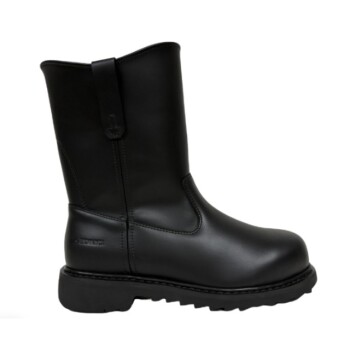
Beyond the welt itself, the highest-quality boots integrate a range of specialized materials chosen for specific performance goals. These include advanced leathers engineered for chemical resistance, high-tensile textiles like nylon and neoprene for flexibility, waterproof and breathable membranes such as Gore-Tex, and purpose-built outsole compounds like nitrile rubber for superior durability and protection.
While the Goodyear welt provides a durable and resoleable foundation, the boot's true performance is defined by a system of materials working in concert. The selection of leathers, textiles, and protective components is not arbitrary; it is a direct response to the demands of the intended environment.
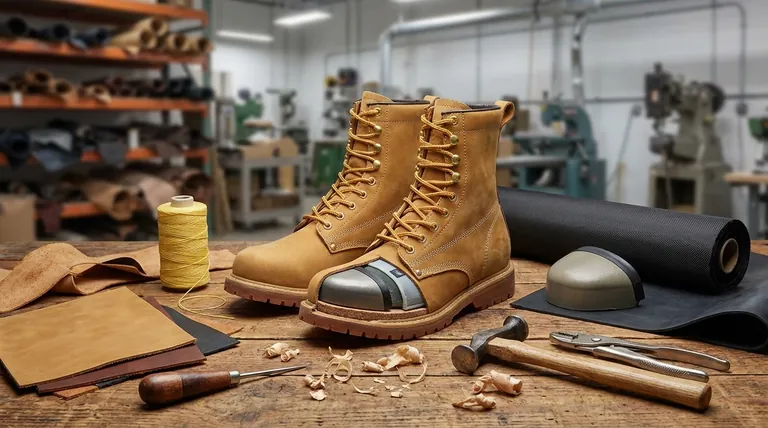
The Anatomy of a High-Performance Boot
A premium boot is more than its construction method. It's an integrated system where each material plays a critical role in protection, durability, and comfort.
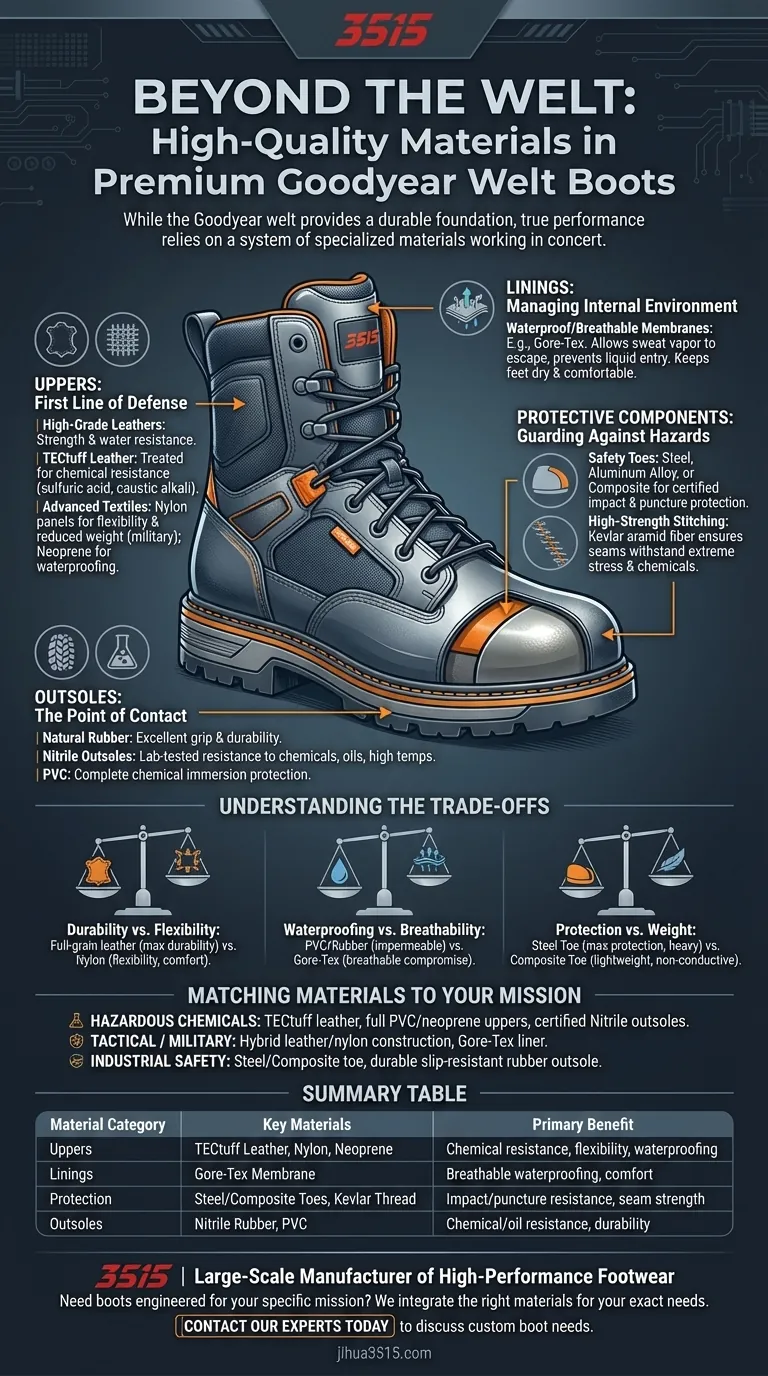
Uppers: The First Line of Defense
The upper is the most visible part of the boot and provides the primary barrier against the elements.
High-grade leathers are a common choice for their inherent strength and water resistance. Specialized variants, such as TECtuff leather, are specifically treated to resist harsh chemicals like sulfuric acid and caustic alkali.
For applications requiring flexibility and lighter weight, manufacturers often use advanced textiles. Nylon panels are frequently integrated with leather in military boots, while neoprene uppers offer excellent waterproofing.
Linings: Managing the Internal Environment
What happens inside the boot is just as important as what happens outside.
Modern boots often incorporate waterproof and breathable membranes, with Gore-Tex being the most well-known example. This material allows water vapor (sweat) to escape while preventing liquid water from entering, keeping feet dry and comfortable.
Protective Components: Guarding Against Hazards
For work and safety applications, hidden materials provide crucial protection against impact and puncture.
Safety toes are a primary feature, made from steel, aluminum alloy, or lighter-weight composite materials. Each offers certified impact protection.
Stitching is another critical but often overlooked component. Using high-strength threads like Kevlar aramid fiber ensures seams do not fail under extreme stress or chemical exposure.
Outsoles: The Point of Contact
The outsole dictates the boot's traction, longevity, and resistance to environmental factors.
Natural rubber is a common choice for its excellent grip and durability. For more demanding conditions, specialized compounds are used. Nitrile outsoles are lab-tested to resist chemicals, oils, and high temperatures, while PVC is often used for complete chemical immersion protection.
Understanding the Trade-offs
Choosing the right materials always involves balancing competing priorities. There is no single "best" material, only the best material for a specific task.
Durability vs. Flexibility
A full-grain leather upper offers maximum durability and abrasion resistance but can be stiff and heavy. Incorporating nylon panels reduces weight and increases flexibility, enhancing comfort during long periods of wear, but may offer less abrasion resistance than thick leather.
Waterproofing vs. Breathability
Materials like PVC and rubber offer complete, impermeable waterproofing, which is essential for chemical protection. However, they are not breathable, which can lead to discomfort in warm conditions. Membranes like Gore-Tex offer an excellent compromise but may not be suitable for full chemical immersion.
Protection vs. Weight
A steel toe provides maximum impact protection at a lower cost, but it is the heaviest option and conducts temperature. Composite toes are lighter, do not conduct heat or cold, and won't set off metal detectors, but they are often bulkier and more expensive.
Matching Materials to Your Mission
To make an informed decision, align the boot's material composition with your primary operational need.
- If your primary focus is hazardous chemical environments: Seek out boots with TECtuff leather or full PVC/neoprene uppers and certified nitrile outsoles.
- If your primary focus is tactical or military use: Look for a hybrid construction of leather for structure and nylon for flexible, lightweight performance, often paired with a Gore-Tex liner.
- If your primary focus is industrial safety and impact risk: Prioritize the safety toe material (steel for cost-effectiveness, composite for lightweight comfort) and a durable, slip-resistant rubber outsole.
Ultimately, a truly high-quality boot is one where every material is carefully selected to create a complete and purpose-built tool for your feet.
Summary Table:
| Material Category | Key Materials | Primary Benefit |
|---|---|---|
| Uppers | TECtuff Leather, Nylon, Neoprene | Chemical resistance, flexibility, waterproofing |
| Linings | Gore-Tex Membrane | Breathable waterproofing, comfort |
| Protection | Steel/Composite Toes, Kevlar Thread | Impact/puncture resistance, seam strength |
| Outsoles | Nitrile Rubber, PVC | Chemical/oil resistance, durability |
Need boots engineered for your specific mission?
As a large-scale manufacturer, 3515 produces a comprehensive range of high-performance footwear for distributors, brand owners, and bulk clients. Our production capabilities encompass all types of safety, tactical, and work boots, integrating the right materials—from TECtuff leather to composite toes—to meet your exact durability, safety, and comfort requirements.
Contact our experts today to discuss your custom boot needs and receive a tailored solution.
Visual Guide
Related Products
- Heavy-Duty Goodyear Welted Pull-On Safety Rigger Boot
- Durable Goodyear Welt Leather Work Boots for Wholesale & Private Label
- Wholesale Durable Leather Work Boots | 8-Inch Goodyear Welt Manufacturer
- Durable Waterproof Rain Boots | Custom Manufacturer for Wholesale & Brands
- Factory Direct Wholesale Rain Boots Durable Waterproof & Fully Customizable
People Also Ask
- What are the key elements of quality boot construction? Ensure Longevity & Performance
- Are Goodyear welted boots worth it? The Ultimate Guide to Lifelong Footwear
- What is a Goodyear welt on a boot? The Secret to Durable, Repairable Footwear
- What makes Goodyear Welt boots suitable for harsh environments? Unmatched Durability & Repairability
- Are there any limitations to oil resistant safety boots? Key Risks and How to Mitigate Them