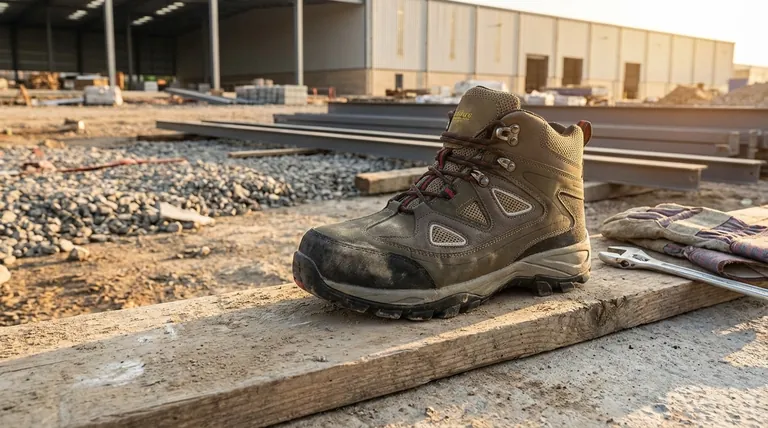
At its core, a combination work boot is a hybrid design that strategically uses both leather and synthetic fabrics like nylon in its upper construction. These materials are stitched together to create a single boot, aiming to leverage the distinct advantages of each material in different areas of the foot.
The central idea behind a combination work boot is to merge the rugged durability and support of leather with the lightweight, breathable, and flexible properties of nylon, creating a versatile boot that balances protection with all-day comfort.
The Anatomy of a Combination Boot
To understand if a combination boot is right for you, you must first understand the specific roles its two primary components play in its performance.
The Role of Leather
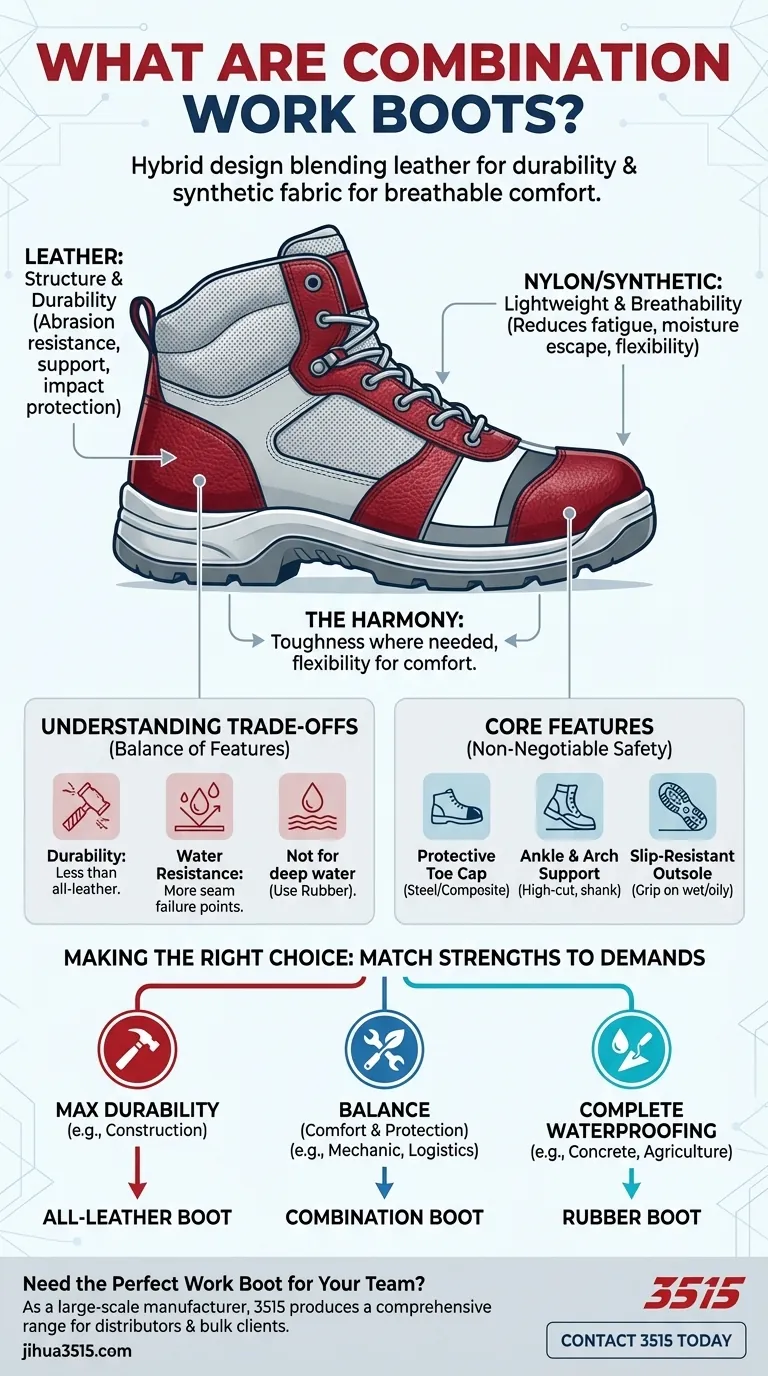
Leather forms the structural foundation of the boot. It is typically used in high-wear areas like the toe cap, heel counter, and eyelet stays.
This material provides excellent abrasion resistance, structure, and support, protecting your foot from impacts and providing a stable platform.
The Advantage of Nylon
Nylon or similar synthetic fabrics are generally used for the boot's side panels, tongue, and ankle collar.
These materials are significantly lighter and more breathable than leather. This reduces overall boot weight, which helps fight fatigue, and allows heat and moisture to escape, keeping your feet drier and more comfortable.
How They Work in Harmony
The design is intentional. Leather provides toughness where you need it most, while nylon provides flexibility and comfort in areas that bend and move.
This creates a boot that doesn't force a choice between pure durability and pure comfort, instead offering a functional compromise between the two.
Understanding the Trade-offs
While versatile, the combination design is a balance of features, not a universal solution. Being aware of the compromises is essential for making an informed decision.
Durability vs. All-Leather
An all-leather boot will almost always offer superior overall durability and resistance to cuts and abrasions compared to a combination boot. The nylon panels, while tough, are inherently more susceptible to damage than a thick piece of hide.
Water Resistance Considerations
While many combination boots are treated with waterproof membranes, the numerous seams between leather and nylon can create more potential points of failure for water entry over time compared to a simpler all-leather construction.
Not a Substitute for Specialized Boots
A combination boot is not a dedicated rubber boot. If your job requires standing in water or deep mud, only a seamless, fully waterproof rubber boot can provide the necessary protection.
Core Features of Any Quality Work Boot
Regardless of the material construction, any work boot worth considering must include several non-negotiable safety and comfort features.
Essential Toe Protection
The boot must have a protective toe cap that meets national safety standards. This can be a steel toe for maximum impact resistance or a lighter composite toe.
Critical Ankle and Arch Support
A high-cut design is crucial for supporting the ankle and preventing sprains or twists on uneven ground. A reinforced arch or shank is also vital for support, especially when climbing ladders.
Non-Negotiable Slip Resistance
The outsole must be made of a material designed to grip oily, wet, or slippery surfaces. Look for a boot explicitly rated as slip-resistant.
Making the Right Choice for Your Job
Selecting the right boot material comes down to matching its specific strengths to the primary demands of your work environment.
- If your primary focus is maximum durability and abrasion resistance (e.g., heavy construction, demolition): An all-leather boot provides the most robust protection.
- If your primary focus is balancing comfort, flexibility, and protection (e.g., mechanic, landscaper, warehouse logistics): A combination boot is an excellent choice for reducing fatigue while maintaining safety.
- If your primary focus is complete waterproofing in wet environments (e.g., concrete work, agriculture): A dedicated rubber boot is the only appropriate tool for the job.
Ultimately, choosing the right work boot is a critical investment in your daily safety and comfort.
Summary Table:
| Feature | Leather | Nylon/Synthetic |
|---|---|---|
| Primary Role | Structure & Durability | Lightweight & Breathability |
| Key Areas | Toe Cap, Heel Counter | Side Panels, Ankle Collar |
| Best For | Maximum abrasion resistance | Reducing fatigue, increasing flexibility |
Need the Perfect Work Boot for Your Team?
As a large-scale manufacturer, 3515 produces a comprehensive range of footwear for distributors, brand owners, and bulk clients. Our production capabilities encompass all types of shoes and boots, including durable combination work boots that expertly balance protection and all-day comfort.
We can help you source or create the ideal footwear solution for your specific industry needs.
Contact 3515 today to discuss your requirements and get a quote!
Visual Guide
Related Products
- Wholesale Durable Safety Boots Manufacturer Customizable Steel Toe Work Boots
- Durable Leather Work Boots for Wholesale & Custom OEM Manufacturing
- Durable Leather Work Boots for Wholesale & Custom Manufacturing
- Wholesale Leather Work Boots with Customizable Wedge Sole for Brands
- Durable Leather Moc Toe Work Boots for Wholesale & Custom Manufacturing
People Also Ask
- What are the pros and cons of steel toe work boots? A Guide to Maximum Protection vs. Comfort
- What are the different types of steel toe work boots? Choose the Right Boot for Your Job
- What is the history of steel toe work boots? From German Invention to Modern Safety Standard
- How much weight can steel toe work boots withstand? Unpacking the 3,372 lb. Safety Standard
- What are some common myths about steel toe work boots? Debunked for Modern Workers