
The fundamental difference between rubber and leather soles on Western boots comes down to a single design philosophy: traction versus mobility. Rubber soles are engineered to provide maximum grip and stability for walking and working, while traditional leather soles are designed to slide easily in and out of a stirrup for rider safety.
The choice between rubber and leather is not about which material is superior overall, but which is better suited for your primary activity. You are choosing between a sole designed for work on the ground (rubber) and a sole optimized for time in the saddle (leather).
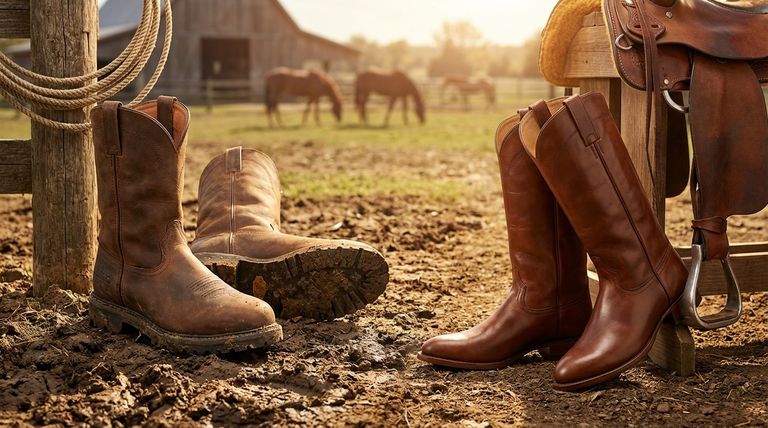
The Core Difference: Grip vs. Slide
The primary function of a boot sole dictates its material. Understanding this core principle is the key to selecting the right boot.
Rubber: Engineered for Traction
Rubber soles are built to grip the ground. Their material composition and tread patterns are designed to provide excellent traction and stability.
This makes them the superior choice for walking on slick or uneven surfaces, from wet pavement to barn floors covered in sawdust.
Leather: Designed for the Stirrup
A traditional leather sole is intentionally smooth. Its primary advantage is allowing a rider's foot to slide effortlessly into and out of the stirrup.
This "slide" is a critical safety feature. In the event of a fall, a slick leather sole is less likely to get caught in the stirrup, reducing the risk of being dragged.
Comparing Key Performance Factors
Beyond the primary difference in function, each material offers distinct advantages in durability, comfort, and weather resistance.
Durability and Longevity
Rubber is generally more durable and resistant to abrasion, making it ideal for rigorous work environments or frequent walking on hard surfaces like concrete.
Leather, while classic, will wear down more quickly with extensive walking. However, it can often be re-soled, and it molds to the shape of your foot over time.
Comfort and Fit
Leather soles provide a unique, customized fit as they break in and conform to your foot's specific shape, offering excellent support.
Rubber soles tend to offer more consistent cushioning and flexibility from the first wear, which can reduce fatigue during long periods of standing or walking.
Weather and Water Resistance
Rubber is inherently more waterproof and better suited for wet or muddy conditions, keeping your feet drier and providing more reliable traction.
Leather is not naturally waterproof and can be damaged by excessive moisture if not properly cared for, making it less ideal for consistently wet environments.
Understanding the Trade-offs
The ideal sole for one task can be a liability for another. Recognizing these trade-offs is crucial for making a safe and practical choice.
The Safety Debate in the Saddle
The slickness of a leather sole is its greatest safety asset for a rider. A boot with too much grip can prevent your foot from sliding free during an emergency dismount.
However, many modern rubber-soled riding boots are now designed with smoother, stirrup-friendly tread patterns to mitigate this risk while still offering better traction on the ground.
Versatility Beyond the Barn
Leather-soled boots are the traditional choice for social settings and activities like dancing, where their ability to glide across a floor is a distinct advantage.
Rubber soles offer far more versatility for all-purpose use. They transition seamlessly from light riding to groundwork, making them a practical choice for those who need one boot to do it all.
Making the Right Choice for Your Needs
Your decision should be guided by how you spend the majority of your time in your boots.
- If your primary focus is horseback riding and competition: A traditional leather sole offers the optimal in-saddle safety and feel.
- If your primary focus is all-around farm and barn work: A durable rubber sole provides the necessary traction, stability, and weather resistance.
- If you need a single, versatile boot for mixed use: A modern boot with a hybrid rubber sole designed for riding is likely your most practical and safest option.
Ultimately, choosing the right sole is about building the proper foundation for your specific needs, both in and out of the saddle.
Summary Table:
| Feature | Rubber Sole | Leather Sole |
|---|---|---|
| Primary Function | Maximum traction for walking/working | Smooth slide for stirrup safety |
| Best For | Groundwork, wet/muddy conditions | Primary riding, competition |
| Durability | High abrasion resistance | Wears faster, can be re-soled |
| Weather Resistance | Excellent, waterproof | Requires care, not ideal for wet conditions |
| Versatility | Excellent for mixed use | Best for riding and social settings |
Ready to Find Your Perfect Western Boot?
As a large-scale manufacturer, 3515 produces a comprehensive range of footwear for distributors, brand owners, and bulk clients. Whether you need durable rubber-soled boots for all-around work or classic leather-soled boots for optimal riding performance, our production capabilities encompass all types of Western boots.
Let us help you build the proper foundation for your needs.
Contact us today to discuss your specific requirements and discover how we can deliver quality, value, and the right sole for your customers.
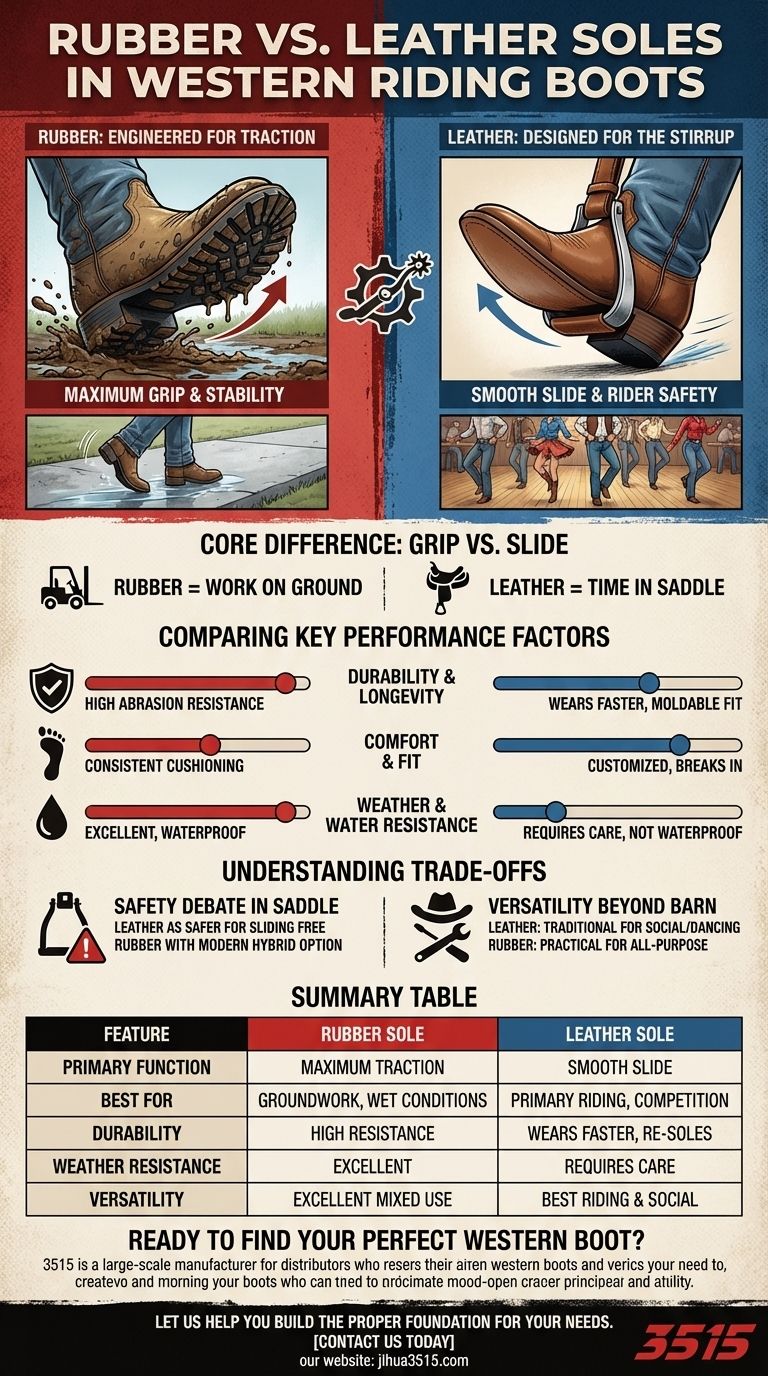
Visual Guide
Related Products
- Durable Goodyear Welt Leather Work Boots for Wholesale & Private Label
- Wholesale High-Traction Camo Boots - Custom Manufacturer for Brands
- High-Traction Suede Tactical Boots Wholesale & Custom Manufacturing
- Wholesale Waterproof Tactical Boots Custom Suede & High-Traction Soles
- Durable Military Combat Boots with Water Drainage for Wholesale & OEM
People Also Ask
- What is the difference between full-grain and top-grain leather? Premium Material Guide for Boot Manufacturers
- What are the advantages of leather as an upper material for work boots? Unmatched Durability & Custom Comfort
- Why is it important to waterproof leather work boots? Protect Your Investment and Performance
- How should new leather work boots be broken in? A Guide to Comfort and Durability
- What are the advantages of leather uppers in work boots? Unmatched Durability & Protection


















