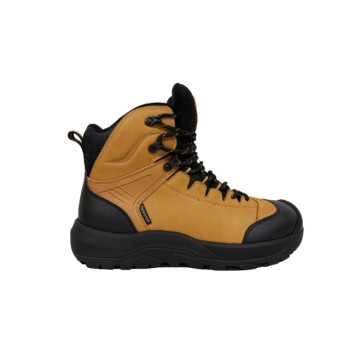
The defining features of good winter boots are a synthesis of three critical functions: warmth from insulation, dryness from waterproofing, and safety from traction. These elements work together to protect your feet from the cold, wet, and slippery conditions of winter, while factors like material durability and proper fit ensure long-lasting comfort and performance.
The best winter boot is not the one with the most features, but the one where the features—insulation, waterproofing, and traction—are correctly balanced for your specific environment and activity level. Understanding this balance is the key to making an informed choice.
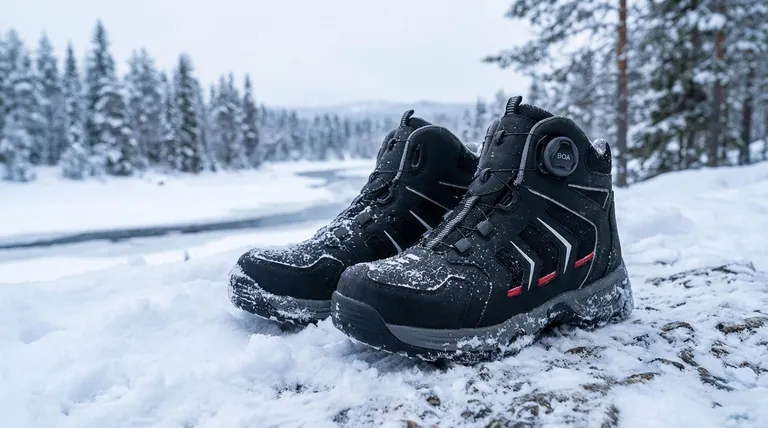
The Three Pillars of Winter Boot Performance
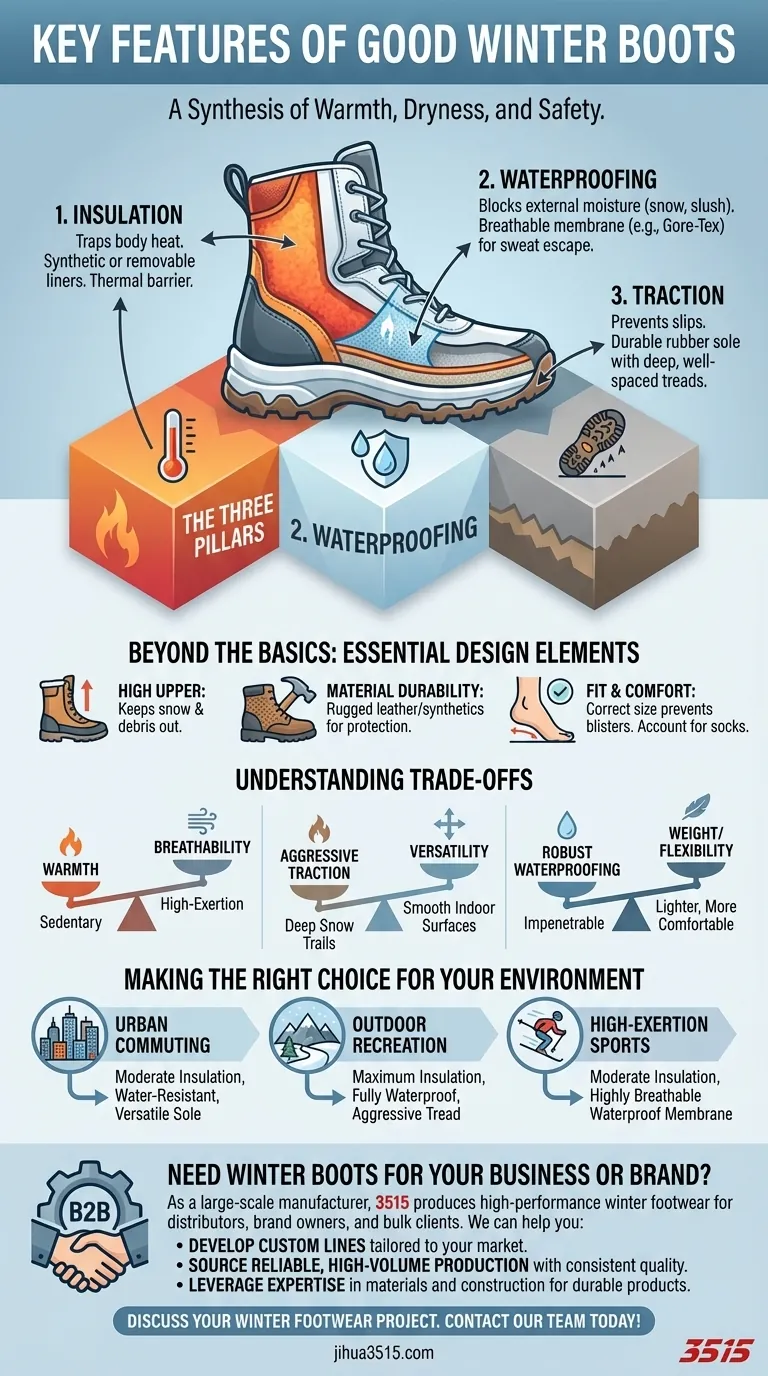
A truly effective winter boot is built on a foundation of three core principles. Each must function correctly for the boot to perform its job.
Pillar 1: Insulation for Uncompromising Warmth
The primary purpose of a winter boot is to keep your feet warm. This is achieved through insulation, which works by trapping a layer of air around your foot, creating a thermal barrier against the cold.
Insulation can be a built-in synthetic material or a removable liner. The key is that it provides a buffer between your body heat and the freezing temperatures outside.
Pillar 2: Waterproofing for Total Dryness
Warmth is useless if your feet are wet. A quality winter boot must prevent moisture from snow, slush, and puddles from getting in.
Look for features like a waterproof membrane (such as Gore-Tex or a proprietary equivalent) that blocks external water. Crucially, this membrane should also be breathable, allowing sweat vapor to escape so your feet stay dry from the inside out.
Pillar 3: Traction for Secure Footing
Winter surfaces are unpredictable and often hazardous. Traction is a non-negotiable safety feature.
This is provided by a durable rubber sole with deep, well-spaced treads or lugs. These design elements grip snow and provide a more secure footing on ice, significantly reducing the risk of slips and falls.
Beyond the Basics: Essential Design Elements
While the three pillars are fundamental, other design characteristics contribute significantly to a boot's overall effectiveness and comfort.
The Importance of a High Upper
Winter boots typically have a higher shaft that extends over the ankle. This design is not just for style; it serves the critical function of preventing snow and debris from entering the top of the boot.
Material Durability and Support
The exterior materials, often leather or rugged synthetics, provide an additional layer of protection. They contribute to the boot's overall waterproofing, durability, and structural support for your foot and ankle.
Fit and Comfort for All-Day Wear
Even the most technically advanced boot is a poor choice if it doesn't fit correctly. A proper fit prevents chafing and blisters while ensuring the insulation can do its job effectively. Always account for the thickness of winter socks when trying on boots.
Understanding the Trade-offs
Choosing the perfect winter boot involves balancing competing characteristics. Recognizing these trade-offs is essential for selecting the right tool for the job.
Warmth vs. Breathability
Heavily insulated boots are excellent for sedentary activities in extreme cold. However, during high-exertion activities like hiking, that same level of insulation can cause your feet to sweat, paradoxically making them cold and damp.
Aggressive Traction vs. Versatility
Deep, aggressive lugs are ideal for trudging through deep snow on trails. On the other hand, they can feel clumsy and may offer less grip on smooth, wet indoor surfaces like tile or concrete.
Robust Waterproofing vs. Weight
A fully waterproof boot with a high rubber shell is impenetrable to water but is often heavier and less flexible. A water-resistant boot may be lighter and more comfortable for casual use but won't stand up to deep puddles or slush.
Making the Right Choice for Your Environment
Your ideal boot depends entirely on how you plan to use it. Focus on the features that align with your primary activity.
- If your primary focus is urban commuting and casual wear: Prioritize moderate insulation, water-resistant properties, and a versatile sole that is comfortable on pavement.
- If your primary focus is deep snow and outdoor recreation: Look for maximum insulation, a fully waterproof design with a high upper, and an aggressive tread for reliable traction.
- If your primary focus is high-exertion winter sports: Balance moderate insulation with a highly breathable waterproof membrane to effectively manage sweat.
By understanding how these core features serve your specific needs, you can confidently choose a boot that will keep you warm, dry, and safe.
Summary Table:
| Key Feature | Primary Function | What to Look For |
|---|---|---|
| Insulation | Traps body heat to keep feet warm | Synthetic materials or removable liners rated for your climate |
| Waterproofing | Blocks external moisture (snow, slush) | Breathable membrane (e.g., Gore-Tex) and sealed seams |
| Traction | Prevents slips on ice and snow | Deep-lugged, durable rubber outsoles |
| High Upper | Keeps snow out | Shaft height that covers the ankle |
Need Winter Boots for Your Business or Brand?
As a large-scale manufacturer, 3515 produces a comprehensive range of high-performance winter footwear for distributors, brand owners, and bulk clients. Our production capabilities encompass all types of insulated, waterproof boots designed with the critical balance of warmth, dryness, and safety.
We can help you:
- Develop a custom line of winter boots tailored to your target market's specific needs.
- Source reliable, high-volume production with consistent quality control.
- Leverage our expertise in materials and construction to create durable, high-performing products.
Let's discuss your winter footwear project. Contact our team today to get started!
Visual Guide
Related Products
- Premium Insulated Safety Boots and Shoes for Wholesale & Bulk Orders
- Factory Direct Wholesale Rain Boots Durable Waterproof & Fully Customizable
- Durable Waterproof Rain Boots | Custom Manufacturer for Wholesale & Brands
- Wholesale Waterproof Tactical Boots Custom Suede & High-Traction Soles
- Premium Waterproof High-Cut Industrial Safety Boots for Wholesale and Bulk Orders
People Also Ask
- What are the recommended insulation ratings for mild winter conditions? A Guide for Active & Stationary Workers
- How does insulation thickness correlate with temperature ranges? A Guide to Choosing the Right Warmth
- What insulation level is needed for severe cold and stationary work? 1200g or Higher is Essential
- What safety advantages do insulated boots offer beyond warmth? Dielectric Protection & Superior Grip
- How does fleece lining contribute to the warmth of insulated boots? Trapping Air for Superior Cold Protection