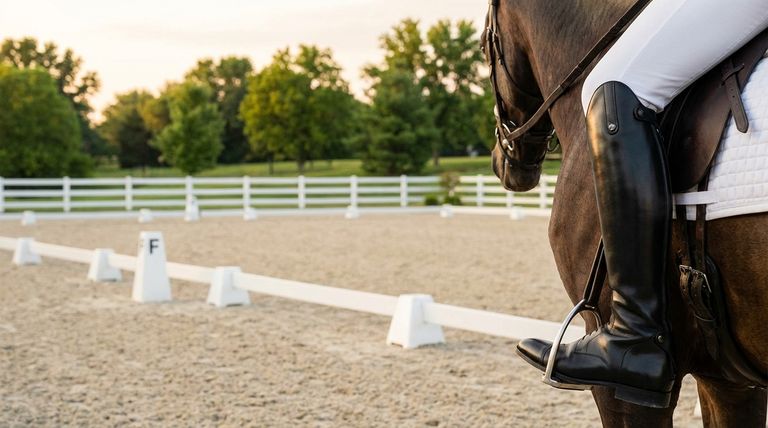
The primary advantages of dress riding boots are their formal appearance, rigid construction for optimal leg position, and sleek, traditional aesthetic. Specifically designed for disciplines like dressage, their stiffness helps create a still, stable lower leg, which is crucial for delivering precise cues to the horse. The lack of laces and a high "Spanish cut" create an elegant, unbroken line that enhances the rider's formal presentation in the show ring.
While other boots prioritize flexibility for walking or jumping, the dress riding boot makes a deliberate trade-off. It sacrifices ankle flexion for the unwavering structural support required for precise equestrian communication, making it a specialized tool for formal disciplines.
The Foundation of Form and Function
The design of a dress boot is not merely about tradition; every feature serves a specific purpose for the rider. It is engineered to create stability and enhance the formal silhouette required in certain equestrian arts.
Unwavering Leg Support
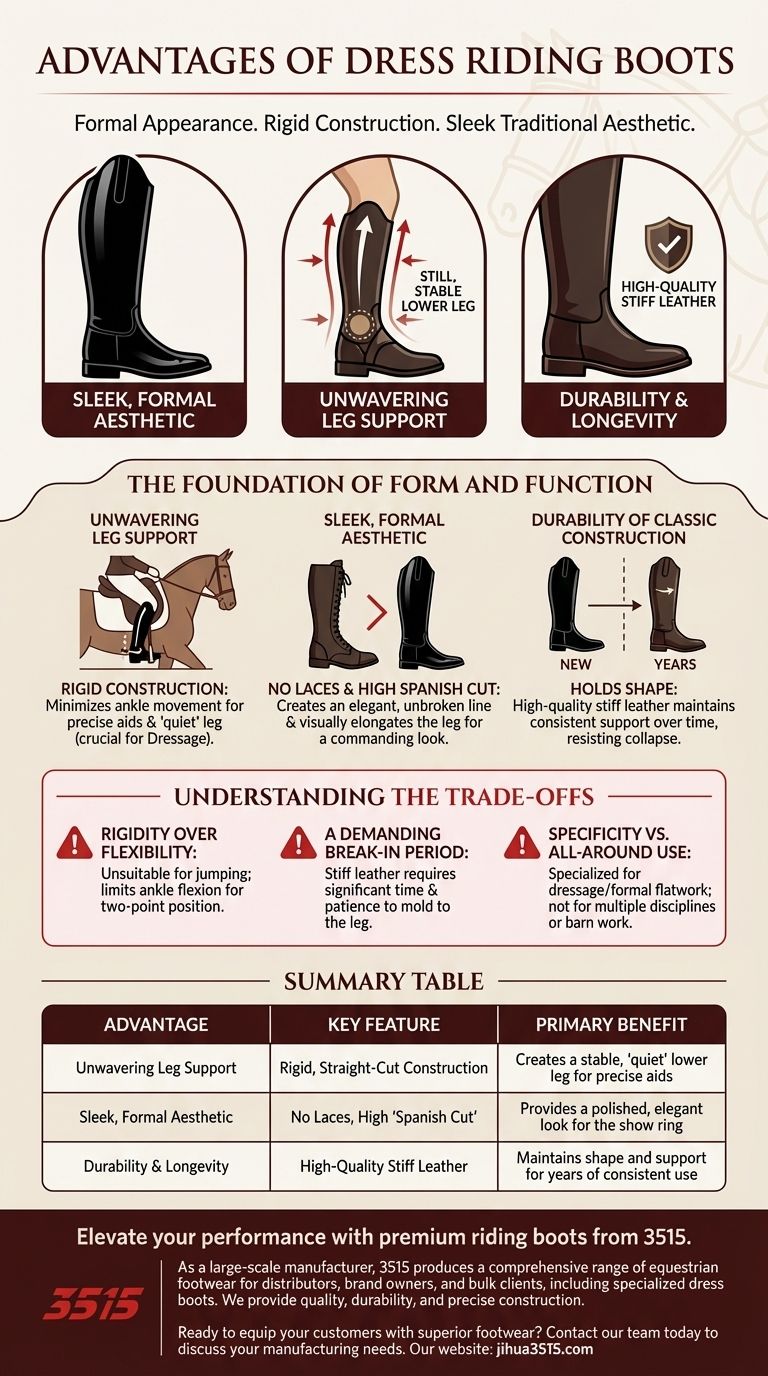
The most significant functional advantage is the rigid construction. Dress boots are made from stiffer leather with a straighter fit through the ankle compared to other riding boots.
This rigidity minimizes ankle movement, helping the rider maintain a "quiet" and stable lower leg. This stability is paramount in dressage, where subtle aids from the leg are used to communicate with the horse.
A Sleek, Formal Aesthetic
Dress boots provide a polished, traditional appearance essential for the dressage arena and other formal events. Their defining feature is the absence of laces, which creates a smooth, uninterrupted profile.
Many also feature a higher cut on the outside of the leg, known as a "Spanish cut." This design element extends over the side of the knee, visually elongating the rider's leg for a more elegant and commanding look.
Durability of Classic Construction
The high-quality, stiff leather used in dress boots is chosen for its durability and ability to hold its shape. While this requires a significant break-in period, it means the boots will provide consistent support for years.
This construction ensures the boot doesn't soften or collapse around the ankle over time, maintaining the leg support it was designed to provide.
Understanding the Trade-offs
Choosing a dress boot means opting for specialization over versatility. Understanding its limitations is key to knowing if it's the right choice for your needs.
Rigidity Over Flexibility
The core advantage of a dress boot—its stiffness—is also its main drawback outside of its intended discipline. The lack of ankle flexion makes them unsuitable for jumping, which requires the heel to drop in a two-point position.
They are also significantly less comfortable for walking long distances around a showground or barn compared to more flexible field boots or paddock boots.
A Demanding Break-in Period
The same stiff leather that provides excellent support makes the break-in process notoriously challenging. New dress boots can be uncomfortable and require time and patience to mold to the rider's leg.
This contrasts sharply with softer boots that offer comfort almost immediately.
Specificity vs. All-Around Use
A dress boot is a piece of specialized equipment. It is the perfect tool for dressage and formal flatwork but a poor choice for a rider who participates in multiple disciplines or wants one boot for all their barn activities.
Making the Right Choice for Your Discipline
Selecting the correct boot is about aligning its features with your equestrian goals.
- If your primary focus is dressage or formal flatwork: The rigid support and polished look of a dress boot are specifically designed to enhance your performance and presentation.
- If your primary focus is jumping, eventing, or general riding: A field boot with laces will offer the necessary ankle flexibility for a secure two-point position and greater comfort out of the saddle.
- If your primary focus is barn work, trail riding, or casual riding: The comfort, light weight, and breathability of paddock boots and half-chaps are a far more practical choice.
Choosing the right boot is about matching the tool to the task, ensuring your equipment actively supports your equestrian goals.
Summary Table:
| Advantage | Key Feature | Primary Benefit |
|---|---|---|
| Unwavering Leg Support | Rigid, Straight-Cut Construction | Creates a stable, 'quiet' lower leg for precise aids |
| Sleek, Formal Aesthetic | No Laces, High 'Spanish Cut' | Provides a polished, elegant look for the show ring |
| Durability & Longevity | High-Quality Stiff Leather | Maintains shape and support for years of consistent use |
Elevate your performance with premium riding boots from 3515.
As a large-scale manufacturer, 3515 produces a comprehensive range of equestrian footwear for distributors, brand owners, and bulk clients. Our production capabilities encompass all types of riding boots, including specialized dress boots designed for optimal support and a flawless appearance.
We provide the quality, durability, and precise construction that serious riders and brands demand. Ready to equip your customers with superior footwear? Contact our team today to discuss your manufacturing needs.
Visual Guide
Related Products
- Wholesale Comfort Dress Shoes with Dial Closure for Custom Manufacturing
- Wholesale Perforated Comfort Dress Shoes | Custom Derby Shoe Manufacturer
- Wholesale Women's Leather Derby Shoes Custom Factory Production
- Wholesale Classic Leather Lace-Up Ankle Boots for Brand Manufacturing
- Durable High-Ankle Tactical Boots Wholesale Manufacturer for Custom & Bulk Orders
People Also Ask
- How do comfort dress shoes differ from traditional dress shoes? Discover the Ergonomic Advantage
- Which dress shoe styles are suitable for wearing with jeans? A Guide to Smart-Casual Style
- What features make dress shoes suitable for standing all day? Achieve All-Day Comfort with Anatomical Design
- What are the benefits of resoling dress shoes? Extend Life & Boost Comfort
- What recent trends have influenced traditional dress shoe designs? The Shift to Modern Comfort