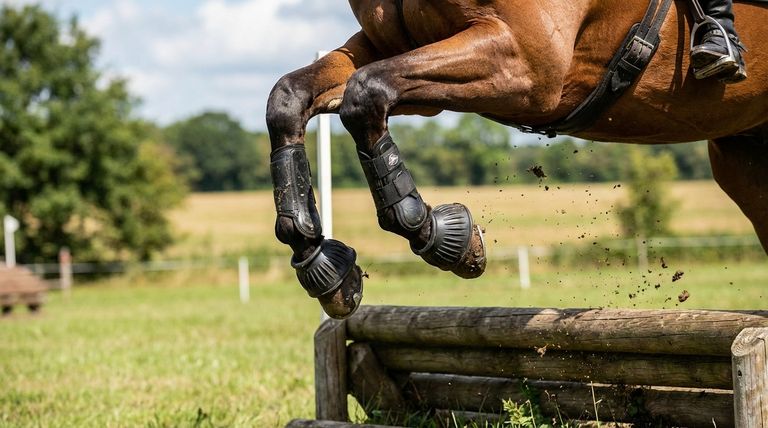
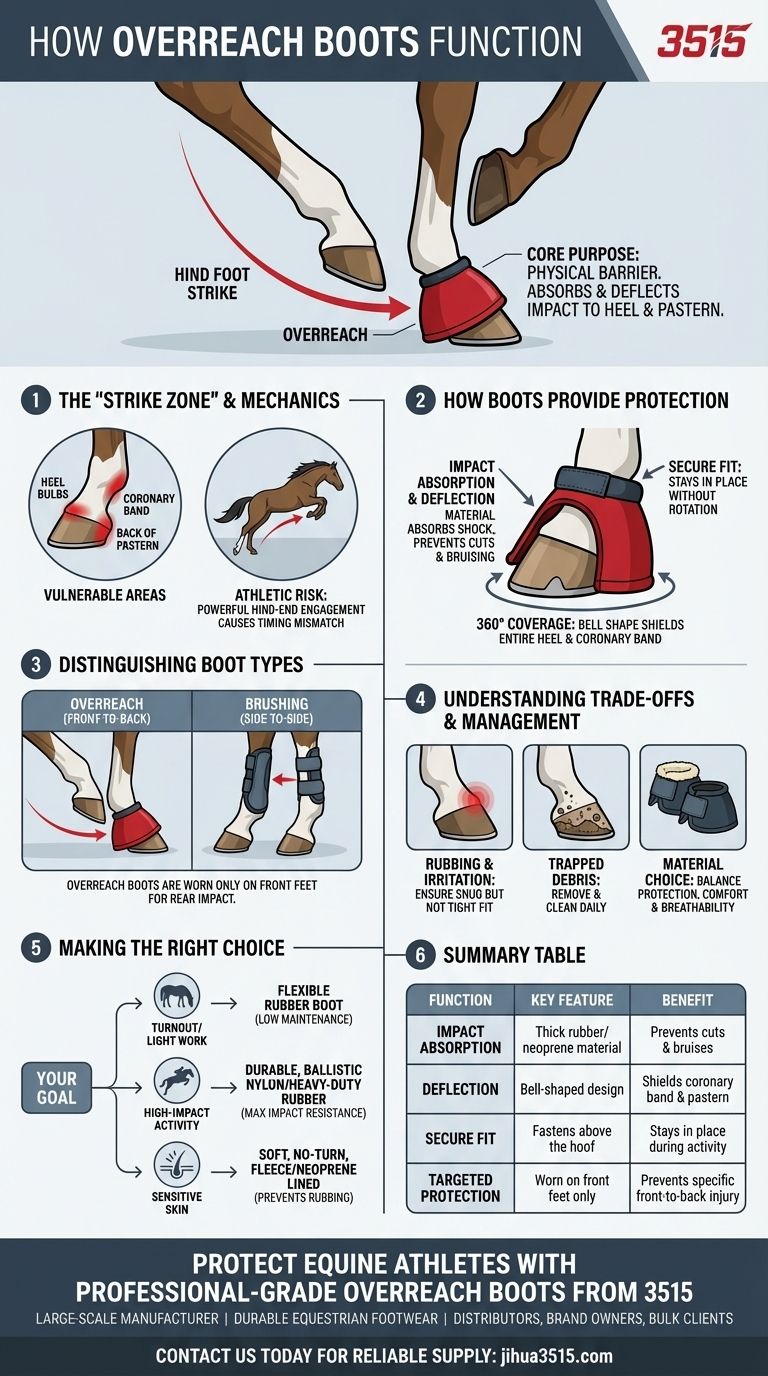
At their core, overreach boots serve a single, critical purpose: to protect the vulnerable heel and pastern area of a horse's front feet from being struck by the toes of their own hind feet. This self-inflicted injury, known as an "overreach," is a common risk for athletic horses during strenuous work or even simple turnout.
The function of an overreach boot is not to correct a horse's movement, but to provide a simple, physical barrier. It absorbs and deflects the impact of a hind hoof, preventing it from causing injury to the delicate structures of the front heel.
The Mechanics of an Overreach Injury
To understand how the boots function, we must first understand the problem they solve. An "overreach" occurs when a horse's hind foot lands at or beyond the spot where the front foot just left the ground.
The "Strike Zone"
This timing mismatch causes the toe of the hind hoof to strike the back of the front leg. The most vulnerable areas are the soft tissues of the heel bulbs, the sensitive coronary band (where the hoof wall grows from), and the back of the pastern.
Why Athletic Horses are at Higher Risk
While any horse can overreach, the risk is significantly higher in performance disciplines. Activities like jumping, galloping cross-country, or executing sharp turns demand powerful hind-end engagement, which can easily lead to the hind feet catching up to the fronts.
How Overreach Boots Provide Protection
The design of an overreach boot, often called a "bell boot" for its shape, is specifically engineered to shield the high-risk "strike zone."
Impact Absorption and Deflection
The primary function comes from the material, typically thick rubber, neoprene, or another durable polymer. When the hind hoof strikes, this material absorbs the initial shock and deflects the force of the blow, preventing the hard edge of the hoof from cutting or bruising the tissue beneath.
Coverage of Vulnerable Areas
The characteristic bell shape is intentional. It is designed to hang down from the pastern and completely cover the horse's heels and coronary band, providing 360-degree protection to the entire area.
The Role of a Secure Fit
The boot fastens around the pastern, above the hoof. A proper fit ensures it stays in place, covering the heels without rotating or being so loose that it trips the horse.
Distinguishing Overreach Boots from Other Leg Protection
It is crucial not to confuse overreach boots with other common types of protective gear, such as brushing or fetlock boots. Each is designed to prevent a different type of injury.
Overreach vs. Brushing (Interference)
An overreach is a front-to-back injury (hind foot striking the front foot). Brushing, or interference, is a side-to-side injury, where one leg strikes the inside of the opposite leg.
Different Boots for Different Problems
Fetlock boots and brushing boots are worn on the lower leg to protect the inner cannon bone and fetlock joint from side-to-side impact. Overreach boots are worn only on the front feet to protect the heels from rear impact.
Understanding the Trade-offs
While highly effective, overreach boots require proper management to avoid creating other issues. They are a tool, and like any tool, they must be used correctly.
Risk of Rubbing and Irritation
A poorly fitting boot, or one left on for too long, can rub against the pastern and cause chafing or sores. It's essential to ensure the fit is snug but not tight.
Trapped Debris and Moisture
Debris like sand, mud, or small rocks can get trapped under the boot, leading to significant skin irritation. Boots should be removed and cleaned daily, and the horse's legs inspected.
Importance of Material Choice
Softer, fleece-lined boots may reduce rubbing but can retain more moisture and heat. Hard rubber boots offer maximum protection but may be less comfortable for sensitive horses. The choice depends on the horse and the intended use.
Making the Right Choice for Your Goal
Selecting the correct boot is a matter of matching the level of protection to the level of risk for your horse's specific job.
- If your primary focus is turnout or light work: A flexible, pull-on rubber bell boot often provides sufficient, low-maintenance protection.
- If your primary focus is high-impact activity (jumping, cross-country): Choose a durable, thicker boot made from ballistic nylon or heavy-duty rubber with a secure hook-and-loop closure for maximum impact resistance.
- If your horse has sensitive skin: Look for boots with a soft, no-turn design or a fleece or neoprene lining to prevent rubbing during long training sessions.
Ultimately, selecting and properly using an overreach boot is a direct investment in your horse's soundness and athletic longevity.
Summary Table:
| Function | Key Feature | Benefit |
|---|---|---|
| Impact Absorption | Thick rubber/neoprene material | Prevents cuts and bruises to heel bulbs |
| Deflection | Bell-shaped design | Shields the coronary band and pastern |
| Secure Fit | Fastens above the hoof | Stays in place during strenuous activity |
| Targeted Protection | Worn on front feet only | Prevents specific front-to-back injury (overreach) |
Protect your equine athletes with professional-grade overreach boots from 3515.
As a large-scale manufacturer, we produce a comprehensive range of durable equestrian footwear for distributors, brand owners, and bulk clients. Our production capabilities ensure high-quality boots designed for maximum protection and comfort, whether for turnout or high-impact disciplines like jumping and cross-country.
Contact us today to discuss your specific needs and secure a reliable supply of protective gear for your customers.
Visual Guide
Related Products
- Wholesale Tactical Boots High-Traction & Reflective for Bulk & Brand Orders
- Durable High-Ankle Tactical Boots Wholesale Manufacturer for Custom & Bulk Orders
- High-Traction Suede Tactical Boots Wholesale & Custom Manufacturing
- Wholesale Lightweight Tactical Boots Custom Manufacturer for Desert & Combat Use
- Durable Leather High-Ankle Tactical Boots for Wholesale & Custom Manufacturing
People Also Ask
- How do tactical boots protect against injuries? Discover the Integrated Safety System
- What features should law enforcement officers look for in tactical boots? Essential Guide for Safety & Performance
- What are the advantages and disadvantages of tactical boots? Lightweight Comfort vs. Rugged Durability
- How does additive manufacturing equipment reduce environmental risks? Sustainable Tactics for Modern Footwear Production
- What are the consequences of wearing ill-fitting tactical boots? Avoid Injury and Boost Performance