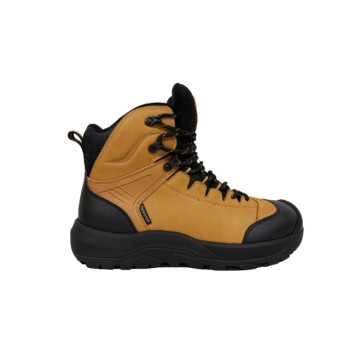
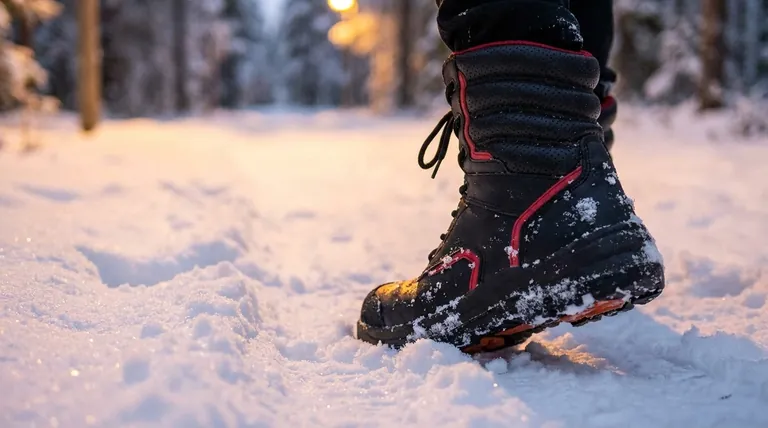
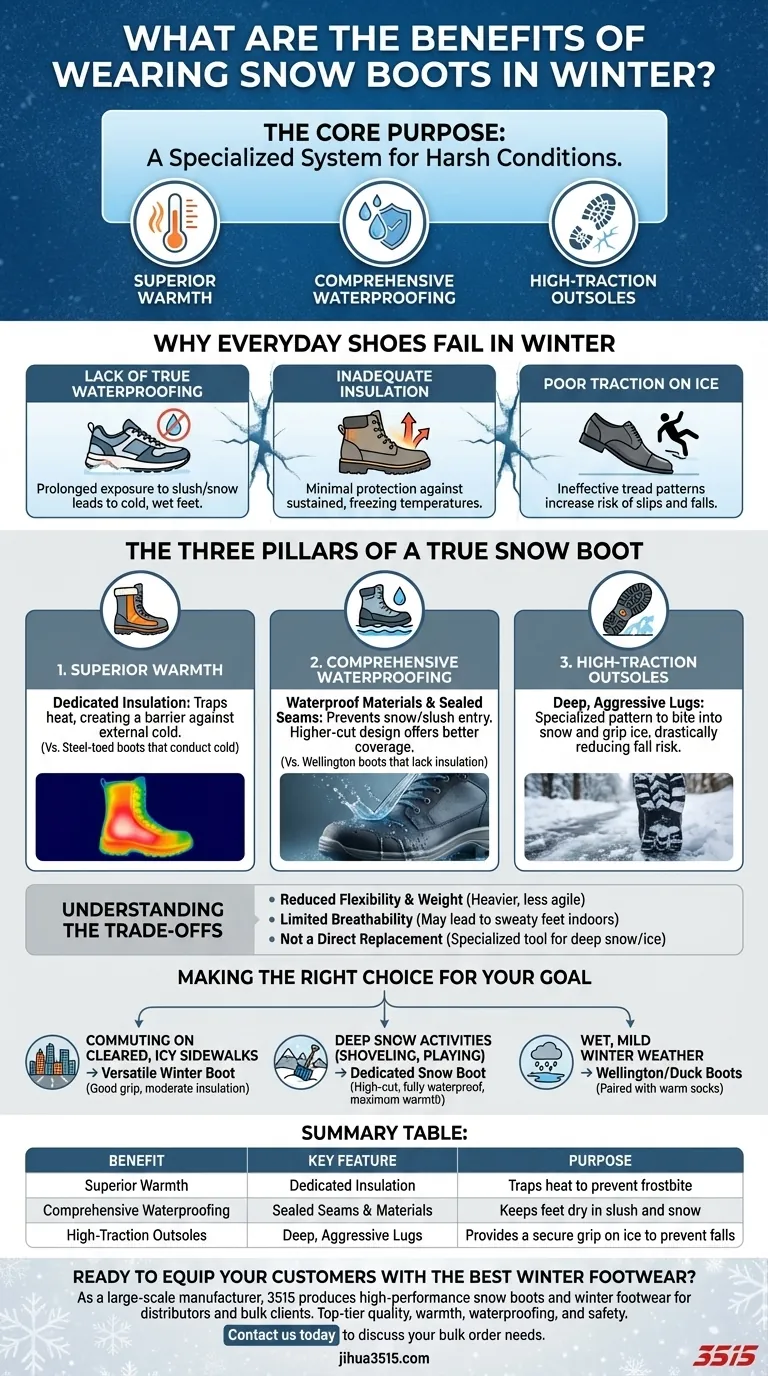
In short, the primary benefits of wearing snow boots are superior warmth, comprehensive waterproofing, and high-traction outsoles. This combination keeps your feet dry and insulated while providing a secure grip on ice and snow, which is crucial for preventing both frostbite and dangerous falls.
The core purpose of a snow boot isn't just to be a warmer version of a regular shoe; it's a specialized piece of equipment designed to create a protective, stable, and warm microenvironment for your feet in the harshest winter conditions.
Why Everyday Shoes Fail in Winter
Regular shoes and even standard boots are simply not engineered for the unique challenges of snow and ice. Understanding their failure points highlights the specific problems that snow boots are built to solve.
Lack of True Waterproofing
Most fashion or work boots are water-resistant at best. Prolonged exposure to slush and snow will eventually lead to moisture seeping through the materials or seams, resulting in cold, wet feet.
Inadequate Insulation
Without dedicated insulation, the cold ground rapidly draws heat away from your feet. Even with thick socks, materials like leather or canvas offer minimal protection against sustained, freezing temperatures.
Poor Traction on Ice
The soles of standard shoes are designed for predictable, dry surfaces. Their tread patterns and rubber compounds are ineffective on ice and packed snow, creating a significant risk of slips and falls.
The Three Pillars of a True Snow Boot
A purpose-built snow boot excels by delivering on three essential engineering features that work in concert to protect your feet.
1. Superior Warmth
This is achieved through dedicated insulation. Unlike a simple lining, this material is specifically designed to trap air and prevent heat from escaping. It creates a critical barrier against the external cold.
Steel-toed work boots, by contrast, can actually make your feet colder as the metal conducts cold very efficiently.
2. Comprehensive Waterproofing
Snow boots utilize waterproof materials like rubber shells and treated textiles. Crucially, they often feature a higher-cut design and sealed seams to prevent snow and slush from entering from the top or through stitching.
Wellington boots are waterproof, but typically lack the insulation needed for true winter conditions.
3. High-Traction Outsoles
The sole of a snow boot is its most critical safety feature. They are built with deep, aggressive lugs—the indentations and patterns on the outsole—that are designed to bite into snow and grip uneven, icy surfaces.
This specialized design provides stability on everything from icy sidewalks to snow-covered trails, drastically reducing the risk of a fall.
Understanding the Trade-offs
While essential for severe weather, snow boots are specialized tools and come with certain compromises.
Reduced Flexibility and Weight
The robust construction, thick insulation, and heavy-duty soles make snow boots heavier and less flexible than other footwear. They are not designed for agility or all-day indoor comfort.
Limited Breathability
The same features that make boots waterproof and warm also limit their breathability. This can lead to sweaty feet if worn indoors for extended periods, which ironically can make your feet feel cold once you go back outside.
Not Always a Direct Replacement
While a work boot might be insulated or a "winter boot" might be warmer than a sneaker, neither offers the complete protective system of a true snow boot. A winter boot is a good all-arounder, but a snow boot is required for deep snow, icy conditions, or prolonged exposure.
Making the Right Choice for Your Goal
Select your winter footwear based on the conditions you will actually face.
- If your primary focus is commuting on cleared but icy sidewalks: A versatile winter boot with good grip and moderate insulation is often sufficient.
- If your primary focus is deep snow activities (shoveling, playing): A dedicated, high-cut, and fully waterproof snow boot is non-negotiable.
- If your primary focus is wet, mild winter weather: Waterproof Wellington or duck boots paired with warm socks can be a practical and effective choice.
Ultimately, investing in true snow boots is an investment in your safety and comfort during the most challenging winter weather.
Summary Table:
| Benefit | Key Feature | Purpose |
|---|---|---|
| Superior Warmth | Dedicated Insulation | Traps heat to prevent frostbite |
| Comprehensive Waterproofing | Sealed Seams & Materials | Keeps feet dry in slush and snow |
| High-Traction Outsoles | Deep, Aggressive Lugs | Provides a secure grip on ice to prevent falls |
Ready to equip your customers with the best winter footwear?
As a large-scale manufacturer, 3515 produces a comprehensive range of high-performance snow boots and winter footwear for distributors, brand owners, and bulk clients. Our production capabilities ensure top-tier quality with superior warmth, waterproofing, and safety features tailored for harsh conditions.
Contact us today to discuss your bulk order needs and secure reliable winter footwear for your market.
Visual Guide
Related Products
- Premium Insulated Safety Boots and Shoes for Wholesale & Bulk Orders
- Factory Direct Wholesale Rain Boots Durable Waterproof & Fully Customizable
- Durable Waterproof Rain Boots | Custom Manufacturer for Wholesale & Brands
- Wholesale Waterproof Tactical Boots Custom Suede & High-Traction Soles
- Wholesale Lightweight Tactical Boots Custom Manufacturer for Desert & Combat Use
People Also Ask
- What are the recommended insulation ratings for mild winter conditions? A Guide for Active & Stationary Workers
- How does insulation thickness correlate with temperature ranges? A Guide to Choosing the Right Warmth
- What insulation level is needed for severe cold and stationary work? 1200g or Higher is Essential
- What safety advantages do insulated boots offer beyond warmth? Dielectric Protection & Superior Grip
- How does fleece lining contribute to the warmth of insulated boots? Trapping Air for Superior Cold Protection