
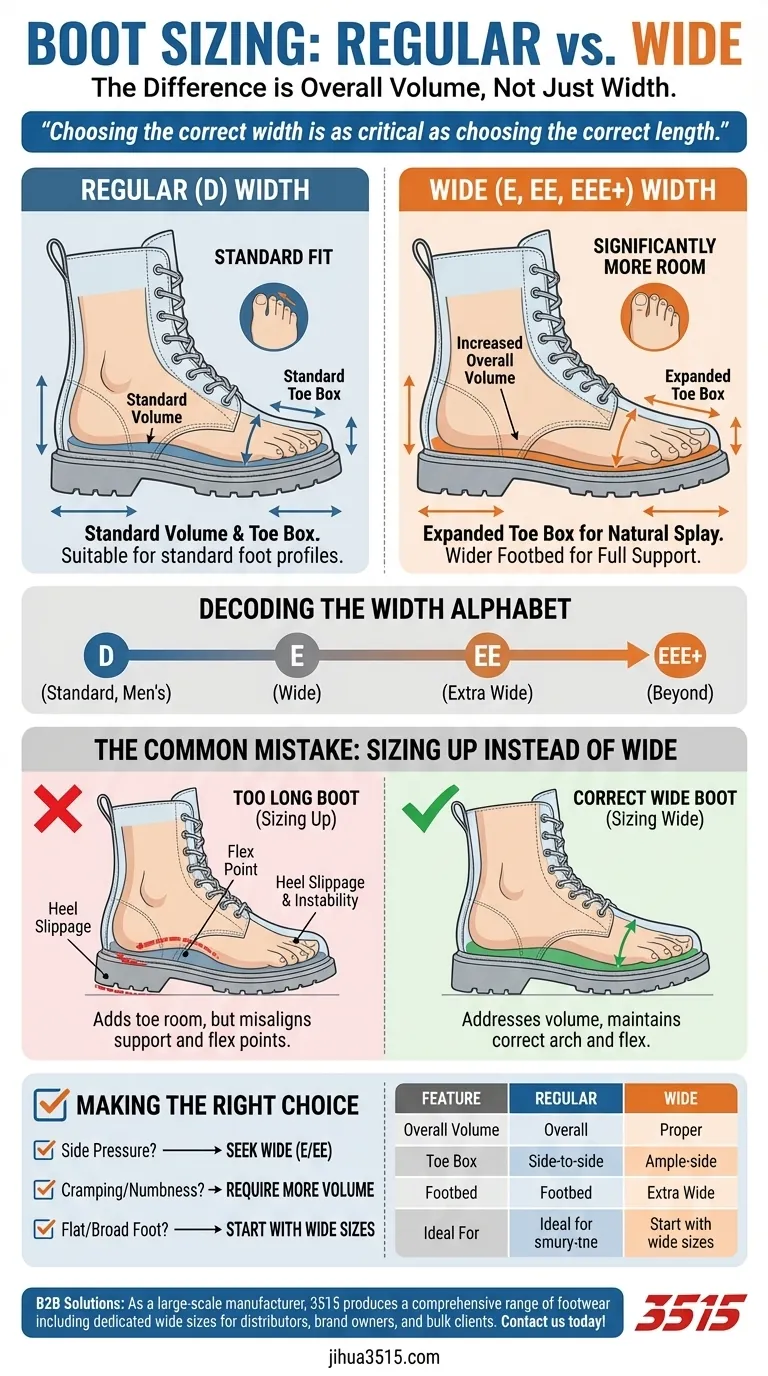
The fundamental difference between regular and wide boot sizes is about overall volume, not just side-to-side measurement. While a wide boot is indeed broader across the ball of the foot, it also provides significantly more room in the toe box and through the footbed, accommodating feet that require more space in every dimension.
Choosing the correct width is as critical as choosing the correct length. The distinction between regular and wide sizing is a matter of three-dimensional fit, directly impacting your comfort, stability, and long-term foot health.
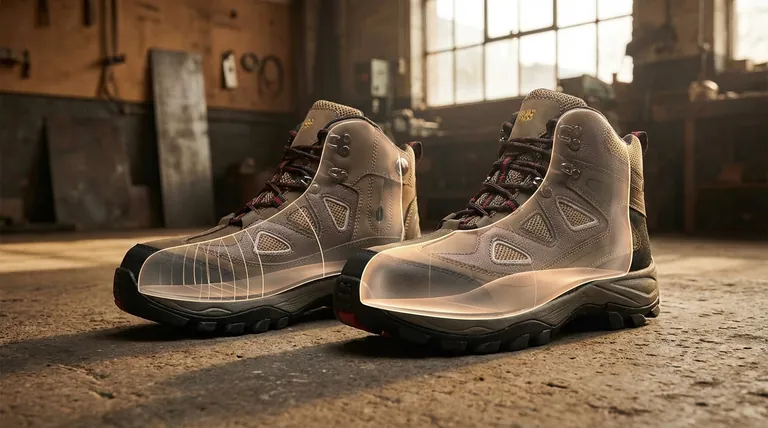
The Anatomy of a Wide Boot: More Than Just Width
Many people mistakenly believe "wide" simply means the boot is stretched horizontally. The reality is that a true wide-size boot is constructed differently from the ground up to create more internal volume.
Increased Overall Volume
A wide size provides more space throughout the entire boot cavity. This means more room vertically and horizontally, preventing your foot from feeling compressed from the sides or the top.
The Expanded Toe Box
This is one of the most critical features. A wide boot features a broader, often deeper, toe box. This allows your toes to splay naturally as you walk, preventing painful cramping and reducing the risk of conditions like bunions or hammertoes.
A Roomier Footbed
The actual base of the boot, or footbed, is wider. This ensures your entire foot is supported by the insole and midsole, rather than spilling over the edges, which can cause instability and arch strain.
Decoding the Width Alphabet: D, E, and EE
Boot widths are designated by letters, which can be confusing. While standards can vary slightly between brands, there are general guidelines to follow.
The Standard: 'D' Width
For men's footwear, a 'D' width is considered the standard or regular size. If a boot doesn't have a width letter specified, it is most likely a D. For women, the standard width is typically a 'B'.
Entering Wide Territory: 'E' and 'EE'
Wide sizes begin with the letter 'E'. An 'EE' (sometimes written as '2E') is considered extra-wide. The progression continues with EEE (3E), 4E, and beyond, with each letter representing a significant increase in volume.
The Common Mistake: Sizing Up Instead of Sizing Wide
When a boot feels tight, the most common mistake is to simply buy a half or full size up in length. This is a flawed strategy that creates more problems than it solves.
Why Buying a Longer Boot Doesn't Work
Sizing up in length adds room at the toes but fails to address the pressure on the sides of your foot. More importantly, it misaligns the boot's intended flex point with your foot's natural bend, and it places the arch support in the wrong spot.
The Risk of a Poor Fit
An overly long boot leads to heel slippage, which causes blisters and instability. Your foot will slide forward and backward within the boot, especially on inclines or declines, compromising your stability and comfort.
Making the Right Choice for Your Foot
Selecting the proper width is essential for all-day comfort and performance. Use your specific needs to guide your decision.
- If you feel consistent pressure on the sides of your feet: Your primary issue is width, and you should seek out a dedicated wide size (E or EE).
- If your current boots cause foot cramping or numbness: This is a clear sign they are too narrow, and you require the additional volume of a wide size.
- If you have a flatter or broader foot profile: Start by trying on wide sizes, as a standard 'D' width is unlikely to provide adequate support and comfort.
Ultimately, prioritizing the correct width ensures your boots work with your feet, not against them.
Summary Table:
| Feature | Regular (D) Width | Wide (E/EE) Width |
|---|---|---|
| Overall Volume | Standard fit | Significantly more room in all dimensions |
| Toe Box | Standard width and depth | Broader, deeper for natural toe splay |
| Footbed | Standard width | Wider base for full foot support |
| Ideal For | Standard foot profiles | Broader, flatter feet or side pressure |
Struggling to find boots that fit perfectly? As a large-scale manufacturer, 3515 produces a comprehensive range of footwear, including dedicated wide sizes (E, EE, and beyond), for distributors, brand owners, and bulk clients. Our production capabilities ensure a perfect fit for every foot profile, enhancing comfort and performance. Contact us today to discuss your wide-width boot needs!
Visual Guide
Related Products
- Wholesale Durable Safety Boots | Custom Steel Toe & Puncture-Resistant Manufacturing
- Premium Wholesale Tactical Style Safety Shoes Boots with Quick Lacing
- Durable Goodyear Welt Leather Work Boots for Wholesale & Private Label
- Durable Leather Work Boots for Wholesale & Custom Manufacturing
- Durable Leather Work Boots for Wholesale & Custom OEM Manufacturing
People Also Ask
- How should safety boots be cleaned to avoid damage? A Gentle Guide to Preserve Your Boots
- What are the key features of safety boots? Essential Protection for Hazardous Workplaces
- What materials are commonly used for outsoles in safety boots? A Guide to Durability, Grip, and Comfort
- What are the risks of using ordinary rubber boots in forest clearing? Why professional safety boots are essential
- What are the consequences of not wearing safety boots? Protect Your Finances and Career


















