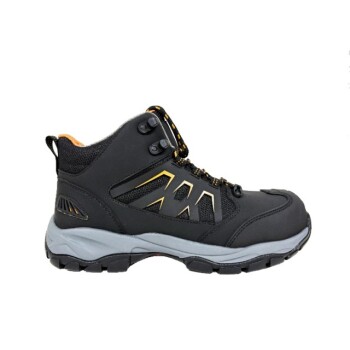
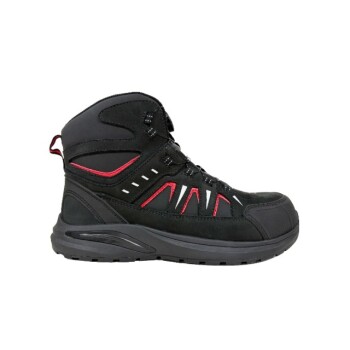
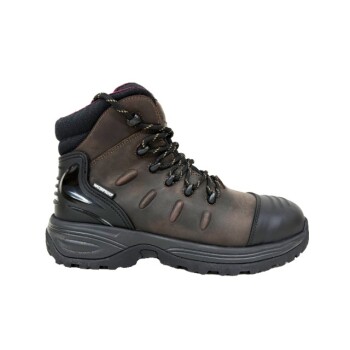
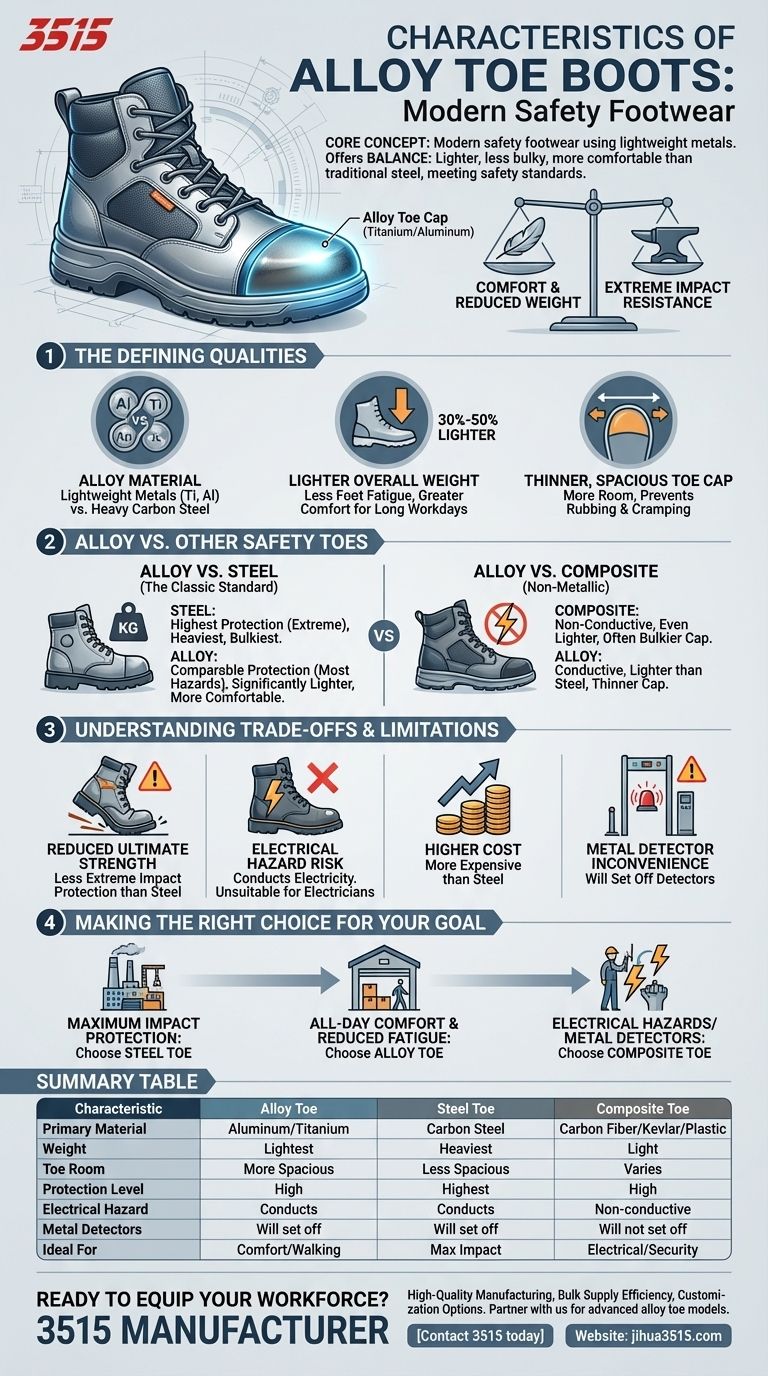
At their core, alloy toe boots are a modern type of safety footwear that uses lightweight metals like aluminum and titanium for protection. This construction makes them significantly lighter and less bulky than traditional steel toe boots, offering a more comfortable fit with increased toe room while still meeting certified safety standards.
The central characteristic of an alloy toe boot is its balance. It sacrifices the absolute maximum impact resistance of steel in exchange for a substantial improvement in wearer comfort, reduced weight, and a more spacious toe box.
The Defining Qualities of an Alloy Toe
An alloy toe boot's characteristics stem directly from the materials used in its protective cap. This modern approach offers distinct advantages over older safety boot technologies.
The Alloy Material
Alloy safety toes are crafted from lightweight metals, most commonly titanium or aluminum, or a blend of similar materials. This is a direct contrast to the heavy carbon steel used in traditional safety boots.
A Lighter Overall Weight
The use of these lighter metals results in a boot that is 30% to 50% lighter than a comparable steel toe boot. This reduction in weight directly translates to less foot fatigue and greater comfort over a long workday.
A Thinner, More Spacious Toe Cap
Because these alloys are very strong for their weight, the protective toe cap can be made much thinner than a steel one. This creates more room for your toes inside the boot, a critical comfort factor that prevents rubbing and cramping.
How Alloy Compares to Other Safety Toes
Understanding where alloy fits requires comparing it to the other primary types of safety footwear: traditional steel and non-metallic composite.
Alloy vs. Steel
Steel is the classic standard for safety toes, offering the highest level of protection against crushing and impact forces. However, it is the heaviest and bulkiest option. Alloy provides comparable protection for most common workplace hazards but in a significantly lighter and more comfortable package.
Alloy vs. Composite
Composite toes are non-metallic options made from materials like carbon fiber, Kevlar, or plastic. They are even lighter than alloy and do not conduct electricity. However, to meet the same safety rating, a composite cap often needs to be bulkier than an alloy one, potentially reducing toe room.
Understanding the Trade-offs and Limitations
While alloy toes offer an excellent balance of features, they are not the perfect solution for every situation. Objectively evaluating their limitations is key to making an informed decision.
Reduced Ultimate Strength
While all certified safety boots must meet a minimum standard (such as 200-joule impact resistance), steel offers superior protection against extreme, top-end compression forces. In environments with a high risk of heavy crushing, steel remains the toughest option.
Electrical Hazard Risk
Alloy toes are metallic and conduct electricity. They are completely unsuitable for electricians or anyone working in an environment with a risk of live electrical circuits.
Higher Cost
The advanced materials and manufacturing process typically make alloy toe boots more expensive than their steel toe counterparts.
Metal Detector Inconvenience
Like steel, the metal in an alloy toe cap will set off metal detectors. This can be a daily nuisance in high-security workplaces.
Making the Right Choice for Your Goal
Selecting the correct safety boot requires matching the toe material's specific characteristics to the primary demands of your job.
- If your primary focus is maximum impact protection: A steel toe boot is the definitive choice for heavy industrial, logging, or construction roles.
- If your primary focus is all-day comfort and reduced fatigue: An alloy toe boot is ideal for warehouse work, light manufacturing, and trades that require constant walking.
- If your primary focus is working near electrical hazards or passing through metal detectors: You must choose a non-metallic composite toe boot.
Ultimately, choosing the right boot is about understanding that each material represents a deliberate engineering trade-off designed for a specific need.
Summary Table:
| Characteristic | Alloy Toe Boots | Steel Toe Boots | Composite Toe Boots |
|---|---|---|---|
| Primary Material | Aluminum, Titanium | Carbon Steel | Carbon Fiber, Kevlar, Plastic |
| Weight | Lightest (30-50% lighter than steel) | Heaviest | Light (can be lighter than alloy) |
| Toe Room | More spacious (thinner cap) | Less spacious | Varies (often bulkier) |
| Protection Level | High (meets ASTM standards) | Highest | High (meets ASTM standards) |
| Electrical Hazard | Conducts electricity | Conducts electricity | Non-conductive |
| Metal Detectors | Will set off | Will set off | Will not set off |
| Ideal For | All-day comfort, walking, light industry | Maximum impact protection | Electrical work, security sites |
Ready to equip your workforce with superior safety footwear?
As a large-scale manufacturer, 3515 produces a comprehensive range of footwear for distributors, brand owners, and bulk clients. Our production capabilities encompass all types of safety shoes and boots, including advanced alloy toe models.
Partner with us to access:
- High-Quality Manufacturing: Durable boots that meet rigorous safety standards.
- Bulk Supply Efficiency: Reliable, large-volume production to meet your demand.
- Customization Options: Tailor styles and specifications for your brand or workforce.
Let's discuss how our alloy toe boots can enhance safety and comfort for your customers or employees.
Contact 3515 today for a quote and more information!
Visual Guide
Related Products
- Durable Steel Toe Safety Boots Wholesale & Custom Manufacturing
- Wholesale Durable Safety Boots Manufacturer Customizable Steel Toe Work Boots
- Wholesale Mesh Steel Toe Safety Shoes with Dial Closure Factory Production
- Wholesale Durable Breathable Safety Boots Custom OEM Manufacturer
- Puncture-Resistant Velcro Safety Boots for Wholesale & Custom Manufacturing
People Also Ask
- Why are industrial safety boots with steel toes necessary for machine operators? Essential Foot Protection for Safety
- Why is it mandatory to wear safety shoes with steel toe protection during metal loading? Prevent Crushing Injuries
- What are the main materials used in steel toe safety shoes? A Guide to Protective Footwear Construction
- What are the characteristics of steel toe safety boots? Maximum Protection, Key Trade-offs
- Is it true that steel toes can cause toes to get cut off? Debunking the Dangerous Myth