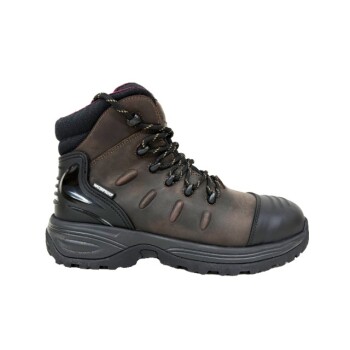
At their core, work boot safety toes are categorized into three main types: steel, composite, and alloy. Each type meets the same baseline ASTM safety standards for impact and compression, but they achieve this protection using different materials, resulting in distinct advantages for specific work environments.
The choice of a safety toe is not about finding the "strongest" one, as all certified options meet required safety standards. Instead, it's a strategic decision based on the specific trade-offs between weight, conductivity, and material thickness required by your job.
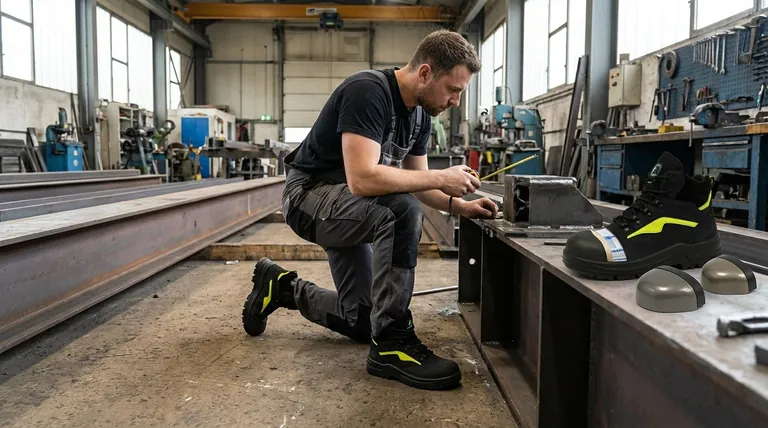
The Three Core Safety Toe Materials
The primary function of a safety toe cap is to protect your feet from falling objects (impact) and heavy rolling objects (compression). While all certified boots accomplish this, the material used determines the boot's secondary characteristics.
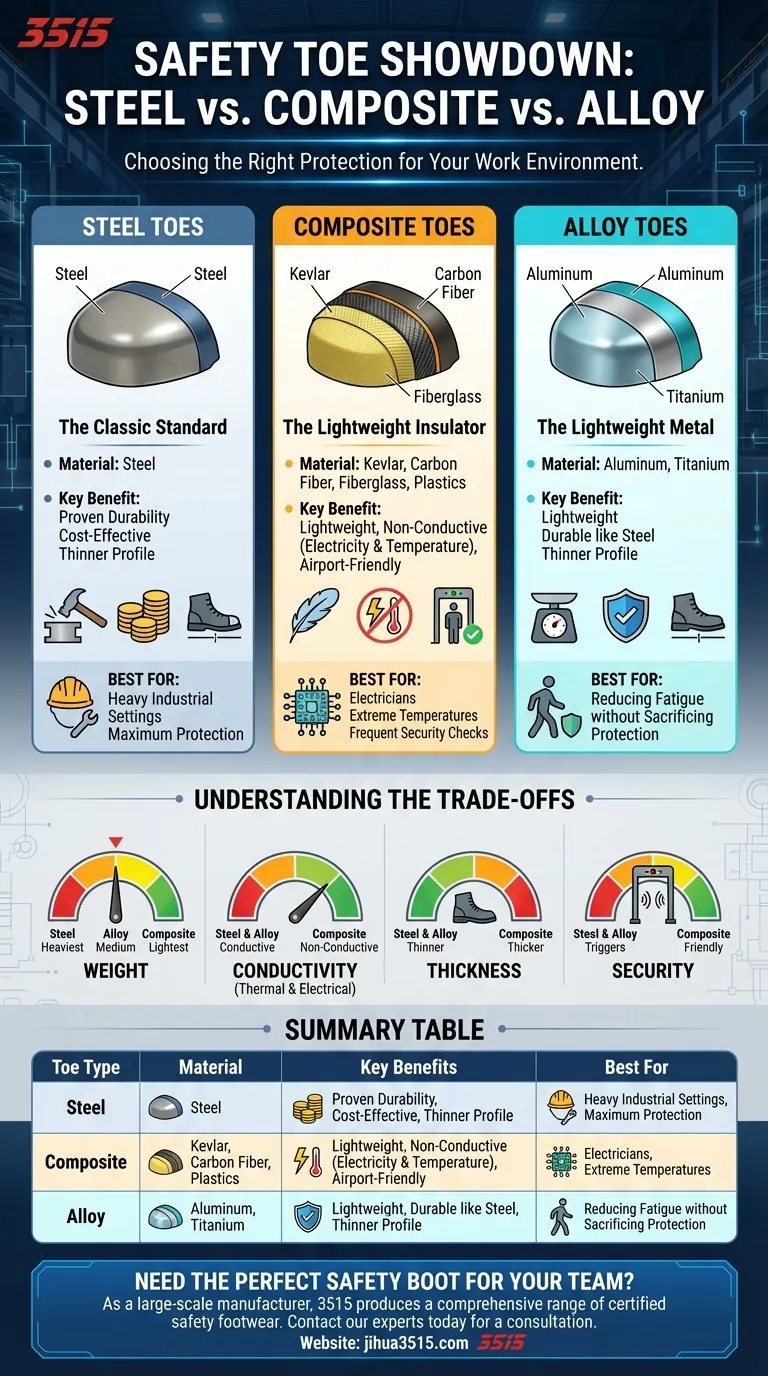
Steel Toes: The Classic Standard
Steel was the original material for safety toes and remains a trusted standard for heavy-duty protection. It is a proven, cost-effective solution known for its strength.
A key physical property of steel is that it can be made thinner than composite materials while providing the same level of protection, which can result in a less bulky-looking boot.
Composite Toes: The Lightweight Insulator
Composite toes are made from non-metallic materials like Kevlar, carbon fiber, fiberglass, or even specialized plastics. Their primary benefit is being significantly lighter than steel.
This non-metallic construction means they do not conduct heat, cold, or electricity, making them the default choice for electricians or workers in extreme temperature environments. "Nano composite" is a term for advanced, lighter-weight versions of these materials.
Alloy Toes: The Lightweight Metal
Alloy toes are crafted from lightweight metals such as aluminum or titanium. They offer a modern compromise between steel and composite options.
They provide the same impact and compression resistance as steel but at a noticeably lower weight—often 30-50% lighter. Like steel, they can be made thinner than composite caps, offering a more streamlined toe box.
Understanding the Trade-offs
Choosing the right safety toe requires balancing protection against the daily realities of your work environment. No single type is universally superior; each has distinct pros and cons.
Weight and Comfort
- Steel: The heaviest option. The extra weight can contribute to foot fatigue over a long shift.
- Alloy: A significant improvement, offering robust protection at a much lower weight than steel.
- Composite: The lightest of the three, providing the most comfort for workers who are constantly on the move.
Conductivity (Thermal and Electrical)
- Steel: Conducts heat, cold, and electricity. This makes it unsuitable for electricians and potentially uncomfortable in extreme weather conditions without proper insulation.
- Alloy: Also conducts electricity and temperature, similar to steel.
- Composite: Does not conduct electricity or temperature, making it the safest choice for electrical work and the most comfortable in very hot or cold climates.
Thickness and Fit
- Steel & Alloy: Because metals are stronger by volume, these toe caps can be thinner, resulting in a less "bulbous" or bulky boot profile.
- Composite: To achieve the same safety rating, composite caps must be thicker. This can make the toe box feel larger and may be a factor for those who prefer a more streamlined fit.
Security Checkpoints
- Steel & Alloy: Will set off metal detectors, requiring removal at security checkpoints like airports.
- Composite: Being non-metallic, these are "airport-friendly" and will not trigger metal detectors.
Making the Right Choice for Your Goal
Your specific job function and environment are the most important factors in selecting the right safety toe.
- If your primary focus is maximum protection in a heavy industrial setting: Steel toes offer a proven, cost-effective, and robust solution where weight is a secondary concern.
- If your primary focus is electrical hazard protection or work in extreme temperatures: Composite toes are the only logical choice due to their non-conductive properties.
- If your primary focus is reducing fatigue without sacrificing metal's durability: Alloy toes provide an excellent balance of steel-like protection at a much more manageable weight.
- If your primary focus is frequent movement and passing through security: Composite toes offer the lightest weight and convenience of being non-metallic.
Ultimately, the best safety boot is the one that provides certified protection while addressing the unique demands of your workday.
Summary Table:
| Toe Type | Material | Key Benefits | Best For |
|---|---|---|---|
| Steel | Steel | Proven durability, cost-effective, thinner profile | Heavy industrial settings, maximum protection |
| Composite | Kevlar, Carbon Fiber | Lightweight, non-conductive (electricity & temperature) | Electricians, extreme temperatures, airport security |
| Alloy | Aluminum, Titanium | Lightweight like composite, durable like steel, thinner profile | Reducing fatigue without sacrificing protection |
Need the Perfect Safety Boot for Your Team?
As a large-scale manufacturer, 3515 produces a comprehensive range of certified safety footwear for distributors, brand owners, and bulk clients. Whether you need the classic durability of steel toes, the lightweight insulation of composite, or the balanced performance of alloy, we have the production capabilities to meet your exact specifications.
Contact our experts today for a consultation and let us help you equip your workforce with the right protection.
Visual Guide
Related Products
- Wholesale Durable Safety Boots Manufacturer Customizable Steel Toe Work Boots
- Customizable Anti-Smash Safety Boots for Wholesale & Private Label Manufacturing
- Wholesale Customizable Safety Boots Durable & Protective Footwear Manufacturing
- Wholesale Durable Breathable Safety Boots Custom OEM Manufacturer
- Durable Steel Toe Safety Boots Wholesale & Custom Manufacturing
People Also Ask
- What are the pros and cons of steel toe work boots? A Guide to Maximum Protection vs. Comfort
- What are the different types of steel toe work boots? Choose the Right Boot for Your Job
- What is the history of steel toe work boots? From German Invention to Modern Safety Standard
- How much weight can steel toe work boots withstand? Unpacking the 3,372 lb. Safety Standard
- What are some common myths about steel toe work boots? Debunked for Modern Workers