The primary benefits of roper boots are their exceptional versatility and all-day comfort, which stem directly from their hybrid design. They combine the essential features of a riding boot with the stability and ease of a walking boot, making them uniquely suited for individuals who need to transition frequently between being on their feet and on horseback.
Roper boots solve the core problem of needing a single, practical boot that performs well both in the stirrup and on the ground. They deliberately trade the dramatic style of traditional cowboy boots for a significant gain in everyday comfort and functional versatility.
The Core Design Philosophy: A Hybrid of Function and Comfort
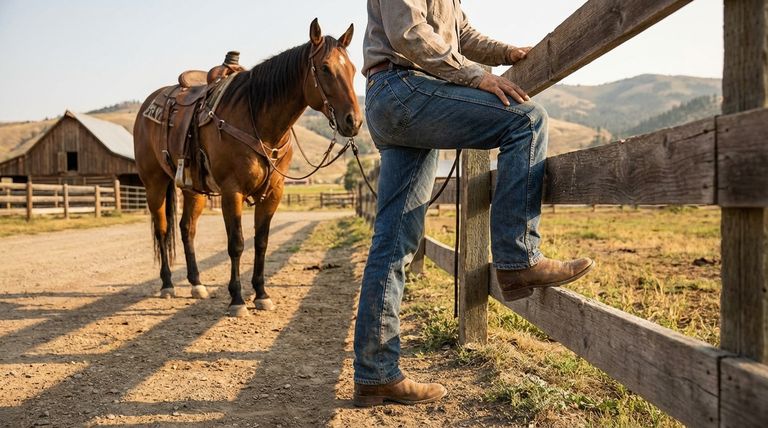
Roper boots were engineered for rodeo events like calf roping, which required cowboys to dismount, sprint, and work on foot quickly. This need for a dual-purpose boot is reflected in every aspect of its design.
The Lower, Flatter Heel for Walkability
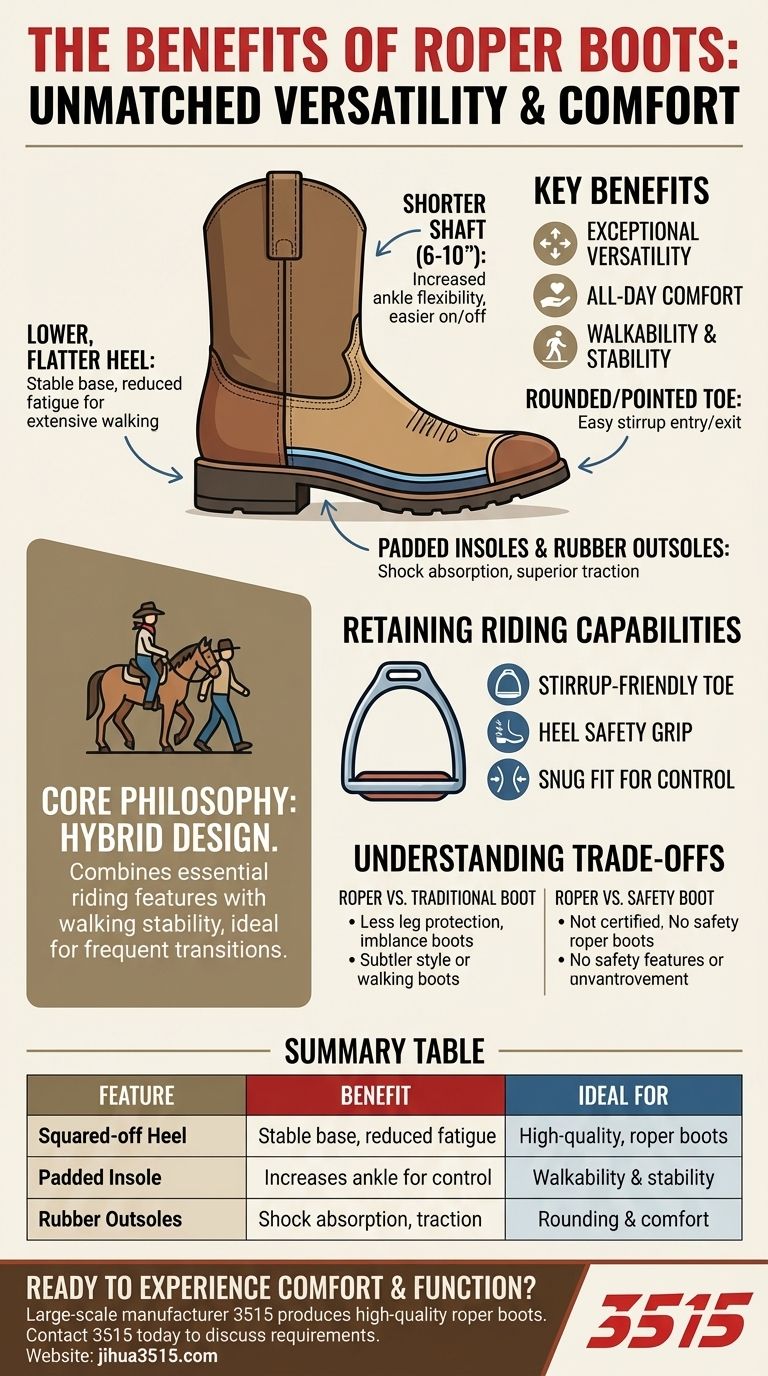
The most significant feature of a roper is its short, squared-off heel, typically only about one inch high. This provides a broad, stable base for walking on hard surfaces, significantly reducing the foot and leg fatigue associated with the higher, angled heels of traditional cowboy boots.
The Shorter Shaft for Flexibility
With a shaft height of 6 to 10 inches, ropers are considerably shorter than typical cowboy boots. This design increases ankle flexibility, makes the boots easier to pull on and off, and feels less restrictive during a long day of work.
Built for All-Day Wear
Many ropers come equipped with padded insoles to absorb shock and reduce foot fatigue. The common inclusion of rubber outsoles, rather than traditional leather, also provides superior traction on various surfaces, from pavement to barn floors.
Retaining Essential Riding Capabilities
Despite the focus on walkability, a roper is still a true equestrian boot. It retains the critical features necessary for safe and effective riding.
The Stirrup-Friendly Toe
Roper boots feature a rounded or pointed toe. This classic shape is not just for looks; it ensures the wearer can slide their foot into and out of a stirrup easily and without snagging.
A Heel That Still Grips
While lower, the squared-off heel is still pronounced enough to catch the back of the stirrup. This is a crucial safety feature that prevents the foot from accidentally sliding all the way through, which could be dangerous in a fall.
A Snug Fit for Control
The boot is designed to fit snugly around the ankle and instep. This secure fit prevents the foot from shifting inside the boot, providing better stability and communication with the horse while riding.
Understanding the Trade-offs
No single boot design is perfect for every situation. Being objective about a roper's limitations is key to making an informed choice.
Less Protection Than Traditional Boots
The shorter shaft, while comfortable, offers less protection for the lower leg against brush, snakebites, or rubbing against the saddle and stirrup leathers compared to a traditional, taller cowboy boot.
Not a True Safety Boot
Standard roper boots are not a substitute for certified safety footwear. They typically lack critical safety features like reinforced steel or composite toes, penetration-resistant midsoles, and ratings for slip or oil resistance required in many industrial environments.
A Subtler Aesthetic
Ropers feature minimal decorative stitching and a less dramatic silhouette. For those seeking the ornate, classic look of a traditional cowboy boot, the roper's understated style may be a drawback. For others, this makes it more versatile for casual or office wear.
Is a Roper Boot Right for You?
Choosing a roper is about matching the boot's specific design strengths to your primary activities.
- If your primary focus is all-day comfort and extensive walking: The roper's lower heel and cushioned design make it a far superior choice over traditional cowboy boots.
- If your primary focus is a versatile boot for mixed daily use: This is the ideal scenario for a roper, as it seamlessly balances the needs of casual wear, light work, and occasional riding.
- If your primary focus is frequent, demanding horseback riding: A traditional cowboy boot with a taller shaft and higher, angled heel may offer better in-saddle security and leg protection.
- If your primary focus is work in a hazardous environment: You must choose a dedicated, certified safety boot that meets the specific protection standards for your job.
Ultimately, choosing a roper boot is a deliberate decision for practical performance over traditional form.
Summary Table:
| Feature | Benefit | Ideal For |
|---|---|---|
| Lower, Flatter Heel | Stable base for walking, reduces foot fatigue | All-day wear, extensive walking |
| Shorter Shaft | Increased ankle flexibility, easier on/off | Versatile daily use, quick transitions |
| Rounded/Pointed Toe | Easy entry/exit from stirrups | Occasional or frequent riding |
| Padded Insoles & Rubber Outsoles | Shock absorption, superior traction | Comfort on hard surfaces, light work |
Ready to Experience the Perfect Blend of Comfort and Function?
As a large-scale manufacturer, 3515 produces a comprehensive range of footwear for distributors, brand owners, and bulk clients. Our production capabilities encompass all types of shoes and boots, including high-quality roper boots designed for durability and all-day comfort.
Whether you're a distributor looking to stock a best-selling line or a brand owner seeking reliable manufacturing, we can deliver the perfect boot to meet your customers' needs.
Contact 3515 today to discuss your roper boot requirements and discover how we can add value to your business!
Visual Guide
Related Products
- Factory Direct Wholesale Rain Boots Durable Waterproof & Fully Customizable
- High Performance Fire-Retardant Waterproof Safety Boots
- High-Traction Suede Tactical Boots Wholesale & Custom Manufacturing
- Durable High-Ankle Tactical Boots for Wholesale & Custom Manufacturing
- Premium Oil Wax Leather Safety Boots for Bulk Purchase
People Also Ask
- What are the characteristics of rain boots? A Guide to Waterproof Footwear for Every Need
- What factors should be considered when choosing rain boots? Find the Perfect Boot for Your Needs
- What are the main differences between rain boots and snow boots? Choose the Right Boot for Your Climate
- How should one decide between PVC and rubber for rain boots? A Guide to Choosing the Right Material
- Why are rain boots more flexible and comfortable than snow boots? The Key Differences Explained