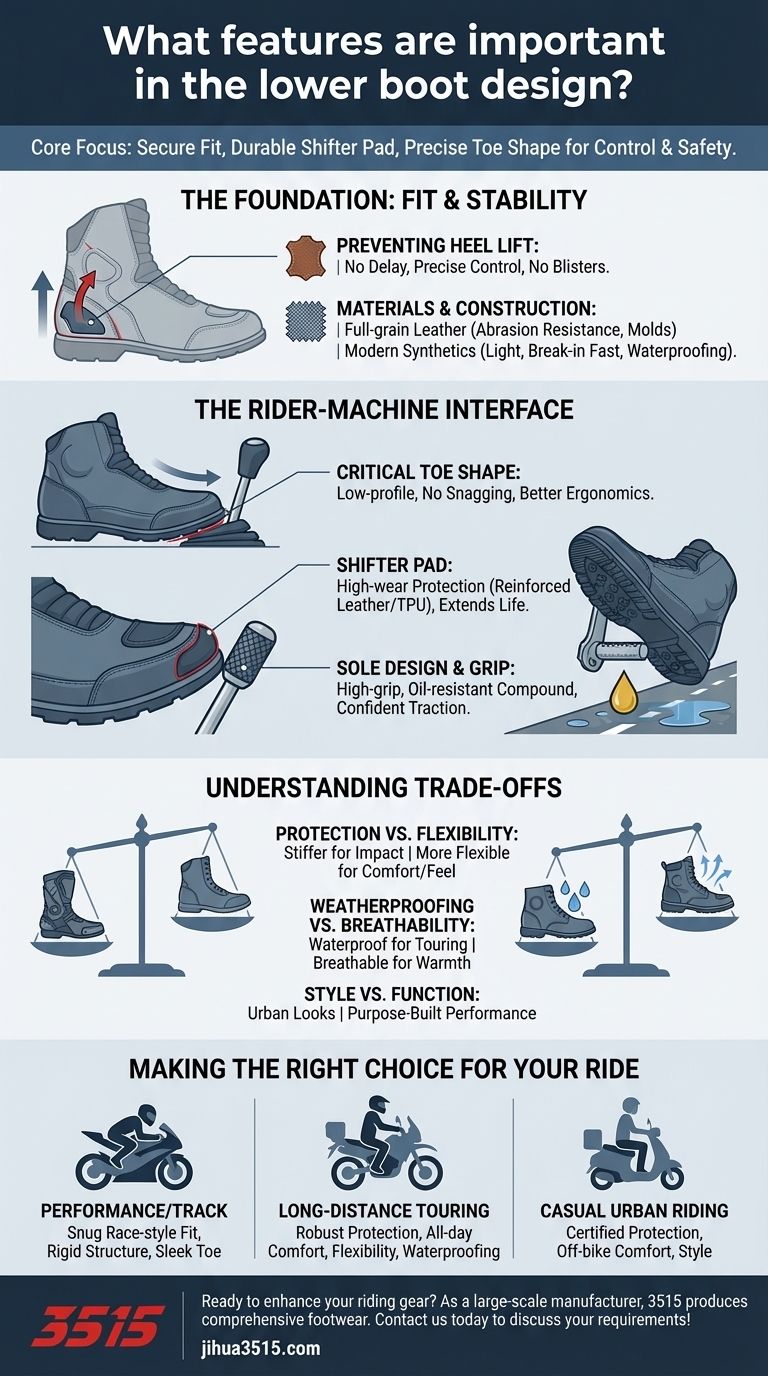
At its core, the design of a lower boot focuses on three critical areas: a secure fit to prevent heel lift, a durable shifter pad to protect the boot's toe box, and an appropriately shaped toe that allows for precise interaction with your motorcycle's controls. These features are not merely for comfort; they are fundamental to rider control and safety.
The lower boot is the primary interface between you and your machine. Its design isn't about style, but about translating your physical inputs into precise mechanical control while protecting you from both the elements and the road.
The Foundation: Fit and Stability
The most fundamental aspect of any performance footwear is how it connects you to your task. For a riding boot, this connection begins with an unwavering fit.
Preventing Heel Lift
Heel lift is when your heel rises from the insole inside the boot during movement. This is a critical failure in a riding boot.
It creates a delay between your physical input and the boot's movement, resulting in sloppy, imprecise control over the shifter and rear brake. It also causes friction, leading to blisters and discomfort on long rides.
Materials and Construction
The boot's structure is defined by its materials. Full-grain leather has traditionally been the standard for its exceptional abrasion resistance and ability to mold to the foot over time.
Modern synthetic materials, such as microfiber and technical fabrics, now offer comparable protection with the added benefits of being lighter, breaking in faster, and often including integrated waterproof and breathable membranes.
The Rider-Machine Interface
Once fit is established, the boot's design must be optimized for interacting with the motorcycle. This is where a boot transitions from mere footwear to technical equipment.
The Critical Role of Toe Shape
The shape of the toe box is paramount. It must be low-profile enough to easily slip under the gear shift lever without snagging.
A bulky or incorrectly shaped toe forces you to alter your foot position, compromising ergonomics and slowing down your reaction time for both shifting and braking.
The Shifter Pad: A Non-Negotiable Feature
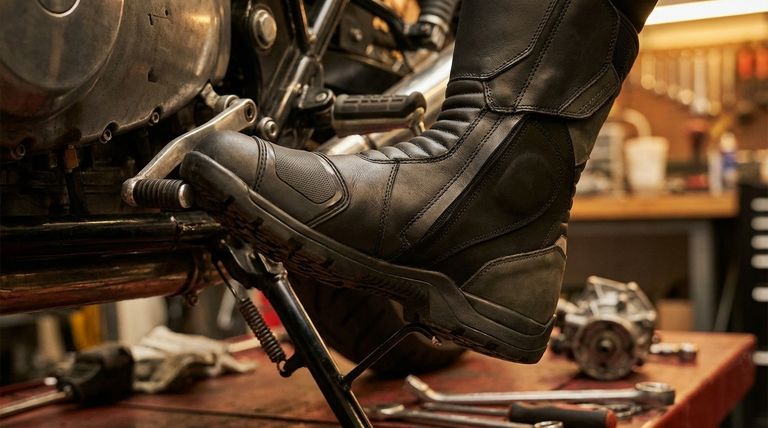
The top of the left toe box is a high-wear area due to constant contact with the gear shifter.
A dedicated shifter pad, typically made of reinforced leather or a durable TPU (thermoplastic polyurethane) panel, protects the boot from being destroyed by the knurled metal of the lever. This simple feature drastically extends the life of the boot.
Sole Design and Grip
Unlike an equestrian boot, which has a smooth sole to prevent snagging in a stirrup, a motorcycle boot requires a high-grip sole.
The sole must be made from an oil-resistant compound to provide confident traction on various road surfaces, especially when you put a foot down at a stop. The tread pattern is designed to offer stability without being so aggressive that it hinders movement on the footpegs.
Understanding the Trade-offs
No single boot design is perfect for every situation. Choosing the right one means understanding the inherent compromises between different design goals.
Protection vs. Flexibility
More armor and a stiffer, more rigid construction provide superior impact and torsion protection in a crash. However, this rigidity comes at the cost of off-bike comfort and can reduce the tactile feedback from the controls.
Weatherproofing vs. Breathability
A boot with a waterproof membrane is excellent for touring or commuting in unpredictable weather. The trade-off is reduced breathability, which can lead to hot, sweaty feet in warm, dry conditions.
Style vs. Function
Many boots are designed to look like casual footwear while incorporating hidden protective features. While these are great for urban riding, they often compromise on the stiffness, height, and overall protection offered by a dedicated, purpose-built riding boot.
Making the Right Choice for Your Ride
Your ideal boot depends entirely on your primary type of riding. Focus on the features that serve your specific goal.
- If your primary focus is performance or track riding: Prioritize a snug, race-style fit with minimal heel lift, a rigid structure for protection, and a sleek toe for maximum control.
- If your primary focus is long-distance touring: Balance robust protection with features that ensure all-day comfort, such as a degree of flexibility, waterproofing, and a supportive insole.
- If your primary focus is casual urban riding: Look for a boot that blends certified protection (like ankle armor and a reinforced sole) with off-bike walking comfort and style.
Choosing the right boot is an investment in your control, comfort, and safety on every ride.
Summary Table:
| Key Feature | Purpose | Benefit |
|---|---|---|
| Secure Fit & Heel Lock | Prevents heel lift | Ensures precise control and prevents blisters |
| Durable Shifter Pad | Protects toe box from gear shifter wear | Extends boot life and maintains integrity |
| Appropriately Shaped Toe | Allows easy interaction with motorcycle controls | Improves ergonomics and reaction time |
| High-Grip, Oil-Resistant Sole | Provides traction on various surfaces | Enhances stability and safety when stopping |
| Material Choice (Leather/Synthetics) | Balances protection, weight, and break-in time | Offers durability with comfort and weatherproofing |
Ready to enhance your riding gear with boots designed for ultimate control and safety?
As a large-scale manufacturer, 3515 produces a comprehensive range of footwear for distributors, brand owners, and bulk clients. Our production capabilities encompass all types of motorcycle boots, ensuring durability, precise fit, and rider-focused features tailored to your needs.
Contact us today to discuss your requirements and discover how 3515 can deliver high-quality, performance-driven boots for your customers!
Visual Guide
Related Products
- Heavy-Duty Goodyear Welted Pull-On Safety Rigger Boot
- Wholesale Tactical Boots High-Traction & Reflective for Bulk & Brand Orders
- High Performance Fire-Retardant Waterproof Safety Boots
- Wholesale High-Traction Camo Boots - Custom Manufacturer for Brands
- Wholesale Waterproof Tactical Boots Custom Suede & High-Traction Soles
People Also Ask
- What are the key elements of quality boot construction? Ensure Longevity & Performance
- Are Goodyear welted boots worth it? The Ultimate Guide to Lifelong Footwear
- What is a Goodyear welt on a boot? The Secret to Durable, Repairable Footwear
- What makes Goodyear Welt boots suitable for harsh environments? Unmatched Durability & Repairability
- What additional high-quality materials are used in Goodyear Welt boots? A Guide to Advanced Components