The single most important maintenance task for winter cycling boots is ensuring they dry completely between every single ride. This simple act is the key to preventing odor, preserving the integrity of the insulation, and maximizing the lifespan of your investment.
Your goal is not just to dry your boots, but to actively manage moisture from both the outside (snow, slush) and the inside (sweat). Failing to do so will rapidly degrade their performance and comfort.
The Core Challenge: Managing Moisture
Winter cycling boots are complex pieces of gear designed to battle moisture on two fronts. They use waterproof and breathable membranes to keep external water out while allowing internal sweat vapor to escape. Proper maintenance is about helping these systems function effectively.
Why Proper Drying is Non-Negotiable
Wet insulation is useless. When the insulating materials in your boots are saturated with water or sweat, they lose their ability to trap air, which is what keeps your feet warm.
Consistent dampness creates a breeding ground for bacteria and mildew. This leads to persistent, unpleasant odors that can be very difficult to remove.
Finally, allowing boots to sit wet can degrade the adhesives and materials over time. Some materials may even shrink or become brittle if they are repeatedly left wet or dried improperly with excessive heat.
The Right Way to Dry Your Boots
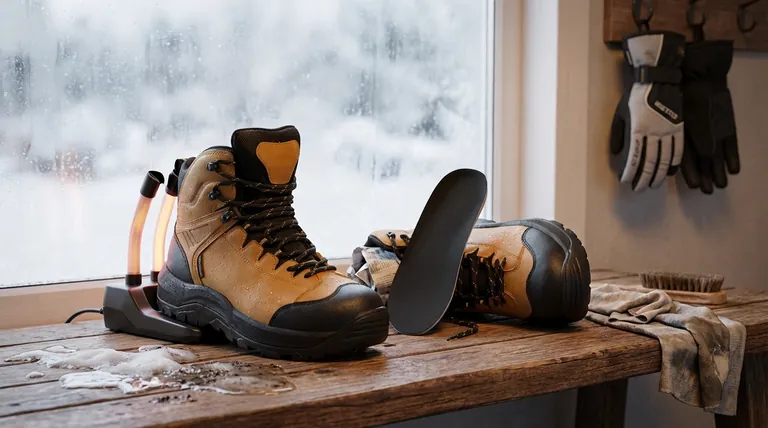
Start by removing the insoles. This opens up the inside of the boot, dramatically improving air circulation and speeding up drying time for both the boot and the insole itself.
For best results, use a dedicated boot dryer. These devices use gentle, low-temperature forced air to safely and thoroughly dry the interior of your boots overnight.
If you don't have a boot dryer, loosely stuff the boots with newspaper. The paper will absorb a significant amount of moisture. Be sure to replace the paper every few hours for faster drying.
Protecting the Outer Shell and Waterproofing
The exterior of your boot is its first line of defense. Keeping it clean and functional is critical for staying dry and warm.
Cleaning Off Grime and Salt
After riding in wet or slushy conditions, rinse or wipe down the exterior of your boots with a damp cloth. Road salt, in particular, is corrosive and can degrade waterproof coatings and materials over time.
Pay special attention to zippers, dials, and other closure systems. A quick wipe-down prevents grime from building up and causing them to jam or fail.
Maintaining the Waterproof Membrane
The boot's technical fabrics rely on a clean surface to breathe effectively. When the exterior is caked in mud, the breathable membrane cannot transfer sweat vapor outwards, leading to damp feet even if no external water gets in.
Regularly check that water is still beading up and rolling off the boot's surface. If it starts to "wet out" (soak into the fabric), it may be time to deep clean the boots and reapply a DWR (Durable Water Repellent) spray to restore performance.
Common Pitfalls to Avoid
Improper care can ruin a good pair of boots faster than thousands of miles on the road.
The Danger of High Heat
Never place your boots directly on a radiator, in front of a space heater, or in a clothes dryer. Intense, direct heat can melt synthetic materials, destroy waterproof membranes, and dissolve the glues that hold the boot together.
Storing Boots While Wet
The absolute worst thing you can do is finish a ride and toss your wet boots into a bag or a cold corner of the garage. This traps moisture, guarantees bacteria and mildew growth, and will permanently damage the insulation's loft and effectiveness.
Forgetting About the Inside
Remember that sweat is a major source of moisture. Even on a dry, cold day, your feet will produce sweat. The drying process is just as crucial after a dry ride as it is after a wet one to maintain the boot's interior environment.
Making the Right Choice for Your Goal
Your maintenance routine should align with your primary objective for your gear.
- If your primary focus is maximizing lifespan: Make a habit of wiping down and setting up your boots to dry immediately after every single ride, no exceptions.
- If your primary focus is ensuring peak performance: In addition to drying, periodically clean your boots and re-treat the DWR coating to ensure the waterproofing and breathability function exactly as designed.
Ultimately, consistent care is the key to ensuring your winter boots are always ready to protect you from the elements.
Summary Table:
| Maintenance Task | Key Action | Why It's Important |
|---|---|---|
| Drying | Remove insoles, use boot dryer or newspaper | Prevents odor, preserves insulation, and extends boot life |
| Cleaning | Wipe off salt and grime; clean zippers/dials | Protects materials and ensures closures function properly |
| Waterproofing | Check for water beading; reapply DWR spray | Maintains breathability and waterproof performance |
| Storage | Store dry; avoid high heat or damp areas | Prevents mildew, material degradation, and adhesive failure |
Need reliable, high-performance winter cycling boots for your customers? As a large-scale manufacturer, 3515 produces a comprehensive range of durable, weatherproof footwear designed for demanding conditions. We specialize in creating boots that meet the needs of distributors, brand owners, and bulk clients, ensuring quality and consistency in every pair. Contact us today to discuss how our production capabilities can support your business with superior cycling footwear solutions.
Visual Guide

Related Products
- Premium Insulated Safety Boots and Shoes for Wholesale & Bulk Orders
- Factory Direct Wholesale Rain Boots Durable Waterproof & Fully Customizable
- Durable Waterproof Rain Boots | Custom Manufacturer for Wholesale & Brands
- Heavy-Duty Waterproof Nubuck Safety Boots Safety Shoes for Bulk Supply
- Durable Goodyear Welt Leather Work Boots for Wholesale & Private Label
People Also Ask
- What are the recommended insulation ratings for mild winter conditions? A Guide for Active & Stationary Workers
- How does insulation thickness correlate with temperature ranges? A Guide to Choosing the Right Warmth
- What insulation level is needed for severe cold and stationary work? 1200g or Higher is Essential
- What safety advantages do insulated boots offer beyond warmth? Dielectric Protection & Superior Grip
- How does fleece lining contribute to the warmth of insulated boots? Trapping Air for Superior Cold Protection